The last time I was in Abu Dhabi four years ago, there was a lot of talk about the development to come that would transform this emirati of 214 islands into a tourism destination – among them, the Saadiyat Cultural District that would comprise the Louvre, Guggenheim and Zayed National Museum.
Well, the Louvre is open and it’s a spectacular piece of architecture built to blend into the desert landscape. What I appreciated the most was the lack of crowds – you pretty much can take your time to explore the 12 galleries without people breathing down your necks and waiting their turns, or hordes blocking your view.
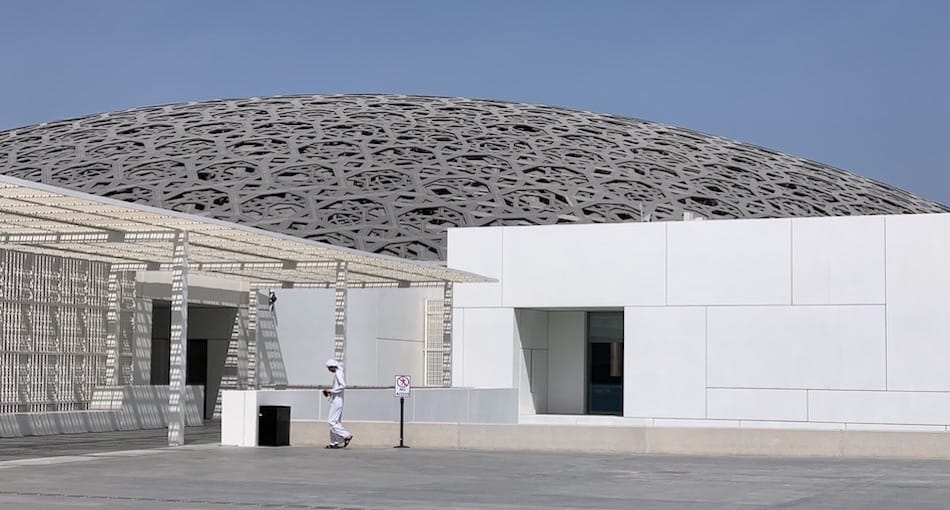
You can get your ticket online prior to the visit or use one of the automated ticketing machines. Arm yourself with an audio guide and you’re pretty much set to learn about the history of the world in art.
I did ask staff when Leonardo Da Vinci’s “Salvator Mundi”, which had been purchased from Christie’s for US$450m for the Louvre Abu Dhabi, would be displayed – it had been scheduled to be displayed last September – but no one knows.
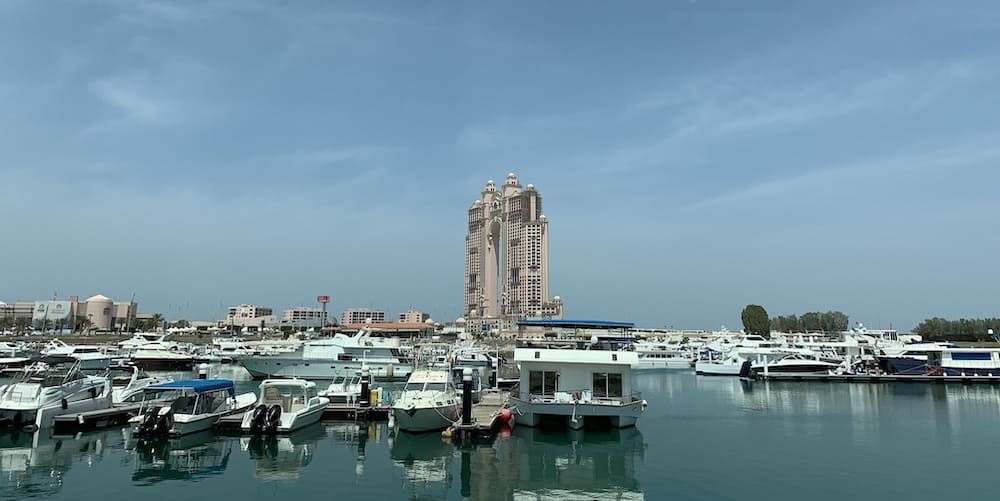
There’s still a lot of construction going on – the new Arabian-themed Fairmont Hotel, being likened to Atlantis on the Palm in Dubai, looks ready from a distance but no firm date has been set for its opening.
Room inventory in Abu Dhabi has been steadily increasing – from 29,679 in 2015 to 32,971in 2018, and there seems to be no end in sight, making hoteliers increasingly nervous about rates. REVPAR has been steadily dropping since 2015 – 13% in 2015, 9.1% in 2016 and 4.2% in 2017, according to figures obtained by WiT.
And when news appeared last month that the Grand Hyatt, which opened in June 2018, would close its doors for issues “beyond control”, more anxiety set in.
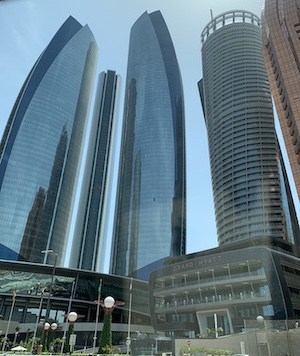
Grand Hyatt Abu Dhabi
Most of the new and old supply are in the five star and luxury segment, and seems misaligned with changing customer trends. The top source market remains the UAE itself but beyond that, it’s India, China and the UK with China overtaking the UK in 2017.
In such an over-supplied and rate-driven market – the situation is pretty similar in Dubai, although Dubai definitely has a more developed tourism market than Abu Dhabi – you can imagine the power of OTAs in driving business.
That’s primarily because they’ve been the ones who’ve been brand building and are able to keep up with tech trends that are changing customer behavior in the Middle East, and when you have such a fragmented market, aggregators and intermediaries who are nimble and tech-savvy tend to wield power.
When we held our first WiT Middle East in 2014 in Dubai, it was clear this market of a predominantly young population was going to go online in a big way and that social and mobile would be huge. That trend has certainly played out.
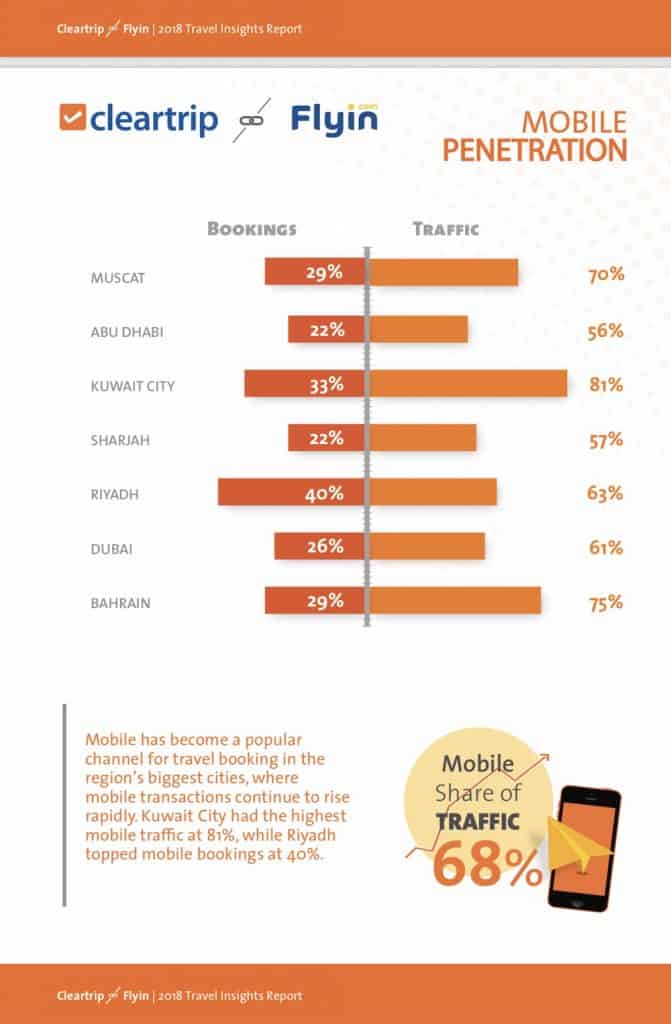
Cleartrip/Flyin’s 2018 Travel Insights Report pegged its mobile share of traffic at 68%. Kuwait City had the highest mobile traffic at 81% while Riyadh topped mobile bookings at 40%.
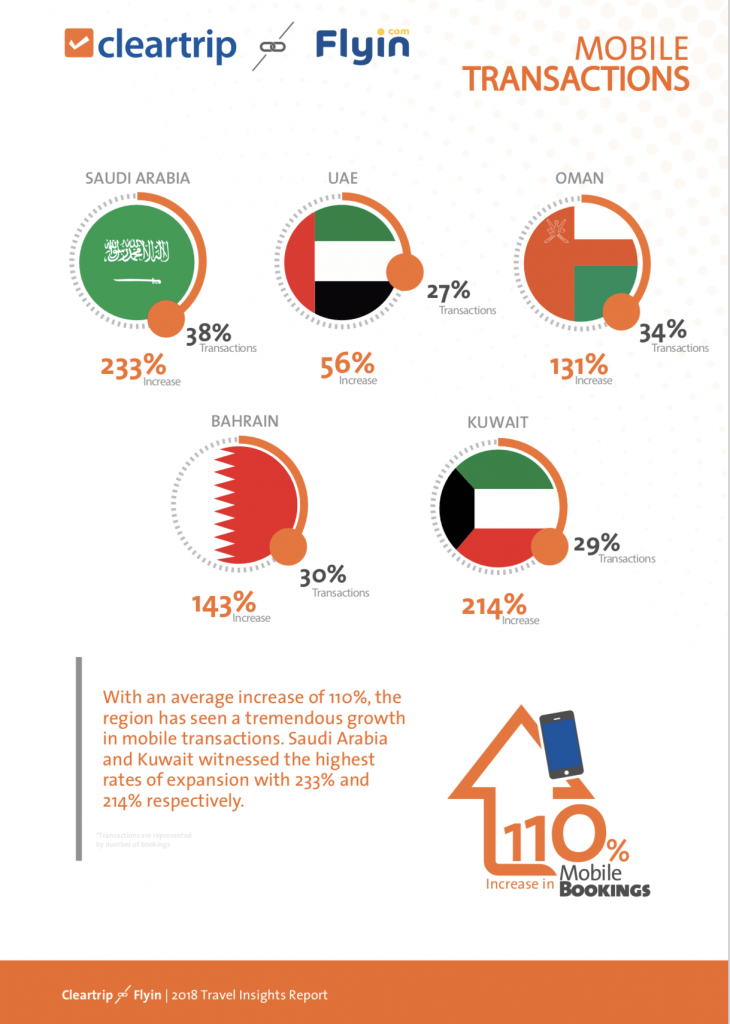
It saw a 110% increase in mobile bookings with Saudi Arabia and Kuwait witnessing the highest rates of growth at 233% and 214% respectively.
What this mobile intensity has done is made the market even more last minute than it already is. We’ve held WiTs in many markets around the world but we can say the Middle East breaks the record which, as you may appreciate, can be nerve-wracking for event organisers. But whatever product or service you’re offering, you’ve got to go with the consumer flow.
Hoteliers here tell me of the growing propensity of guests booking their rooms on an OTA site as they walk into the lobby and often when they check in, their reservation still hasn’t been recorded at the front desk. Or of people booking flights on the way to the airport and paying on their mobile …
Yes, we have become not only demanding customers but impatient and instant. It’s a trend that can only accelerate and such changing customer behavior is challenging for suppliers with legacy tech systems or those without scale and distribution power to engage with customers directly.
It’s against this backdrop that we will kick off WiT Middle East 2019 tomorrow, with a cast of speakers as diverse as this region is. We are excited to learn more from the people on the ground who are changing travel and I believe we in South-east Asia has as much to learn from the Middle East and vice versa.
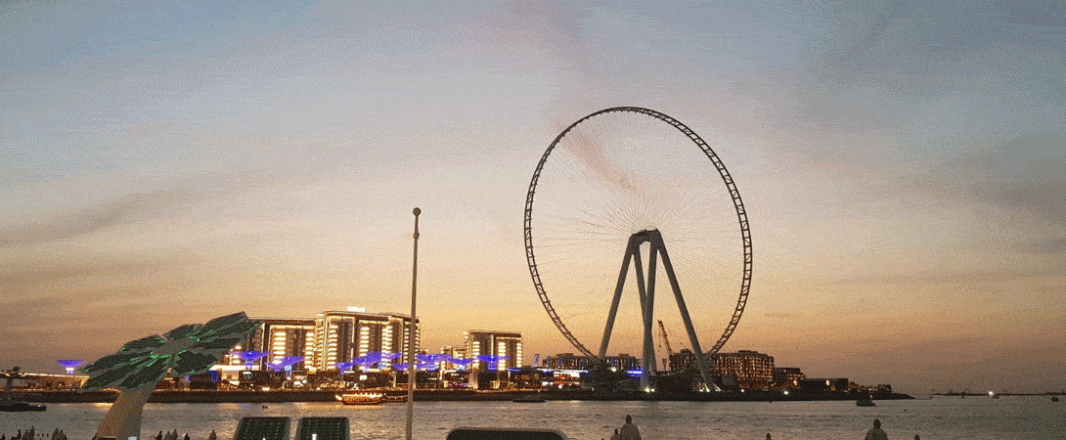
Walking around the Dubai Marina last night, with its lit-up skyscrapers, luxury yachts and cruisers, and dotted with restaurants, bars, cafes and shops, I felt like I was back in Singapore walking along Clarke Quay and Boat Quay on the Singapore River.
The difference is things seem so much bigger and brighter in Dubai, except I remind myself, what I see on the outside is often not what’s really on the inside. Like most travellers, peering “Through The Looking Glass” at places we visit, I wonder what really goes on behind the scenes.
And that is what we will dig into tomorrow. See you in Dubai.