
In today’s evolving digital environment online travel agents (OTAs) in Asia Pacific (APAC) are facing pressure from numerous fronts – from travellers to suppliers to new players – and they must reinvent for future growth.
This is the advice of Amadeus to OTAs in its latest report on the future of online travel, stressing the need for them to embrace merchandising, reinvent retail flow and form strategic partnerships to stay relevant. This is because the APAC online travel markets are no longer “isolated ecosystems” although “diverse in their opportunities and challenges”.
OTAs must also heed that consolidation is on the rise. Big agencies have become mega brands and are acquiring smaller travel agencies to expand their product offerings and customer base. At the same time, local brands are defeating “the giants” through innovative solutions that focus on niche products or services that deliver unique travel experiences.
The demands of the always-on travellers are also changing. They want the same level of choice, personalised service and consistency across channels and devices to compare and choose their desired options.
“This will lead to a paradigm shift when it comes to flight retailing, where online travel players will need to rethink their search and booking flows for consumers to find the right product,” Amadeus said, pointing out “the competition is well and truly on to attract a traveller who is less loyal than ever before.”
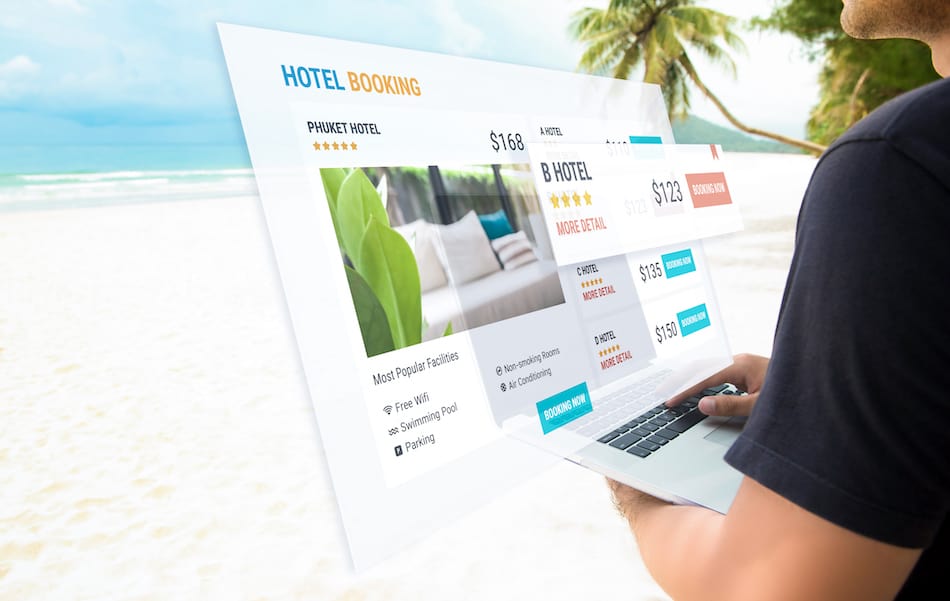
(Image credit: Kritchanut/Getty Images)
Amid this shake up the technology company offers three recommendations for OTAs to stay competitive.
1. Ride the merchandising trend
Sebastien Gibergues, Amadeus vice president, online travel Asia Pacific, said merchandising is at the core of fundamental change taking place in the global airline distribution space.
“The unbundling of airlines’ ancillary products and services such as baggage fees, pre-assigned seats and airport transfers has been a major move for airlines to compete with attractive cheap fares. Today, the ability to cross-sell and up-sell optional services is now critical to secure revenue.”
He suggested OTAs should explore new methods of merchandising to differentiate with and improve the user shopping experience. “This could include providing customised offers for customers at various price points through frequent flyer numbers, or assembling bundles for customers such bundling airfares with seat selections and extra baggage.”
Online travel company eDreams ODIGEO, for example, has worked with Amadeus on its merchandising strategy. It was one of the first players in Europe to implement the sale of extra baggage and seat selection, enabling it offer more personalised products and services.
2. Reinvent retail flow to meet traveller demand
“Travel offer unbundling will continue to fragment content, which is good news for online travel companies that will play an important role in helping consumers purchase the right product,” said Gibergues. “However, the challenge will be how to best aggregate and normalise travel content from multiple sources, so it can be searched and compared by travel sellers and travellers.”

Sebastien Gibergues: Unbunding travel offers will help consumers purchase the right product.
OTAs have to reinvent their retail flow to satisfy the customers’ demand for “search and compare” involving the combination of all functionalities
“This means not only displaying the cheapest possible fares but also offering choice – fare families, baggage, seat selection and others – all in one simple, easy to use booking flow,” Gibergues added.
India-based B2C online travel aggregator Goibibo, a subsidiary of Go-MakeMyTrip group, is another company that is ‘transforming’. It is experimenting with the creation of its own offers to help travellers better understand and compare prices of fare families across airlines.
Creating OTA branded bundles could allow consumers to identify what they need (economy with extra luggage, premium economy with no exchange fees) across multiple airlines. This also allows Goibibo to complement with missing services that would allow like-for-like comparison with other suppliers.
3. Build mutually beneficial partnerships across the industry
Gibergues said with “content chaos” across the industry the challenge for OTAs is finding the best way to aggregate and normalise travel content from multiple sources.
“Travel suppliers are seeking more control over how their products are displayed and sold across channels, which will bring both challenges and opportunities for online travel companies. Therefore, it is critical for online travel companies to build strategic partnerships in the industry – whether that be with technology providers, airlines or corporate travel companies.”
Partnerships would be the answer for travel companies to have “the widest and most accurate content choice to offer their customers, to deliver frictionless, end-to-end travel experiences,” Gibergues added.
Online travel company Travix is an example of a company forming such partnerships. It is working with Amadeus to enable NDC content to sit alongside traditional EDIFACT technology so that it can be found through one search and displayed in an aggregated way to allow for easy comparison.
“The online travel market will be an exciting one to watch in the coming years”, Gibergues commented. “Innovation will continue to spark growth and change across the sector. To remain competitive and ensure future growth online travel companies in Asia Pacific will need to rethink their merchandising and retail flows, as well as look for opportunities to collaborate with others across the travel industry.”
Download the whitepaper on the Future of Online Travel here.
• Featured image credit: NicoElNino/Getty Images