
During its darkest days in the eye of the storm, Trip.com found itself handling “tens of thousands” of domestic flights and hotels cancellations a day. Thankfully, Yudong Tan, CTO and vice president, flight business, who described that time as “really bad”, said the group had invested heavily in automation and so was able to handle 95% of cancellations automatically.
“That was very smooth.”
However, in February, cancellations came in for the international markets and even though it had also invested in automation, only 50-60% of cancellations could be handled automatically “due to other issues”.
Tan said that created a huge backlog of international queries, which took more than a month to clear. While handling that backlog, it nevertheless invested more engineering resources to handling the international sector so that, by the end of February, the automation rate of cancellations was around 70-80%.
Thus, when the second wave of cancellations came in from international markets around mid-March, it was in a better position to cope compared with January and February, related Tan.
Traveloka experienced a similar problem. Saying Indonesia is “in the early stages” of Covid-19, Caesar Indra, CEO, Transport, said it first felt the impact in Thailand when it saw declines in travel and experiences bookings and massive spike in cancellations and refunds requests in February.
Then in March, things went downhill when Indonesia reported the first coronavirus case. “We saw a massive refund request to our customer care centres, 10 times the usual volume.”
Again, because the majority of its business was domestic, it was able to handle this through automation. However, when it came to international flights, Indra said, “There is a gap and it’s highly dependent on multiple partners – the GDS, ATPCO and airlines – and it’s hard to be automated.”
Indra said the challenge is the lack of standardisation in refund policies and “some are submitted by free text which is readable by agents but not as easy to be automated”.
“If we can, as an industry, agree on a certain protocol in refund and scheduling policies and have all the airlines commit to it, it would be much easier to be automated and improve efficiencies across the value chain.”
Tan agreed, saying that although there was already protocol defined by ATPCO, “not all airlines fully comply and not all airlines move at the same pace. There are also low cost carriers which are not subscribed to ATPCO. To resolve this, every party in the industry – GDS, travel agents, airlines – needs to work together to solve the problem.”

A true stress test of customer care that needs more tech to solve
The crisis also challenged the traditional call centre model. When “social distancing” guidelines enforced by local governments prevented its staff from going to the site in the Philippines, Indra confessed “it was a bit of a shock”.
However, based on what it had seen happened in China – Trip.com also moved its 15,000 employees in its call centres in China to remote work during lockdown – it “immediately prepared all infrastructure for call centre agents to be able to work remotely”.
“This is a great difference from the traditional call centre model.”
He described the situation as “a true stress test of customer care” – when you get a sudden spike in cancellations of bookings accumulated over a few months compressed into a few days.
While he believes the human touch is important in managing emotions, this crisis has shown how important technology is at the back end. “We were already building a tech solution to scale up the back end and Covid-19 has accelerated the programme and investment in this area.
“It is important for us and other OTAs to have a tech back office operation which is equally as important as bookings. The most important thing is, the customer must get their money back.”
He said Covid-19 presented “an exponential problem that cannot be solved with a linear approach”.
Jane Lim, VP, APAC Strategy & Operations, Tripadvisor commented, “you need the human touch, but you need technology to enable it at scale… this crisis has brought out the fact that people need to support people, but you need to invest in product and technology to people supporting people.”
Tan said the key lesson learnt from Covid-19 is “we need to invest more in technology to smoothen the customer experience especially when you are faced with massive requests”.
Taking steps for recovery – green shoots and beyond travel services
Another question Covid-19 has raised for Tan is, how can travel companies adapt better to the digital world?
“If you look at the mobile apps in China and you see which ones have become more popular the past two months, they are pure online apps – online games, online shopping, food delivery. If you can serve your clients without a need to reach out in person, that business can survive.”
Technology can also play a role in spurring recovery. Drawing on her experience working with e-commerce site, Shopee, Lim said the power of an online community can be used to connect a community of sellers, to source help and support across the industry.
For example, Tripadvisor is working on seeding forums to provide greater assistance, as well as looking at one-on-one consultations with impacted travel businesses on how they can develop their product and prepare themselves for the rebound.
On the recovery front, Tan said it was working on several initiatives to nurture the green shoots it was seeing in the Chinese domestic market. Pre-sale hotel products are selling well, it is looking at cross-selling between flights and hotels and it was testing out new marketing channels such as Duoyin (Chinese version of TikTok) and WeChat with chairman James Liang himself as the spokesperson.
For Traveloka, Indra said that given it was still in the early stages of the crisis, “it is extremely important to assist the customer during this difficult period. It’s taken a toll on their emotions and we believe the way to stay engaged is to do whatever we can to handle cancellations or rescheduling. It sounds basic but it means a lot to them.”
Traveloka is also fortunate in that it sells other products beyond travel. Its financial services, rolled out in 2018, has become very relevant to customers during the Stay-Home period, where people are paying their bills over the app as well as buying more mobile data plans. Pay Later, its digital/offline credit card, is also seeing good transactions. “We will continue to invest and accelerate these services.”
On whether product or price will lead the way towards recovery, Indra believes that “there will be a need to incentivise demand and it is unlikely suppliers will jack up prices. We will go into demand recovery which will lead to lower prices”.
Collaboration needed for all players to emerge stronger
Overall, the crisis calls for an industry collaborative effort to identify and ameliorate weaknesses across the value chain. Covid-19 has forced companies to ask questions about how they must design their products for the future.
Said Indra, “Covid-19 is a traumatic event to businesses and consumers and there are some side effects that will stick around… consumers will become more aware of hygiene and more information will be required of all products and it’s up to us to integrate all that information [on our platforms]. There will also be more considerations around flexibility – which was previously taken for granted – it may become an important criteria as customers become more sensitive to [booking policies].”
Referring to the 100% Refund Guarantee product it started selling in fourth quarter 2019, he said, such a product will become even more popular.
Tan added that reliability will also become critical in how consumers assess travel products, whether in flights, hotels or experiences. He argued that the need for clearer policies, better service quality and overall customer experience must be the top priority, which could only truly be achieved through better collaboration between all players in the value chain.
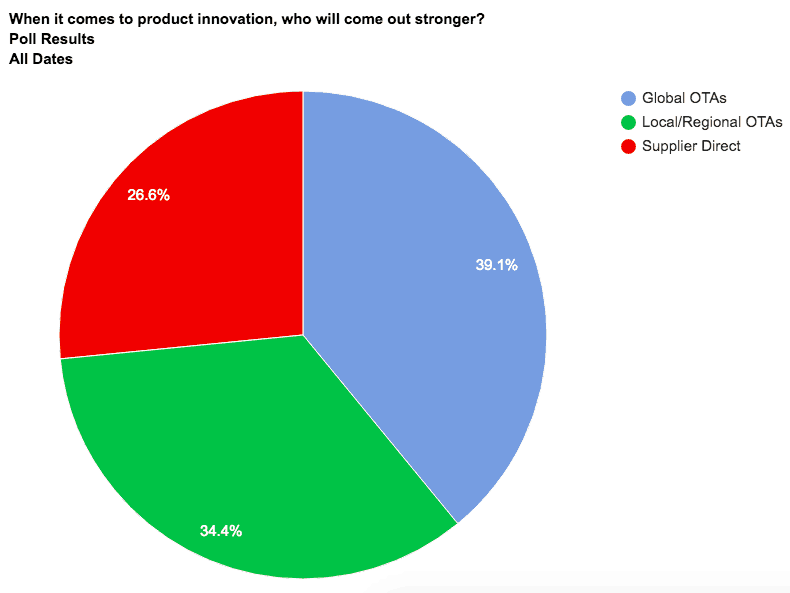
Indeed, when the question was asked about who would emerge stronger – global or regional OTAs or supplier direct – Indra said, “I don’t think a single player can come out of this stronger without the collaboration of the others in the value chain.”
Lead image: Getty Images