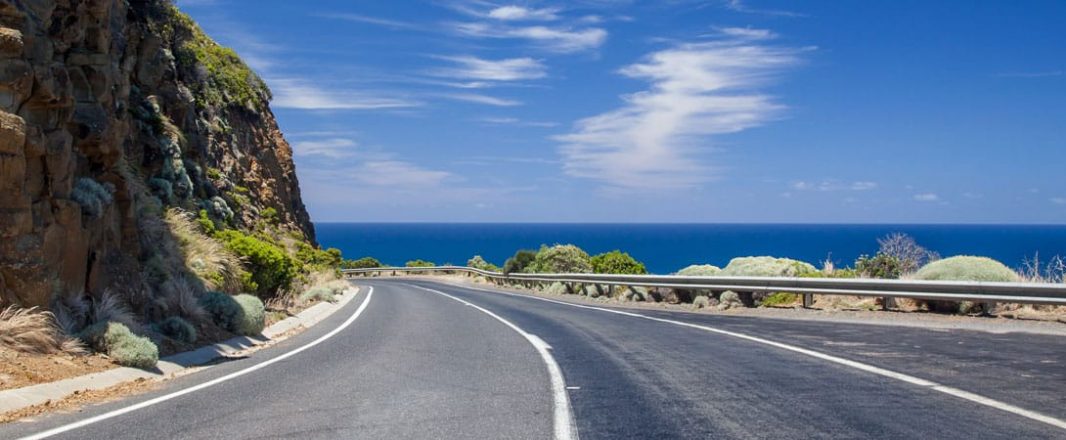
Australians may soon be able to go on road trips again as Prime Minister Scott Morrison hopes domestic travel within Australia will be allowed by the July school holidays.
Morrison has foreshadowed a return to intra-state travel under the Federal Government’s three phase plan to ease coronavirus restrictions across the country. He said the National Cabinet has discussed the reopening of state borders, which could be within weeks,
According to the PM, the return of domestic travel could generate up to $20 billion a year for Australian tourism businesses.
Last weekend restaurants, cafes and bars re-opened in most parts of Australia, including New South Wales, Queensland and the Norther Territory after a two-month lockdown to stem the spread of coronavirus. Groups of 10 people are also allowed to meet for recreation in parks, at playgrounds or for barbecues. Swimming pools also re-opened with limitation on the number of people using the facility.
Meanwhile, Centre for Aviation (CAPA) sees a 60% recovery in domestic (Australia) air capacity by this Christmas.
Based on a combination of analysis of government statements, airline projections and underlying demand, CAPA’s newly-launched Airline Capacity Model projects a slow, phased recovery in domestic air capacity in Australia through the remainder of this year. Domestic capacity is forecast to reach 37% of last year’s volume by early July, 49% the October school holidays and 60% by mid-December.
According to CAPA, the Airline Capacity Model was developed to provide the aviation and travel industry with a robust guide to future air capacity possibilities.
The aviation body expects a supply-led return over the coming three months as airlines tempt passengers back to the air with low fares whilst emphasising enhanced health and safety precautions.
“As demand rebuilds, supply (capacity and route network) will be adjusted to optimise yields and the market will steadily recover.” it added..
CAPA chairman Peter Harbison said Australia was one of the best positioned countries globally to suppress the first wave of Covid-19 infection.
“If this continues and we avoid a second outbreak, the Australian domestic air market could see some signs of life by mid-year and a steady improvement by Christmas-2020. However, we don’t expect to see 2019 levels of domestic flying reached again this year. International will be hit harder and potentially take multiple years to recover. However, this will be to the benefit of the domestic market – potentially also embracing trans-Tasman operations”.
He noted that the international markets are unlikely to recover quickly and the CAPA Airline Capacity Model sees international air capacity (seat numbers) still down by 92% year-on-year in July 2020, 86% in October and 85% in December.
• Featured image credit (Great Ocean Road in Victoria, Australia): kubyshin/Getty Images