Planning your summer holiday? Well even if we can’t travel yet, we can still do so with our minds. Here are 25 books you can take with you to the desert island of your imagination. We asked five avid book readers of the WiT Community to share their choices and the reasons why.
Fritz Demopoulos, CEO, Queen’s Road Capital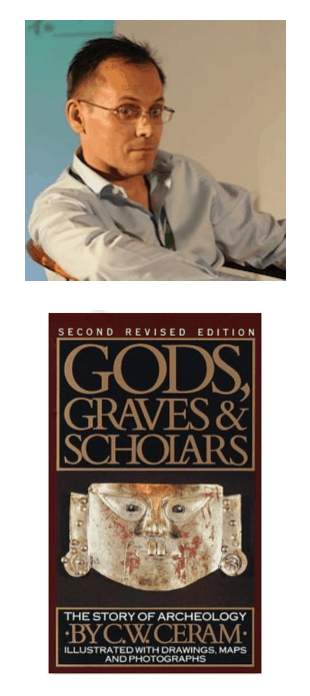
Gods, Graves & Scholars (C.W. Ceram)
“It’s book about the history of archaeology … when it was run by hobbyists and enthusiasts, as opposed to academics. Mr Long, in his world history class, really opened my eyes to the world for the first time.”
The Seven Pillars of Wisdom (T.E. Lawrence)
“Winston Churchill said this was the greatest adventure story ever. During your first job, you should think about it like having an adventure in life … taking our first baby steps and starting our career. That’s what this book is about. It’s like there’s an adventure awaiting over the next 30 or 40 years.”
Romance of the Three Kingdoms (Luo Guanzhong)
“It’s my first year in mainland China. Romance of the Three Kingdoms is one of the classics. It’s similar to the Homeric poems in the West. What’s fascinating about this book is to really fundamentally understand Chinese culture and the Chinese language, you really need to understand Romance of the Three Kingdoms because there are so many references from this book to Chinese language and culture.”
Burn Rate (Michael Wolff)
“It’s my first startup. This book … is a cheeky alternative view of the golden years during Silicon Valley. Michael Wolff takes a very funny, you could say anti-hero approach to someone who has successes and failures. That book inspired us to not take ourselves too seriously. The key lesson is, let’s have some fun and not take yourself too seriously.”
The Black Cloud (Fred Hoyle)
“Fred Hoyle was a UK-based cosmologist. He actually coined the term the Big Bang … and he wrote this sci-fi book about this gaseous super organism, which is as big as our planet floating around in space. He had a different vision on what possibly sentient life could be like, in the universe.”
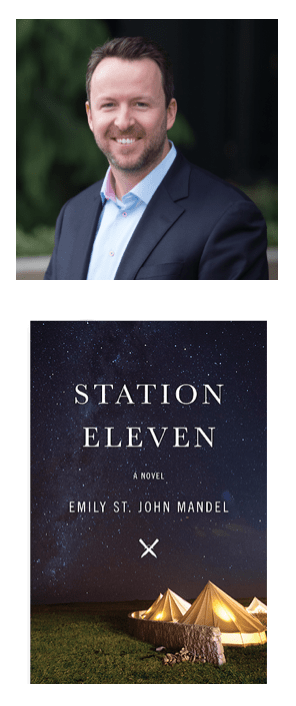 Greg Schulze, Senior Vice President, Expedia Group “I chose five books like favorites that have some meaning to me in my life. I did rule out any business books or self-help books which do have their place but come on, you don’t bring them to a deserted island.”
Prayer for Owen Meany (John Irving)
“John Irving is a good place to start if you only have five books. I’ve read this book a few times, it’s just a classic novel with a rich story. Beautiful language – John Irving just brings places and people to life on the pages. A lot of enjoyment and just a lot to think about with that story.”
Station Eleven (Emily St John Mandel)
“My daughter and I share this. We both enjoy dystopian novels and this would be one of our favorites. I don’t know that I would recommend it right now because it’s kind of like COVID-19, but worse, a lot worse. But if I’m stranded on an island, I would enjoy a book that shows the resiliency of human spirit under crazy adversity.”
A Tree Grows in Brooklyn (Betty Smith)
“Brooklyn is a part of New York; my mother is a New Yorker. This is one of her favorite books. It’s about a girl who grows up really poor in New York in the early 20th century. It’s a touching story about people living difficult lives – the characters have all been pressure tested and really come alive. On a deserted island, you want to really dive into the world that you’re reading about. It would also remind me of my mum who will be happy to hear that I chose this book.”
The Bible
The Bible is one that people tend to love or hate. But it’s important for me and especially if I’m facing my last days alone, it’s a book that contains really incredible stories. It’s a spiritual book … about trying to have balance in life where we need to really develop our intellectual, emotional, spiritual and physical selves. It’s also just really long and multifaceted so I think it will keep you busy.”
Different Seasons (Stephen King)
“I am definitely cheating on this because it’s actually four stories. Three of them have been made into movies – Shawshank Redemption and Stand By Me. I don’t think it’s the greatest literature probably; he is an incredible author and just a cool person. If we had to vote the author that you’d want on your island, I would probably vote for Stephen King.”
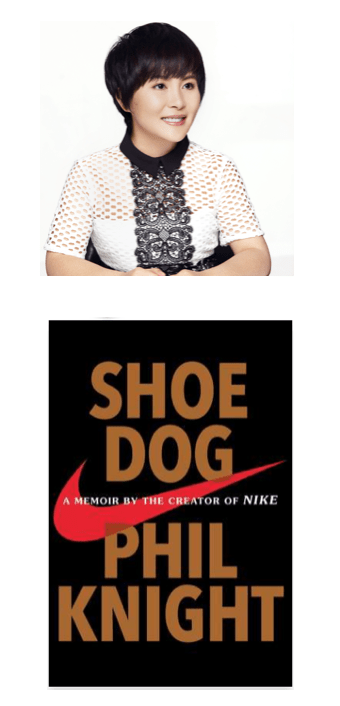 Melissa Yang, Co-founder, Tujia
How to Raise Successful People (Esther Wojcicki)
“I have a 12-year-old daughter, this is the best parenting book I’ve ever read. What I learned is to figure out what kind of role a parent should play in their kid’s life – I’m just a helper to my daughter to help her get values and skills to be better prepared for life, to love unconditionally, and how can she become the best person she could become. After reading it, I recommended it to my husband. We feel like we have a better relationship with our daughter, maybe partially due to the book.”
Shoe Dog (Phil Knight)
“I’m also an entrepreneur in China. Recently, I also start to be an investor to help entrepreneurs. This book really resonates with entrepreneurs, what it takes to build a company. In the book, Phil Knight (founder of Nike) opens up in a way very few CEOs are willing to do so. He tells his story of building it from scratch to IPO. as honestly as he can.
“At his most difficult times, Phil got the habit of running six miles a day – this is what he said in the book. “When you run around … you have no real destination, at least none that can fully justify the effort. The act itself becomes a destination. It’s not just that there’s no finish line. It’s that you define the finish line … it’s all in how you frame it, how you sell it to yourself.”
Algorithms to Live By (Brian Christian)
“My major at college is computer science and at work, we do a lot of these algorithms. But to most people, algorithms are very remote. This book actually explores how computer algorithms can be applied to our everyday life and help us make decisions.”
When Breath Becomes Air (Paul Kalanith)
“At age of 36, Paul had almost finished a decade of training as a neurosurgeon, and then he was diagnosed with stage four lung cancer. This book recalls his transformation from naive medical student to a neurosurgeon and finally, to a patient and a new father confronting his own mortality.
“He wrote most of the book and his wife finished the last chapter because he died. It’s beautifully written. Throughout his life, Paul has been consistently searching for purpose and the meaning of life. He asked some questions, for instance, what makes life worth living in the face of death? What does it mean to have a child?
“This book is very impressive and unforgettable, not only because of the content but also because of the timing. When I read this book a couple of years ago, I was going through a major change of my work. I was reflecting about my past and was also searching for meaning and purpose. This book actually helped me a lot.”
The Little Prince (Antoine De Saint-Exupery)
“This is a classic so everybody must know it. This is a book about love and growth. It’s not just a fairy tale for kids. It’s a book for adults, for everyone.”
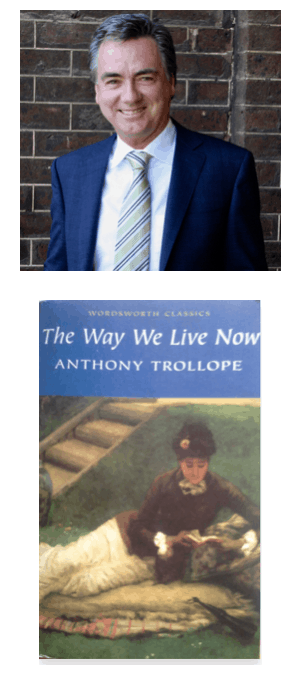 Rod Cuthbert, Founder, Viator
A Suitable Boy (Vikram Seth)
“This one of the longest books ever written in the English language. It transports you to India in the 1950s. It tells the story of a young woman and her search for a husband, a suitable husband. But that’s only one layer of the book. The other layers deal with the Indian caste system, the ongoing strife between Muslims and Hindus, land reform, which is a really crucial issue at the time because the British had just left – so it was an amazing time of great disruption.
“It also deals on another level with an interesting topic – the place of musicians and courtesans in society. It also deals with the pros and cons of marriages – love vs arranged marriages. We all know the statistics on that.”
The Way We Live Now (Anthony Trollope)
“Although it’s set in the 1850s, and tells the story of a scammer, it really could be a story about Bernie Madoff, Michael Milken, Elizabeth Holmes or Adam Neumann – these larger than life characters with such charismatic appeal that people are drawn to and want to be in their society. It deals with issues – these sorts of scandals have been popping up forever since we’ve had society and they’ll continue to pop up in the future. This is just a beautiful story of how one of them occurred in England in the 19th century.”
Tortilla Flat (John Steinbeck)
“Steinbeck wrote this in 1935. He was generally regarded as one of the greatest writers of the 20th century. The Nobel Committee obviously thought so because they gave him their prize in 1962. It’s a story about a guy called Danny who returns from the First World War to Monterey, California, penniless. There’s a lot of parallels between this story and that of King Arthur and the Knights of the Round Table. Both gathered a group of friends around them, they both had a lot of problems they had to overcome, they had oaths of allegiance …
“One of the messages that come through is that these guys are penniless, all they have is a roof over their head, but all they need to be perfectly happy is to wake up in the morning sunshine, surrounded by their friends. I read this book to be reminded of the fact that material possessions don’t really factor into happiness as much as you might think that they do.”
The Betrothed (Alessandro Manzoni)
“If Russia has War and Peace, and English has Dickens, then Italy has this book. It’s the story of a young couple who wish to marry but are refused by a local priest who’s corrupt and controlled by the feudal lord. It’s set against the background of the plague in Milan in 1630. It deals with the struggle between good and evil principally within the Catholic Church, good priests and really terrible priests – but one of the key messages is love conquers all.”
Dictionary (of any kind)
“My final book is the dictionary for Australians – the Macquarie dictionary. If you’re in the Americas, it’s Webster’s. The Oxford Dictionary will do. Lots of stories in here. Lots of great words, you can open up at any page.”
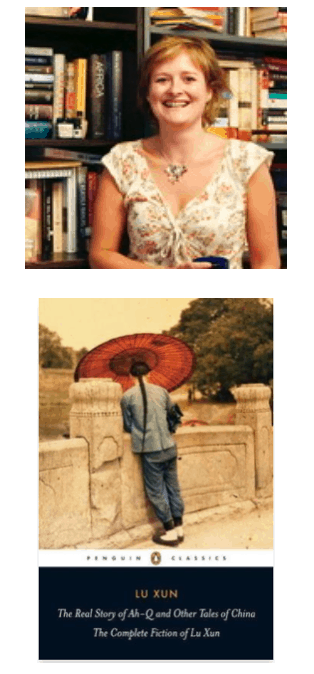 Jo Lusby, Co-founder, Pixie B
Circles in a Forest (Dalene Matthee)
“A South African modern classic, written in the 1980s, set in the 1800s. It’s a stunning story about a hermit called Saul who lives as a wood cutter in the forest. He’s living very much in harmony with nature. It’s in the time of the gold rush in South Africa. There’s a lot of threats to his environment. It’s a tough life. It’s an Afrikaans novel. It’s a story of the tough African spirit, the sort of push on through adversity, but it’s also about balance and nature. It’s terrifying and it’s romantic. It’s just a massive story of nature.”
The Real Story of Ah-Q and other stories, the collected short fiction of Lu Xun
“Luxun is often called the George Orwell of Chinese writing. He’s a superb fiction writer and an essayist. He’s known to hold up a mirror to the Chinese psyche, he’s quite critical of what he perceives as being flaws in the national character. He was born in the late 1900s, he was writing from 1918 onwards, and so he’s charting a world that’s in transformation.
“He looks at class, status, privilege, all the big issues –he’s known for writing in the vernacular, which is why if you want to start reading Chinese, it is a good place to start because it’s very narrative as opposed to speech driven writing.”
The Wizard of the Crow (N’gugi Wa Thiongo)
“I read this when it was first published back in 2006. He’s one of Kenya’s most important writers. It’s really magic realism. He writes this novel set in a fictional African country where it’s ruled by an autocratic tyrant. Everybody in the book is walking around looking for the Wizard of the Crow, who will get everybody out of trouble and save everybody in this sort of post-colonial, corrupt, self-defining crossroads period.
“It’s almost 800 pages long. It’s crazy, trippy, dreamy. It’s deep in African myths, and it’s not a country I’ve ever visited. I feel as though I can experience something of the country through this story.”
Roast Chicken and other stories (Simon Hopkinson)
“It’s a brilliant cookbook. It’s a little paperback – no photos of food in it or anything. It’s stories and anecdotes, and it’s got a chapter on pigeons. So if a pigeon lands on my island, I can work out how I can cut it up, how I can cook it, how I can eat it. If a fish happens to sort of fall into my lap …”
On Writing (Stephen King)
“I do some teaching of creative writing. I also work with a lot of authors, particularly first time novelists. This book is just a masterclass. You read this book and you actually believe at the end of it, you too will write like Stephen King. It’s how he writes. It’s a diary of how it feels when he writes, it’s about how hard it is to write. It has advice – the only thing you need to write a novel is a room with the door that you can close because it shuts you in and it gives everybody else the signal that you are writing and you mustn’t be disturbed.
“He talks about cutting TV out of your life – what you have to do is sit alone at your desk preferably in front of a blank wall, that’s when he suggests you are engaging in the deepest possible sense with your own imagination.
“So I’m going to actually stop being somebody that lectures people how to write books for a living and when I’m on my island, I’m going to turn into a writer and I have to scribble in the sand.”
Featured image credit: Getty Images