LOI’S mission gets momentum from Covid-cost pressure and sustainability movement.
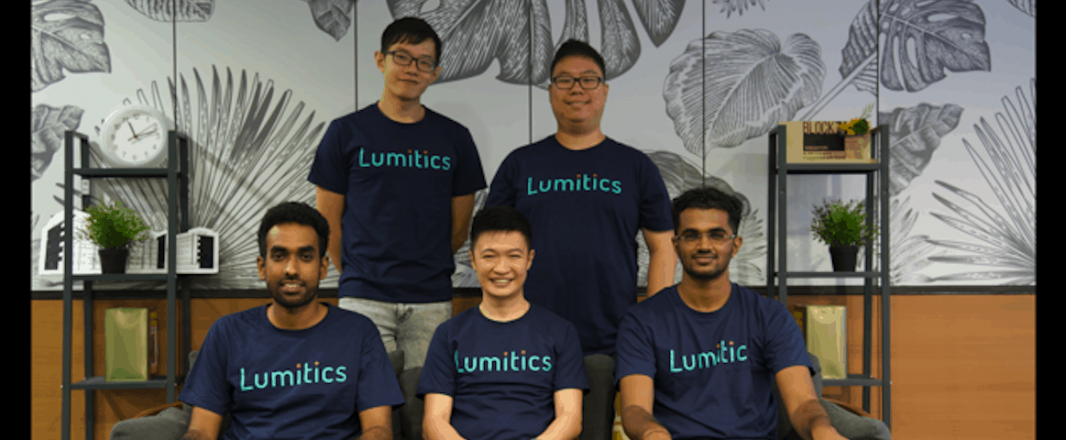
When Lumitics’ founder and CEO Raynor Loi hit upon the idea of tackling the issue of food waste in Singapore as a 22-year-old finance undergraduate, he would not have imagined having a platform to speak to ministers about regulations around food waste nor being counted in the lineup of 25 winning global startups at United Nations World Tourism Organisation’s Sustainable Development Goals Startup competition.
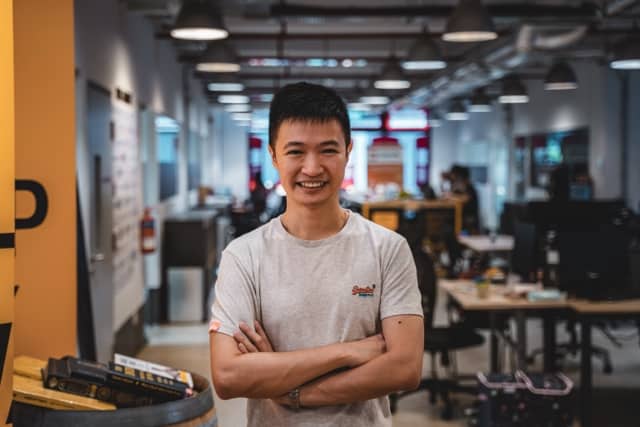 But now 26, Loi (pictured left) has done that and then some. Speaking to WiT about Lumitics’ recent UNWTO award for Sustainable Consumption and Production, Loi says this is “further validation that the food waste problem is one that is pressing and needs immediate attention”.
Immediate attention meant Loi put pause to his undergraduate studies – “don’t tell my parents, but I may not go back to school”.
Speaking about the beginnings of Lumitics, he said, “There were a lot of solutions in the recycling space for turning waste into compost, and some solutions that turn food waste into grey water that can then be discharged by the conventional sewage system; and a few companies, charities and NGOs were in the redistribution space – taking food that is still safe for consumption and redistributing it to many.
“What I realised was there were almost no solutions or companies in the prevention space. How can food waste be prevented or minimised at source? Slowly, but surely, as I read more about the problem and what’s being done, the conviction that prevention is far more important than recycling and redistribution grew,” said Loi.
Soon, Loi with an 18-year-old student whom he met at an accelerator programme, came to the idea and solution of a smart waste tracker to track food waste.
Lumitics’ data shows avoidable food waste accounts for 15-20% of hotels’ food costs
Fast forward a few years and Loi with his team have convinced several hotels and airlines to use its food waste tracker, Insight, to find out how much “avoidable waste” is being generated in their kitchen. Insight sits above the waste collection bin, captures images of the food is able to track the type and amount of waste that goes into bin using AI image recognition technology.

With such data analysed and fed back to the kitchen planning staff and chef, kitchens are then able to “minimize waste at the source”.
“Based on the data we’re getting, on average, we see that avoidable food waste accounts for about 15 to 20% of the hotel’s food costs,” said Loi. “Considering how much these large hotels spend on food on an annual basis, it really is a lot.”
Loi says bringing up the numbers makes it easier to convince kitchens that this is something they need to address. The message around “trying to be green and saving the world” is the icing on the cake.
“This is not just about fulfilling your moral obligation. I’m talking about helping your business, and really driving those costs down. You could save six to seven figures on an annual basis,” said Loi.
Loi said the best way to help hotels get a handle on this problem is to use a data-driven approach. “To tell the hotel that your guests don’t want 30 dishes and 15 is enough may not be the most helpful of conversations. Rather, using data, we can show them that the five new dishes they introduced in their menu and that have been on rotation for the last month were also the top five wasted items, indicating that they weren’t well received and should be taken out of the menu rotation. These types of conversations are more meaningful and productive because it is evidence based. We are able to show that we can really move the needle,” he added.
Enough waste to go round – Covid has put focus on cost control and sustainability
While acknowledging that last year was challenging, Loi said towards the end of the year, hotels and airlines were starting to call him again as they considered reopening. This time, he said, many were more concerned about minimizing wastage as there were more cost pressures to manage.
Plus, the Singapore government has announced its Green Plan 2030 which will put pressure on corporations to operate more sustainably.
“We’ve been really encouraged that a lot of hotels and airlines recognise that tackling food waste needs to be a priority for two reasons. One is cost control. Two, with every year that passes, we come closer to the year 2030 – a milestone year for hotels and large airlines because many have made public announcements about how they will reduce food waste by a certain percentage by 2030.
“They realise they need to start taking action and they have reaffirmed that moving forward, they see Lumitics as part of their plans for their sustainability-related goals,” said Loi.
Loi said there are a few other companies in the world that have similar solutions and from which Lumitics takes inspiration. But in Asia, Lumitics is leading the way.
However, Loi said there are not enough companies doing what they are doing. “There are thousands of hotels, hundreds of airlines, not to mention many more cruise ships. Farms, food manufacturers all need help with dealing with food waste. If anyone is bold enough, please copy us. Honestly, more need to go into this space – there is enough to go around,” he added.
When asked where the weakest links are within the travel trade, he mentioned five-star luxury hotels and corporate MICE events.
“When we walk into a five-star hotel or at a MICE event, we expect to see large buffet spreads, a full seafood station, meat station with maybe 20 dishes, and I think hotels have to keep up with that or they may lose business,” said Loi.
But on the flipside, he said a trend in its favour is one where corporate MICE clients are starting to request from planners or hotels a sustainability report.
“It is our hope that as more corporates become aware of these things, they will soon realise that they don’t need 30 dishes. We can tell the hotels we need only 10 dishes because 30 dishes will result in a lot of waste,” he said.
With this newly-minted title by UNWTO, what is Lumitics’ goal for 2021? “In 2019, our solution helped our partners reduce up to 40% of their food waste which translates into a total of more than 100,000 meals being saved. This year, we plan to triple our impact,” he said.
Meanwhile, Loi is encouraged by progress he has seen in all fronts, including with legislation which he points out as being very important. “Legislation plays a big role. When incentives such as tax breaks are aligned, corporates move,” he said.
“I’ve been in conversations with some ministers here in Singapore, engaging with the various agencies to think about how Singapore can begin that process of legislating things to help.
“I am encouraged that things are starting to move. When I first started four years ago, I was really screaming to anybody who was willing to listen about how we should be enacting certain policies. But finally, things are really moving. I think by the end of the year, hopefully something will be passed into legislation. I can’t say too much about it right now because it’s going through review, but I’m encouraged and I’m excited.”