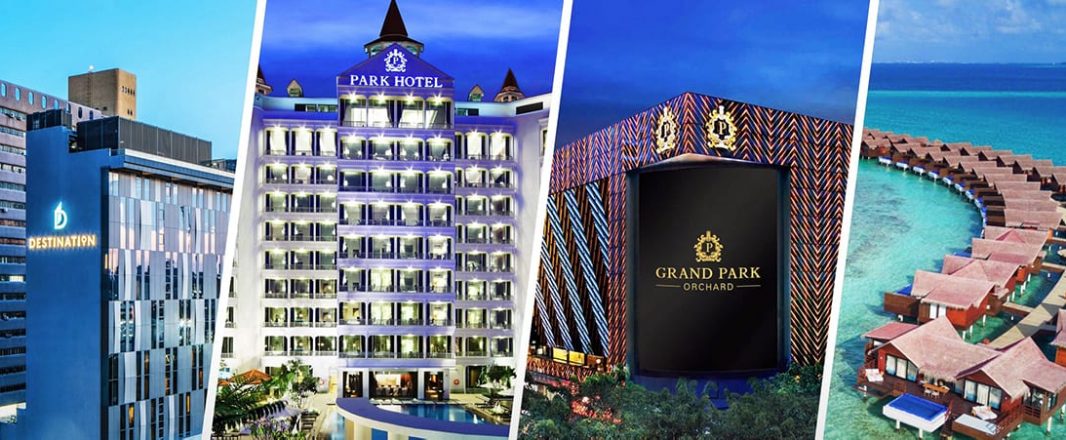
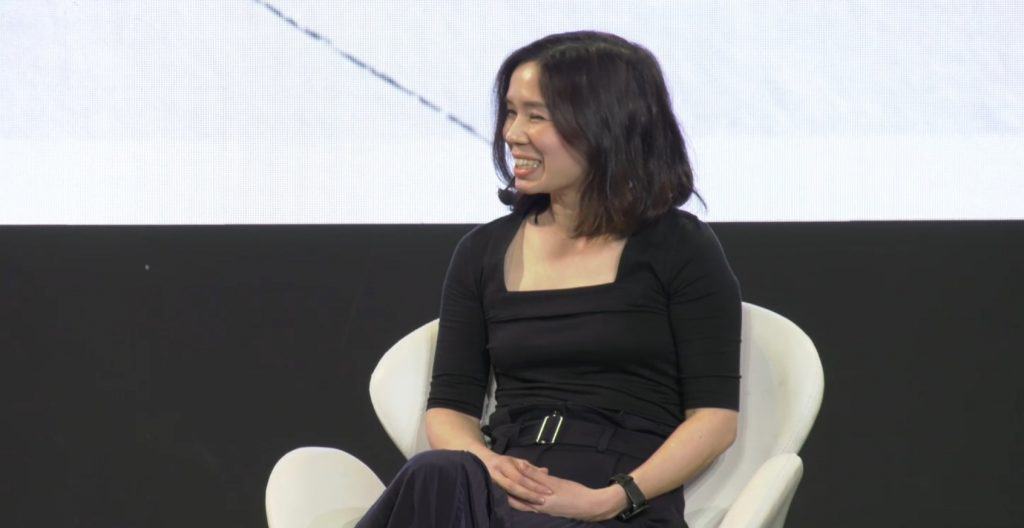
A new generation hotelier, Shin Hui Tan brings fresh perspectives to hospitality. The grand-daughter of renowned banker Wee Cho Yaw (United Overseas Bank), she spent four years in finance and private equity before joining Park Hotel Group in 2009, where she leads commercial and brand strategy. In particular, she is known for her views on environmental and community issues and is actively driving the triple bottom line of People, Planet and Profit for Park Hotel Group. In this interview during the WiT Travel Roadshow, Episode 4, she talks about how Covid has influenced those three pillars.
Q: Let’s get to know you personally first. You come from distinguished roots – your grandfather is Wee Cho Yaw, the founder of United Overseas Bank, and the UOB Group has huge interests in real estate and hospitality. What was the best lesson your grandfather taught you?
One of the few things that he has taught me or I’ve learned by observing is his work ethic. He has amazing work ethic. Even into his 90s he’s still going to the office. Another lesson is from an owner’s perspective and thinking long term. As you know, (the business) was started by the family and it’s inextricably linked to the Wee family name, and I believe that commitment and long term is something to learn from.
Q: You were in private equity and consultancy until 2009 when you got engaged, married Allen Law (CEO of Park Hotel Group) and you decided to leave the world of finance to join him. You must have loved him a lot to give it all up for him?
I think those that know me, know I’m hardly considered romantic, and that’s a very romantic concept. What really happened was hospitality and real estate has always been quite close to my heart, the family has been in the business for a while. I guess I was in between roles and there was a very clear opportunity to make a difference with Park Hotels Group, which is a fraction of its size today. And I decided to take the plunge. It was pretty considered – it is not an unfamiliar industry, firstly and secondly, maybe I was very optimistic that life partners could work together.
Q: You started on the ground floor – you weren’t parachuted in, you said – and you wrote press releases, handled communications, and later revenue and marketing. And now, 12 years later, you are executive director focused on the triple bottom line outcome. On People, share with us what Covid has done to fast track this pillar.
We kickstarted the YMCA Uplift Fund by seeding it with S$500,000. The fund supports those who saw material destruction of their income with priority given to travel and hospitality businesses, F&B, travel agents and attractions.
We prioritised our staff. While we introduced cost controls we had zero retrenchments. We have become more considerate of staff needs and going forward, we will change the way we do staff engagement – for example, family days we will do smaller groups, and activities will be around things like volunteering and visits to hydroponic farms.
Work From Home – we started doing this from last February and we’ve found that our staff are keen to continue and we will probably do 60%/40% in future.
Q: You also spoke about an investment in a new tech stack that will increase productivity, create value-added work for staff and enhance the customer experience.
Today, if you have cash flow you would either do renovations or enhancements, or you would invest in making sure that your business is prepped for the future. We’ve looked at all three and, specifically to the tech stack, we are looking at how we can enhance our customer experience. There has been an acceleration and digitisation of the hospitality industry, as many have already alluded to. What we have done is take a close look at our operations, we already have one hotel that is at the forefront of this by having mobile check-ins, keyless access and no, there are no buttons in the room. In fact, you can all access it via an app.
Now we are looking at extending that experience to the rest. Today’s consumers are online more than before and I don’t think it’s reversible, that means they’re not going to go back.
Q: You have spoken about robotics and automation that will release staff to do more value-added work.
My personal take on robotics is we’ve seen some of the implementations in Singapore, the government has also given grants on that. I think it’s still a bit far fetched to say that you will replace humans. I don’t think that robotics is going to come on in a big way. One thing that hoteliers will definitely have to change is the mentality around digitalisation – we have to be faster to adopt, we have to have more open source platforms, ecosystems that can plug into other ecosystems. If it’s closed, a lot of things can’t be done, which is what we probably experienced during this pandemic.
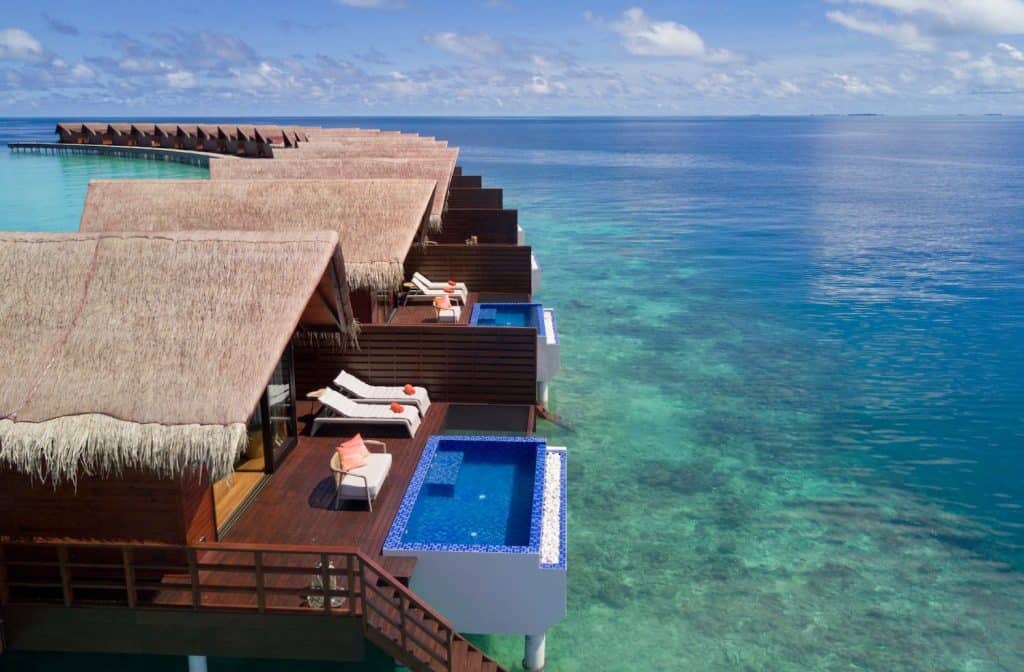
Q: Let’s move onto Planet. Your Grand Park City Hall property has won several awards – Platinum Green Mark from the BCA (Building & Construction Authority), the Singapore Green Hotel Award and the HICAP Sustainable Award in 2019 for Climate Action. The Grand Park Kodhipparu in Maldives has gone solar power – and this initiative will reduce resort’s carbon emissions, saving up to 150,000 litres of diesel fuel annually. What other big scale initiatives are you taking with your other properties?
Before Covid happened we had quite a lot of plans. And one of them was reduce single use, not just plastics, just single use in general. But with Covid, with hygiene and safety considerations, single use has come back full force – takeaways and so on, so forth. So it does throw some of our plans into the air, but I think the philosophy is there – how do we continually reduce that?
And that might be changing some of our operations. For example, do people really need housekeeping every day? Can we have it as an opt-in as opposed to opt-out which is the default today?
With Grand Park City Hall, when we renovated, we knew what we wanted to achieve. Every time an opportunity comes through we relook at our equipment to see what falls in line with sustainability, and we invest in that.
Q: One of the biggest challenges in sustainability is measurability and that’s something you’ve been able to do with, say the Grand Park City Hall. The measures you took reduced water and energy consumption by 61.9% and 58.2% respectively, as well as a decrease in carbon emission by 58.2%. What has it done to profit?
Anything that you want to get done has to be measured. I am a firm proponent of that. And anything that you want done has to do with multiple things, not just the equipment, the tech but also the processes and the mindset, i.e. the people. So it has to come together. Unfortunately, that’s why it’s not so simple. What has it done to profit? Well, you save energy costs naturally, and it should flow into the bottom line. What people should do is to calculate what the payback period is because there is investment. There are certain ways you can defer some of these costs today, on grants, etc, so I would encourage people to look at that, then it will shorten your payback period but you definitely have to measure it.
Q: It’s like what you said about digitalisation of consumers, that it’s not reversible, likewise with hospitality and sustainability. This is a forward tide that cannot be rolled back, isn’t it?
To be honest, I’m not sure every hotelier thinks the same because there is a payback period, as I mentioned. And today, the default is dirty energy is cheaper. There is no CAPEX, right? So I think you have to ask yourself what your priorities are. Calculate the payback period, talk to your shareholders, or stakeholders and have an agreement on it. But I definitely think from Park Hotels Group’s perspective, if you believe in it, and you’re that path, there is no turning back.
Q: During Covid, PHG and Apricot Capital purchased a newly-built hotel in Kyoto – you bought it virtually? Has Covid created opportunities for distressed assets for hotel owners like yourself?
Well, technically we didn’t buy it online. We did a virtual tour but the paperwork was completed physically. We do see opportunities coming out, but we have not seen it in the scale that we expect it to. The level of forbearance that landlords, banks, governments have been willing to give and continue to give has been astounding. So I think we believe it will come soon because there is a limit to all this. It’s just that we have not seen the kind of quality of assets that will get us really excited yet coming up to market.
Q: I understand you’ve had knocks on your doors from brokers of properties in Kuala Lumpur, Sri Lanka and Phuket?
We have seen different kinds of assets up for sale and some are banks reaching out, some from Japan as well. Usually they might be assets that are probably breaking even or not performing so well pre-pandemic, and pandemic has just put them in the red. So it may not be assets that really get us excited at this
Q: Where are you interested in?
We are interested in markets like Australia, I personally think that markets that have stronger domestic base will be preferential. That said, I have to caveat – China’s reaction and Japan’s tackling of the crisis has been quite different – remarkable in China’s case, in Japan, maybe not so. So I think we have to wear a different lens. But as a rule of thumb, I think I will look at things that have a stronger domestic base, as well as the legal system assessment, how friendly the pricing is and, of course, and the quality of the asset.
Q: In your new builds, how will you think differently about hotel design – that could make it more pandemic-proof perhaps?
For sure, sustainability is one. If I’m building from scratch, I could put everything in that checks all the green stuff that we want to put in, it’s harder for old buildings.
I will build it differently. I will build it for flexibility. I think pandemic is considered a Black Swan event – in fact, most contracts don’t even cover pandemics – but if you want to invest for Black Swan events, flexibility is the way to go.
I believe, as well, that people’s memories are quite short. If you go extreme, like, ‘I don’t want humans, I don’t want contact’ then what if people forget and they actually desire that? So I feel building for flexibility is key – furniture that can be moved, rooms that could be reconfigured for long stay, or business suites and on to co-working, co-living.
Q: You did talk about having open-able windows as well and that the majority of rooms in Singapore or most cities don’t have open-able windows. This became quite important for Stay Home Notice hotels.
Yeah, a large percentage of the inventory don’t have that capacity to open windows and there are various reasons for it – safety and security being one. So yes, it costs more to maybe have that but it does give you some flexibility, should a pandemic happen again.
Q: Having gone through The Great Travel Upheaval, has it shaken your commitment to the hospitality industry?
Representing Park Hotels Group our commitment to hospitality has not changed. I think today, you have to be even more steadfast because it’s easy to run at a sign of trouble. You have to relook your operations, you have to look at – where’s the largest cost? How could you minimise that? How could you keep your people? How can you keep them engaged? And at the same time, how do you prepare for the future?
It is a lot more work with a lot less revenue. All of us are working really, really hard. You can’t do as many events but somehow you’re busier. And you can’t do it with less commitment.
As a business person, I would say yes, we have to look at diversifying. Hotels are daily leases – do I look at longer term leases with my customers, longer stays, meaning service residents? Do I look at other sources of revenue, whereby I can use my hotels for the working crowd, the digital nomad? It is relooking the way hospitality contributes to your revenue, and reconfiguring your assets so you have that diversification effect. And geographically – you can imagine if all your assets were in one country, that would be an issue today, right?
Q: You have two boys. What have you learnt about them during Covid?
That I cannot handle them, plus home-based learning classwork.
Q: What have they learnt about you?
That Mummy actually works – because now they see me at home and I am working. Before, I’d go to the office and they never actually saw that.
Q: The most over-used word in travel
New normal
Q: The most under-appreciated word in travel
Multi-skilling
Q: When do you expect to take your first quarantine-free family holiday
Hopefully the bubble of Hong Kong third time lucky, we hope. Sometime July, because we’ve got family there.
• Featured image credit: Park Hotel Group