THE WiT Travel Roadshow Episode 5 made a bit of history by being the first hybrid broadcast event to be staged at the RWS Convention Centre, which has been re-purposed for events in these extraordinary times.
Speaking to WiT, RWS vice-president of business innovation, Lam Xue Ying tells us that it is all part of the organisation’s goal of ensuring that they are able to provide “best-in-class facilities to support [their] clients’ needs” as an event and convention venue.
As the MICE industry moves towards incorporating virtual and hybrid experiences, RWS sees exciting possibilities and is investing to be ready for them.
Its main 11,000 square metre ballroom boasts a 270-degree panoramic, immersive projection screen as well as a multi-screen hybrid studio. There are plans to review the hybrid studio in the Saffron and Equarius hotel ballrooms as well.
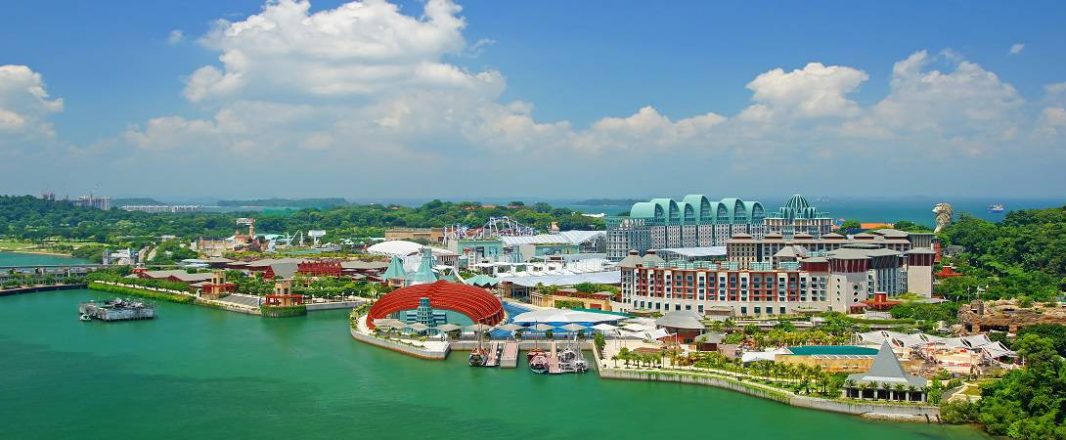
Its location amid a larger 49-hectare resort – comprising a mix of indoor and outdoor spaces – opens the possibility of “creating satellite events across the resort, supported by hybrid technological capabilities,” Lam tells us, which could change at a conceptual level the way event organisers think about their programmes and their use of space.
Add to that the F&B and entertainment assets that are part of RWS, and possibilities open up for events that sprawl across the resort, utilising the various spaces in ways that play to their unique features – for example using F&B establishments for networking sessions, the convention centre as a main stage and smaller venues as breakout spaces for workshops or presentations.

According to Lam, there are “exciting creative conversations” taking place with event organisers as well as hybrid events already in the pipeline.
Pre-pandemic, Lam tells us, one third of all international arrivals to Singapore would visit RWS. For context, Singapore welcomed 19 million international arrivals in 2019, meaning that the rooms on property were predominantly occupied by tourists.
The evaporation of international arrivals prompted RWS to look closer to home, and style themselves as a domestic tourism destination for Singaporeans. Lam shares some of the things that she has observed.
Local guests, she says “are not looking for a room to sleep in – they want to relax and recharge, be in touch with nature, discover hidden gems or spend quality time,” in essence, guests want to feel like they’re on vacation.
And being on vacation, is about experiences, especially when, as Lam points out “most of our locals have been to our attractions,” what was important then, was to keep the experiences ‘fresh’ giving locals a reason to keep going back.
One way RWS did this is by creating new experiential immersive zones, which encourage guests to get up close with animals like poison arrow frogs (from RWS’ own breeding programme) and even “touch and feel, some of the marine species that are native to Singapore, such as the Knobbly Sea-Star”.
Another way was through behind-the-scenes programmes like “Behind the Panel” and the “Junior Aquarist” programme, which brought guests back-stage, as it were, to learn how the S.E.A. Aquarium at RWS cares for its marine animals.

Lam sees the interplay between local and international traveller as a key opportunity for RWS, sharing, “travellers will look to locals for recommendations, right, they want to see the city through the eyes of a local, so we are investing in more product and experience development, to attract locals to make them our advocates. Because if something doesn’t impress the local, it won’t impress the tourist.”
Hopefully then, even when borders open, the products that have been developed will provide a greater breadth of experiences, which can appeal to international arrivals, and returning visitors in particular.
One interesting trend, Lam notes, is that “with a decreased spending in overseas travel, we have seen that our local travellers are more willing to indulge in premium options, like our beach villas, or ocean suites,” which has created space for experiences like the Aqua gastronomy “underwater” dining experience.
In this naturally socially-distanced pop-up event, guests dined in bubble pods alongside the S.E.A. Aquarium underwater wall, surrounded by what Lam describes as “dreamy lighting [and] ocean soundscapes” – an ethereal dining experience.
Beyond an entertaining dining experience, the Aqua-gastronomy menu featured 100% sustainably sourced seafood, and was “intended to share our sustainability efforts, and hopefully inspire [diners] to act in protection of the oceans,” says Lam.
Given that returning travellers, especially millennial and Gen-Z travellers, are increasingly saying that sustainability concerns will factor into their travel decisions, RWS’ showcase of sustainable dining offerings is part of a broader industry trend towards more conscientious travel choices.
Another inevitability – safe and hygienic travel. To that end, says Lam, “we’re quite fortunate that some of these were already in place before the pandemic hit,” referring to the digitalisation that was underway in self-ticketing kiosks that reduce human-to-human interaction.
In response to the pandemic, reservation portals have also been upgraded to enable capacity measurement and tracking, which helps the resort to comply with shifting capacity limit regulations.
Finally, Lam believes that with increased restrictions and more complicated processes surrounding international travel, inbound travellers will stay for longer periods. She sees it as “meaningful travel versus best travel, experience versus possessions,” and so RWS, she continues, is “planning for a holistic variety of sustainable lifestyle experiences that will cater to these needs.”
• Featured image credit: preuk/Getty Images