JULIANA Ramirez was working at OYO Hotels when she got a visit from the founders of Katanox, the startup offering direct API connectivity between sellers and hotels.
Ramirez, who has just joined OYO in 2020 after a 10-year stint with ultra low cost Mexican airline Volaris, knew first hand the challenges faced by suppliers such as airlines when it came to offering hotel inventory.
Responsible for implementing Volaris’ subscription service, hailed as a game changer for the airline sector, she was also heading up ancillary revenues and she knew what a game changer it could be if sellers such as airlines could connect to hotels directly, bypass the OTAs, thus keeping more revenues for themselves.

“I knew from working at Volaris what a big business the B2B side was for OTAs such as Booking.com and Expedia. I’d get my hotel inventory from them and get part of the revenue share; yet a lot of the new visitors they got were coming from Volaris.
“So if there had been the ability for a seller (like me) to deal directly with the hotel and maximise our revenues, I would have been very interested.
“In many ways, I wished I had known them while I was at Volaris because I would have used their API to bypass OTAs and increase hotel commission revenues.”
So when the founders, whom she knew from the airline industry, visited her at OYO, it was almost a no-brainer. “They came to me and told me Julie, what if we re-pipe the current hospitality distribution with an API that would enable hoteliers to sell to whoever and wherever they want by enabling direct relationship with sellers, in a way that hoteliers truly control their distribution and trading, while travel sellers – TMC, airlines, publishers – would increase commission revenues.
“It made so much sense and I was ready to work with them.”
Unfortunately, she didn’t get round to implementing Katanox for OYO because well, we know what happened, Covid hit and OYO closed its Latin American operations.
But her interest in the startup world had been stirred. Indeed, it was after attending WiT Singapore in October 2019, in which she learnt of the dynamic happenings in the Asian marketplace – superapps, e-commerce marketplaces, startup innovation – that she decided she needed a change from the airline industry.
It was a painful decision, she said, given she had grown up in airlines “but I felt I needed to get out there and learn more of other sectors and what was happening in the travel startup world”.
At OYO Hotels in Mexico, she got a fast and furious lesson in hospitality, as well as speed of execution and chase for scale, and working with a team that comprised talent from names such as Google and Facebook. For the young and hungry executive, it was a heady experience. “The speed at which they did things was amazing, very unlike the pace at an airline, and it was exciting, a steep learning curve.”
Finding herself at a career crossroads, Ramirez asked herself – should she return to the airline sector or remain in the startup world, plus there was also the opportunity to get into the burgeoning e-commerce market with brands like Amazon expanding and superapps like Rappi scaling and wanting to get into travel.
In the meantime, Katanox offered her an advisory role and after a trip to their Amsterdam headquarters in the midst of the pandemic, Ramirez took the decision to join the team. With skin in the game, she is now leading the commercial and sales for the startup founded in 2019 by Georgios Georgiadis, Imre Vogelezang, Paul Beukers and Mendel Senf. (The name Katanox comes from the word Katanomi (Κατανομή) which means distribution, and the X is for exchange.)
In February 2021, Katanox raised a 300,000 Euro convertible loan from Innovation Fund Noord-Holland, on top of financing by early stage investors, to pursue its ambitions of “helping the recovery and accelerating the growth of the travel industry”.
According to the company, “The travel industry has seen a lot of growth over the past 30 years, but innovation in the sale of travel products has lagged behind. This is especially the case in the relationship between travel providers and the services they offer, such as air travel and hotel rooms. This relationship is governed by some closed B2B marketplaces and B2C platforms.”
To make it easier for travel sellers to directly sell hotel rooms, the company said it is developing a platform with scalable links for the back-end systems of hotels.
Said Ramirez, “I was convinced after my visit to Amsterdam of the opportunity to do something new and innovative and that would matter to the way travel brands can sell hotel rooms directly, without going through an intermediary. The platform is modern and intuitive and coming from the airline industry with the black screen and green letters, this is a major change. Everyone can use this interface.
At the time of this interview, Ramirez said the company had already onboarded more than 1,000 properties from across the world. She is focusing on business travel sellers and hotel chains as her first layer of customers. The service is offered on a consumption model, based on bookings generated, with no set-up fee involved.
“The value proposition is there. When we talk with travel management companies they get instantly interested in the transparency the solution brings, whereas chains get fascinated since this is something they have been asking for.
“But the reality is that the industry has a lot of gatekeepers – the switches, the GDS, the extranets of x&y seller, or they are relying 100% on the inventory of Booking and Expedia, making them just bigger.”
Another challenge is also the fragmented PMS market with literally thousands of systems out there.
Acknowledging the challenge, Ramirez said, “We are already connected with a bunch of them. Once the PMS connection is built to our API, it takes them, like, five to 10 minutes to onboard to our platform. So we become, in a sense, the source of truth.”
She said the reason this hadn’t happened before was the industry was growing at double digit in many regions and “almost no one had really had the time to take a step back to try and enhance their ‘Frankensteins’ of connectivity layers.”
Covid, of course, changed that thinking. “This is the time when hotels stepped back and said, I have to optimise my connection – if only I could take control of my inventory, take control of my channel mix, and not give all my power to the gatekeepers.
“I think now hotels are ready to take that decision and, on the other side, sellers need to make more commission revenues.”
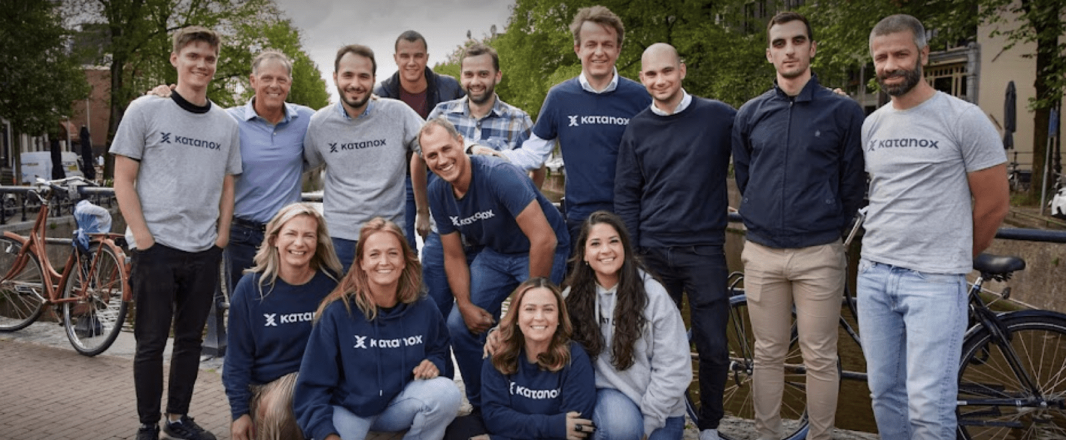
Featured image: The Katanox team in Amsterdam. Credit: Katanox