
“Best time to have a front row seat to travel’s rebound and transformation”
Workation programmes, Unlimited Time Pay Off, Joy Allowances, Remote Work – these are some of the practices being rolled out by online travel brands as they adjust to life changed by Covid, and a talent pool that is asking more questions than ever before about the meaning of work and life.
Particularly challenging is recruiting tech talent from other sectors to an industry that’s been so hammered the last two years while other tech sectors have been booming. In the US, a Reveal Survey report on the Top Software Development Challenges for 2022 identified the number one challenge as recruiting developers with the right skills, followed by maintaining current talent.
Across the world, the situation is similar. When companies such as Amadeus, Klook, Wego and Agoda were asked to rate the severity of “The Great Talent Crunch” during the first episode of The Bridge Series by WiT and Phocuswright, all rated it between 8 and 9, for technical talent, on a scale of 1 to 10, 10 being worst.
As they ramp up for recovery, there’s a battle for talent across the globe – not only among the big travel brands but also startups that offer an alternative path that founders hope will entice with more meaning and purpose as well as an opportunity to participate in the upside of growth or, as Chris Hemmeter, managing director of Thayer Ventures, calls them, “startups with velocity”.
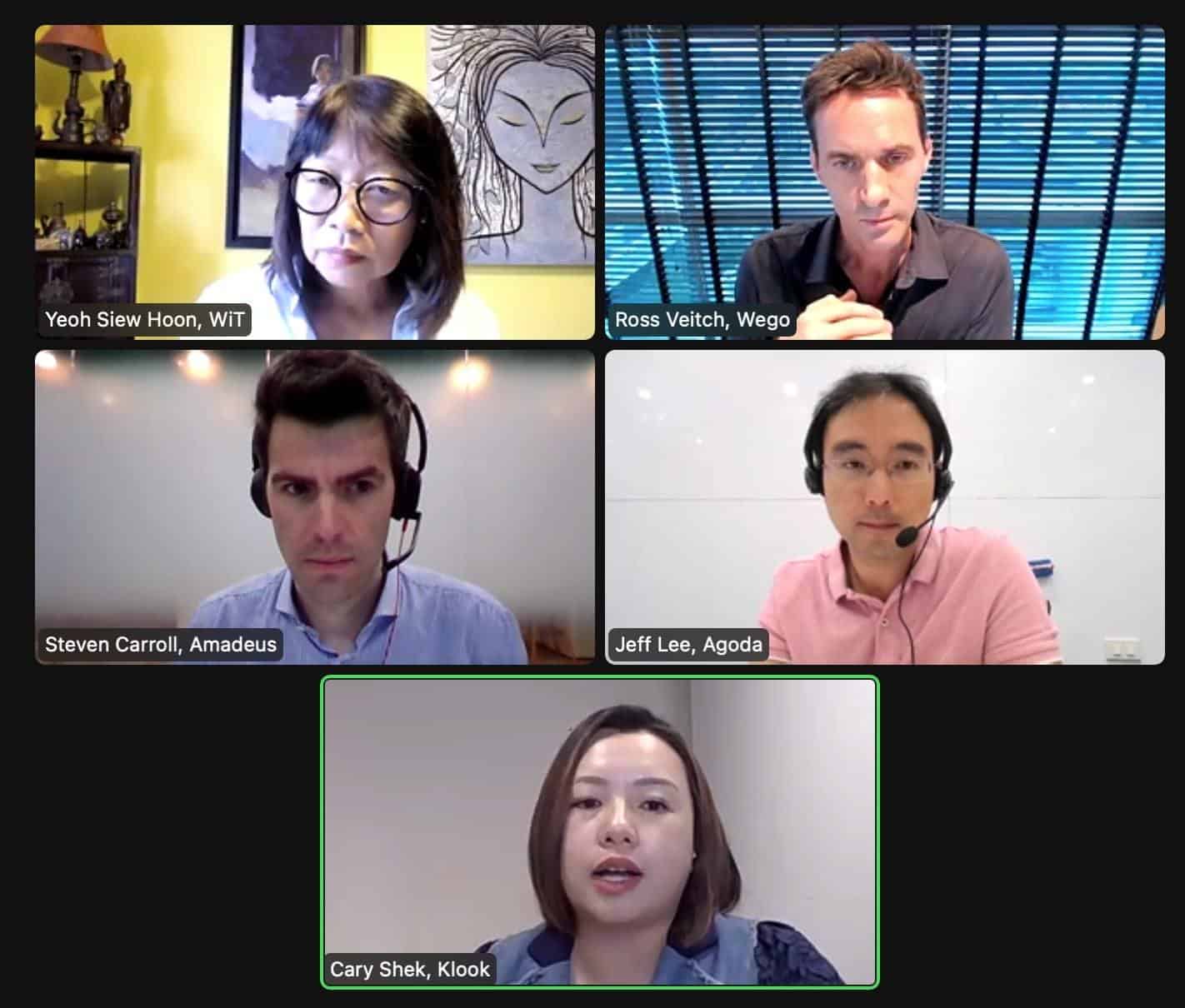
Panel on the “State of Talent” with Wego, Agoda, Amadeus and Klook
Here are the key takeaways from the event, on the trends driving change in the workplace and the changes taking place within organisations in their attempt to turn the Great Resignation into the Great Renewal.
1. The Big Rethink of The Office
Cary Shek, VP, People & Culture of Klook, singled out the influence on Covid on the physical workforce. “Due to the varying local policies, around Covid-19 in different countries, at the current time 22% of our offices are working from home, 21% have hybrid policy and 57% are working in office. This has led us to thinking about these key points on talent and the physical workplace.
“How do we remain flexible to the needs and safety of our staff while prioritising productivity and connectivity? We empower our local teams to make decisions on their work situation. How do we create value in the office environment so that employees are motivated to return? We’re beginning to rethink the purpose of physical office space and how it differs from a work-from-home set up.”
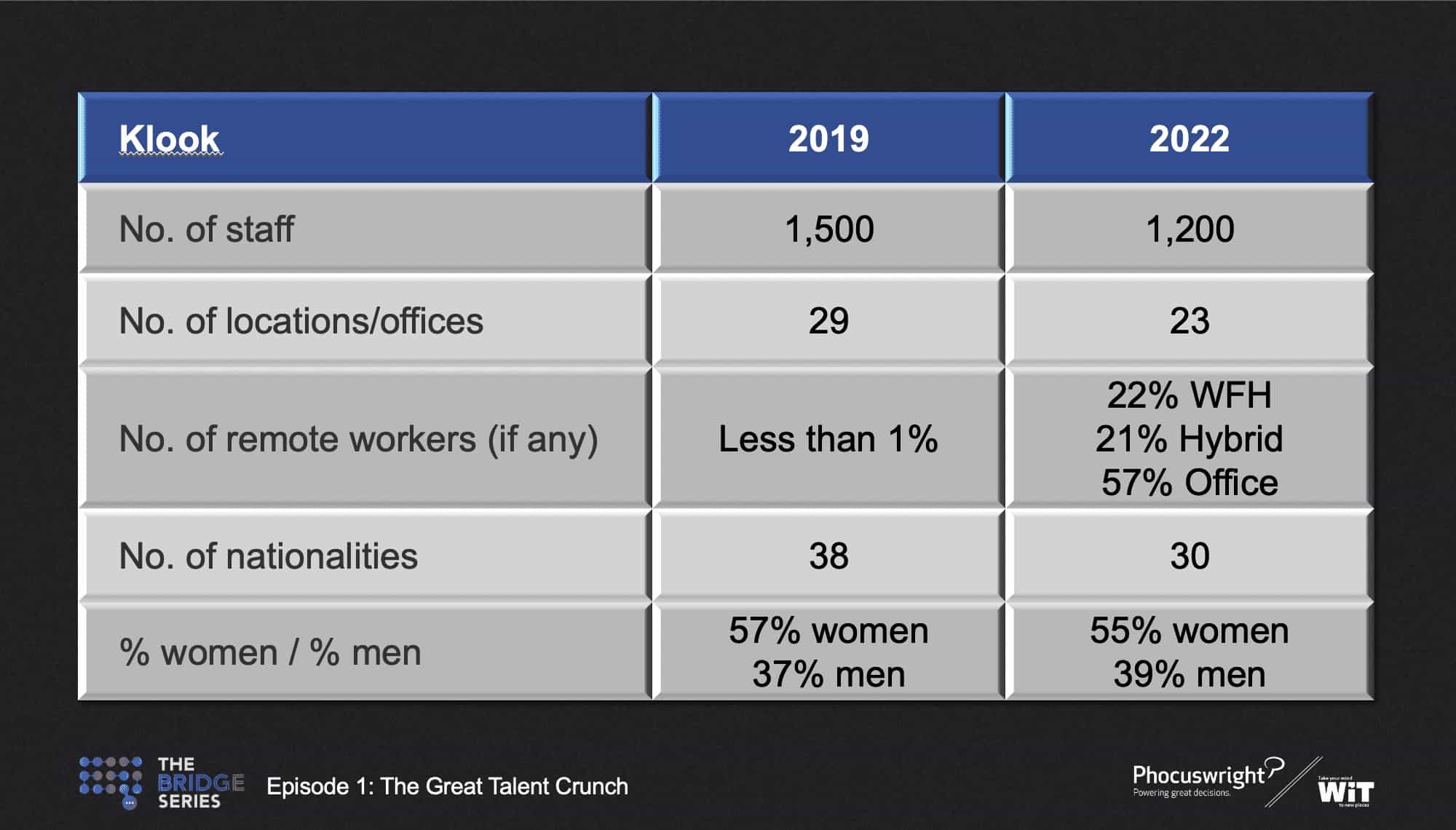
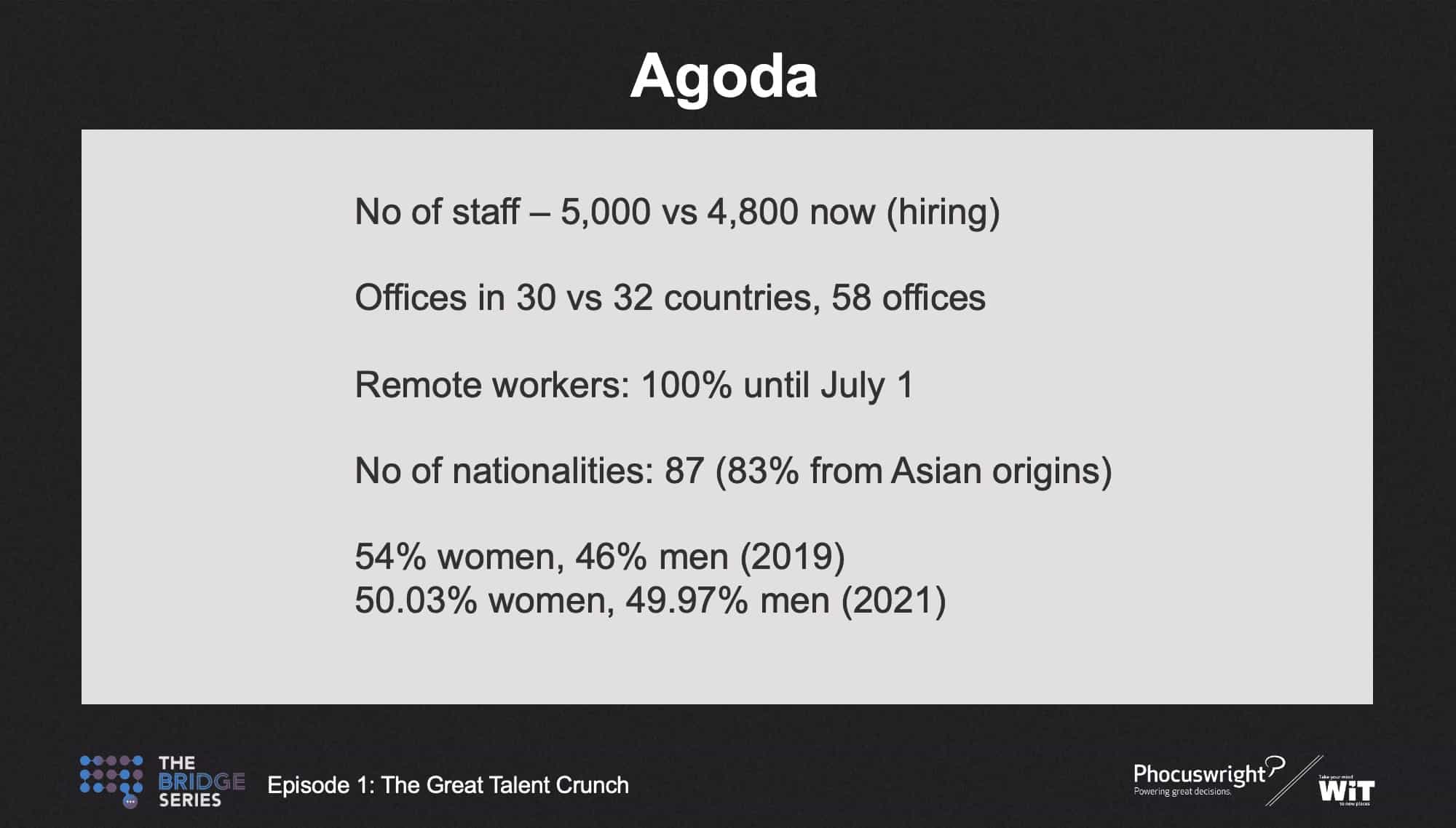
Agoda, which has 4,800 employees and is actively hiring, has gone fully remote (see below). To respond to changing times, Jeffrey Lee, vice president, customer experience group, who was chief people officer prior to this role, said it would move to hybrid working conditions – “only head to the office when there is a need for meetings, discussion, collaborative spaces”.
Lee, who joined Agoda in 2014 and currently manages a team of 2,500 customer service professionals, said another trend is “cutting down business travel in place of more efficient meetings” – virtual meetings have proven to be more inclusive and immersive, allowing more people to speak up, he said.
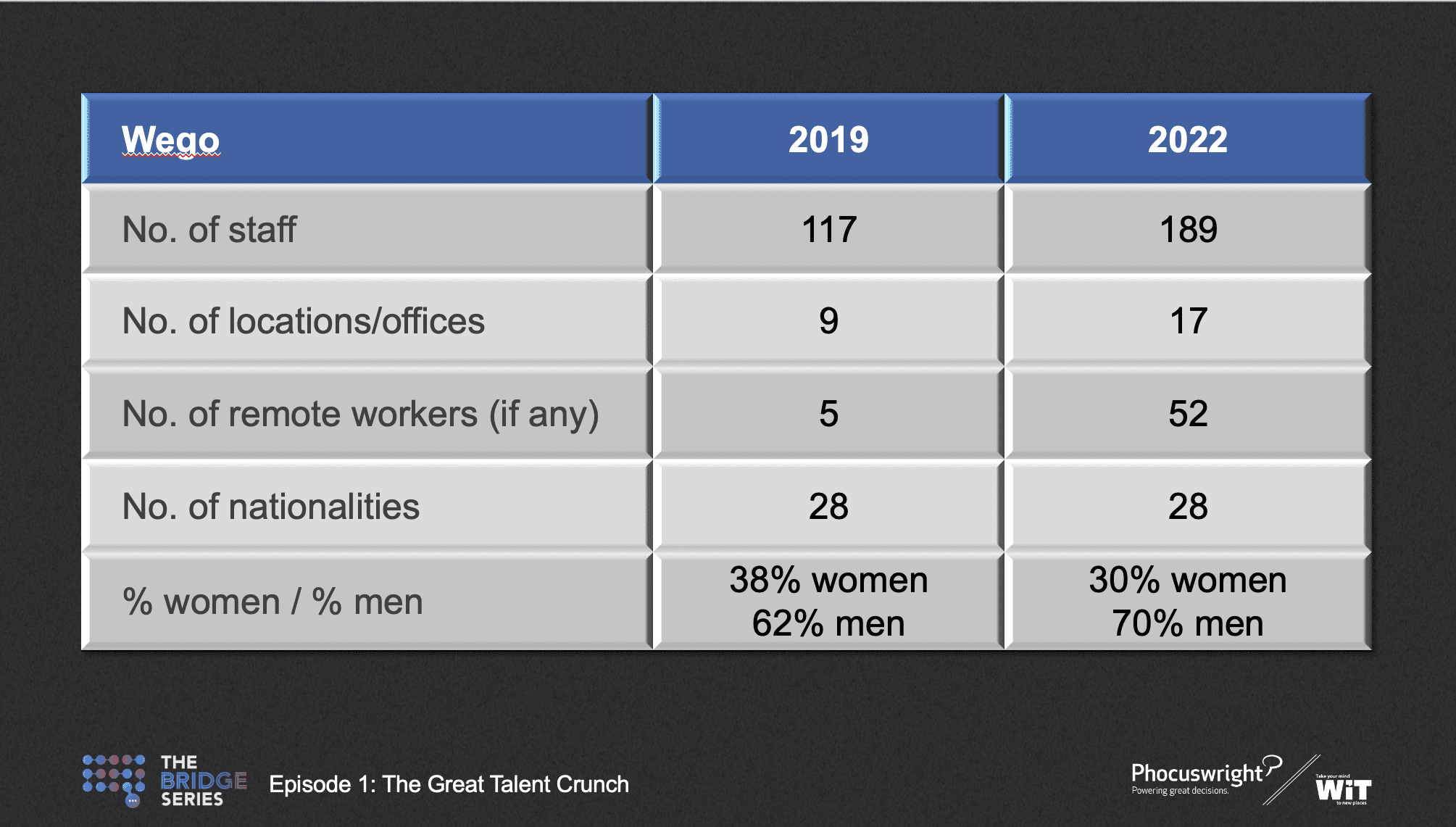
Ross Veitch, CEO and co-founder of Wego, had just returned from a trip to Dubai and Bangalore to wrap up the acquisition of Cleartrip and Flyin’s Middle East business from Flipkart, which will increase his team numbers considerably from the current 189. He cited “workplace flexibility and hybrid work arrangement” as the way forward. He however added that he personally would travel more to places where restrictions have eased.
One bold practice he called out was Twitter’s approach to Work From Home forever and he was curious about how that would play out. “They are also opening up offices after two years but people can continue to WFH forever if they want to,” he said.
2. The Great Remote
The fragmentation of the workplace and the liberalisation of talent means opportunities for travel companies to hire from anywhere, although of course it throws up all kinds of legal and taxation challenges for human resource departments.
Better funded and nimbler startups have taken advantage of this trend. Johnny Thorsen, vice president, strategic partnerships, Spotnana, who is making it a point to hire tech talent from other industries because he doesn’t want legacy thinking, has office locations across Bay Area, Seattle, New York, London, Amsterdam, Mumbai and other remote employee locations. Currently staffed at 137, the US$41m-funded corporate travel disruptor, founded in 2019, is looking to scale to 250 staff by year end.
The Atlas, a flight startup, maintains three locations – Singapore where its founder and CEO Mary Li is based, New Zealand for its business development and marketing functions, and China where its tech team is located. Founded in September 2019, its team stands at 35, and it is looking to double it by the end of this year. “In a small team, one hire can affect the entire company and so the process of recruiting can often take longer than I would like,” said Li.
3. Search for meaning and value, and focus on mental wellness
Klook’s Shek said that the pandemic has really put the search for meaning and value in one’s life top of mind. “So it’s important for us to help our employees find that value and meaning with us and to remove barriers that might be hindering that. That has led us to focus on the following: Active listening – to know if our employees are finding meaningful work with us, we have to first ask them and BLM ownership over employee experience – we cannot overstate the influence the manager has on the employee experience.”
Agoda has rolled out AgodaCares: Supporting duty of care. Said Lee, “There seems to be more appreciation for a better work-life balance, more efficient workdays, everyone values each other’s time a bit better especially after adjusting to the WFH lifestyle (i.e. working parents, those who are caretakers of family members, pet owners, etc., who have adjusted their daily schedules accordingly).”
The company now offers 30 days’ work from anywhere, “creating physical work environment that’s more conducive towards wellness and productivity” and “better benefits to support remote working and mental wellbeing”, including flexible leave options.
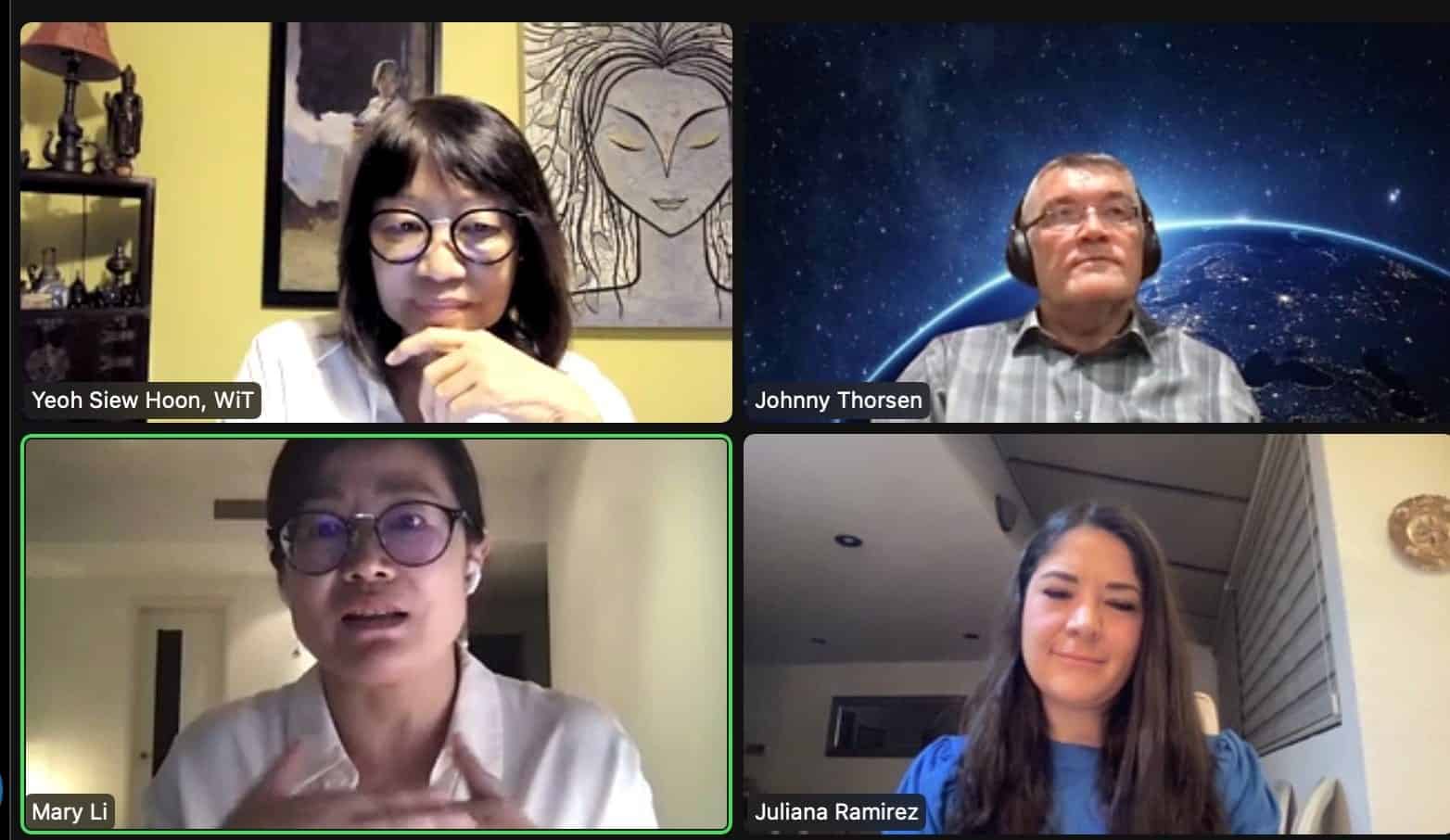
Panel on “How Can Startups Compete For Tech Talent?” with Spotnana, Katanox and The Atlas
Steven Carroll, global talent director, Amadeus, who sits in Singapore, where he relocated to in 2019, said there has been a fundamental change in the role of leaders – beyond technical skills, leaders must now have other qualities such as empathy, compassion and communication abilities. He sees three opportunities for Amadeus to build a stronger and better workplace by improving employee experience, offering enhanced flexibility, and a focus on learning and development.
4. Startups compete with purpose – deeper pockets are also necessary of course
Startups believe they are in a good position to compete for tech talent because they can offer more than money.
Juliana Ramirez, commercial head, Katanox, the youngest of the startups, founded in 2020, identified these opportunities. “Covid has placed an unprecedented pressure on the travel industry opening up an unique opportunity to make a real impact and innovate. The battle for talent allows startups to filter true game-changers and change-makers, it’s not always all about money. There’s a wider talent pool since people has adapted to work from home.” It currently has a team of 18 with a base in Amsterdam and the rest remote, and plans to scale up to 30 staff by year end.
Thorsen cited these opportunities for Spotnana – a significant pool of legacy TMC staff ready to join a next gen player, young candidates still intrigued by the travel industry and remote work talent now available everywhere.
For Li, working on her third flight startup, it’s “no history, quick growth, decision makers”. “It’s not always about the money,” she asserted, “it’s about people you work with and the purpose you are working for.”
Thorsen said competitive salaries were important too of course. His three biggest challenges in recruiting are identifying developers with relevant technical skills (scalable cloud infrastructure), product managers and UX designers and convincing technical candidates about the potential of the travel industry.
He makes it a point to hire tech talent that comes with no travel experience. “Domain expertise is no longer necessary – in fact, it is a disadvantage,” he said.
And therein lies the challenge for travel tech, he believes. “The majority of current travel tech developers in the legacy travel world have grown up with a tech stack with is irrelevant and unable to meet the needs of software design for the future – the travel industry is not able to compete with other industries on salary ad overall packages and will have a very hard time recruiting top talent in the tech vertical – so the gap between the best and the average will widen significantly.”
5. Diversity and inclusion top of agenda
Every travel brand is making this a priority. Amadeus’ Carroll, who shared this Amadeus Global Report from 2020, said working on diversity and inclusion was a top priority going forward.
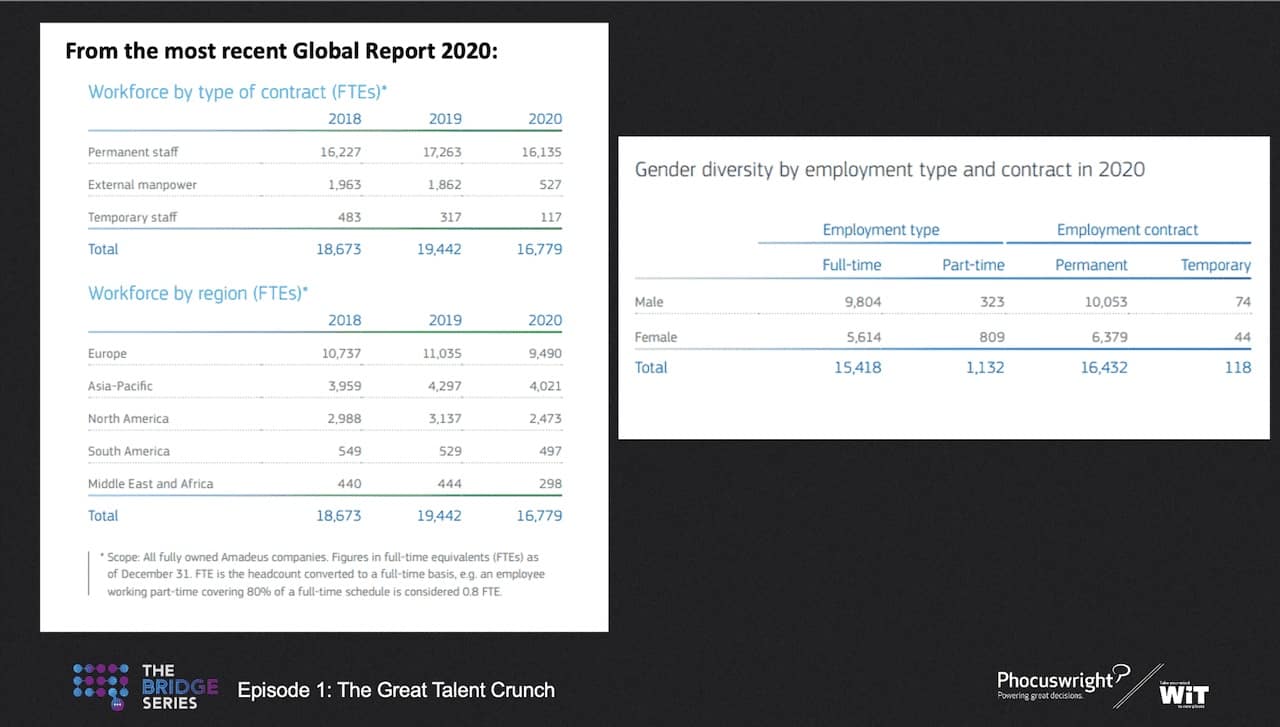
Agoda, which has 87 nationalities within its team, with 83% from Asian origins, went from 54% women, 46% men in 2019 to 50.03% women; 49.97% men (2021). “Accepting diversity, openness for collaboration”, Lee said, is part of Agoda’s culture. “As Agodans, we are a diverse group, with different backgrounds and experiences, and we will not all have the same perspective on a number of things.”
Veitch said that an increasingly hybrid and remote workforce means “managing an increasingly diverse and remote team” which comes with its attendant challenges. He said “diversity and inclusion” would be a key priority for Wego as it expands in the Middle East.
Ramirez cited “diversity in under-represented senior roles” as one of the challenges facing Katanox, along with retention of top talent and speed to getting qualified talent.
6. This is the best time to be in travel – have a front row seat to its rebound and transformation
Matthew Hulen, regional director of marketing, South-east Asia, Hilton, sharing his opinion on “What hospitality needs to do to attract non-traditional and tech talent”, said the hotel industry needed to play to its strengths – and one of these is the rebound to come and a mindset change to digitisation forced by Covid, calling it an exciting time for innovation. (Watch his talk here)
Indeed, this was one of the key reasons that led journalist Xinyi Liang-Pholsena to rejoin Travel Weekly Asia as senior editor this year, after taking a break in 2021. Explaining her “boomerang” decision, she said, “To say the travel industry has been badly hit during the pandemic is an understatement, but at this juncture I also think it’s terribly exciting to witness the revival of the industry as we learn to live with Covid. I think I probably have a case of FOMO too. I’d hate not to be around, not to be part of the action, as travel comes back. I definitely want a front row seat to the travel industry’s transformation.”
She’s also drawn to the fact that “it’s a wonderful industry filled with lots of open-minded, passionate and fun-loving folks bonded by a strong sense of fraternity and solidarity”.
Indeed, this was a strength singled out by Louise Daley, former deputy CEO of Accor Asia Pacific, who spent 30 years in hospitality, and is now CEO of Future Now Capital, a venture capital fund.
“What I miss about the travel industry: The camaraderie of all people in it. Across airlines, hotels, travel and tour operators and more, even if we are competitors, everyone works with each other to better the industry. I have found it is unique to travel.
“What I don’t miss: The frustration that in many instances governments don’t support the industry as much as it should.
“If I knew what I know now: Young tech experts and starters are looking for more than just money – so I would emphasise the collegiate nature of the industry, the desire to share even amongst competitors and also the amount that the industry gives back to community.”
A sentiment echoed by Marissa Trew, formerly content lead at WiT and now working with TZ APAC, a blockchain and NFT company. “There’s a warmth and hospitality engrained within the collective culture of the travel industry that makes it such a great industry to work in. On top of that, it’s inherently diverse – you get exposure to people of so many different backgrounds, all bound by a common passion for travel. Lastly, it’s an industry that is inherently good for the world. Enabling freer and open travel will always be a positive endeavour and being a part of that mission is deeply rewarding.”
And there you have it, beyond hard dollars and cents, and all the changes being made by companies in the face of the Great Talent Crunch, there’s a higher purpose to travel that may just be the right message to communicate at a time when divisions are being sown everywhere. Travel builds bridges, not bombs them.
* Watch the two panels conversation here.
• Featured image credit: ANGHI/Getty Images