How a honeymoon idea started in Asia, and grew during the pandemic
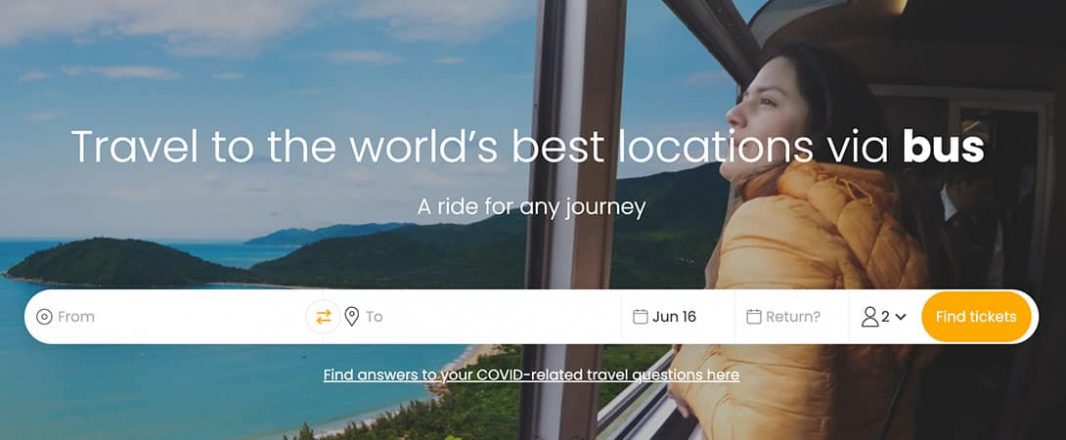
HAVING raised a total of $70 million in the last 12 months, and finalised a fourth acquisition, Bookaway Group, which wants to be the Booking.com of buses, rail and ferries, is ready to scale its business for the next leap forward.
Said Noam Toister, CEO and co-founder of Bookaway Group, “That we achieved this during Covid is something we are extremely proud of. We wanted to come out of the pandemic, a larger group, and we have. Today, travel is recovering, numbers are picking up and we are ready to expand.”

Noam Toister: “It’s a lot of hassle and anxiety for the traveller because they don’t know until they get to a destination. It should be as easy to book as hotels.”
Between March and May 2022, the group said total sales increased by a further 55%, while between July 2021 and March 2022, it saw total sales in APAC increase by 2,503%. The standout APAC market is Thailand where total sales, as of May 2022, have grown by 28%. (See below for Bookaway’s top nine routes in APAC)
During the pandemic, Toister said its business in Asia was more affected than elsewhere because it was reliant on European and American inbound. “We weren’t localised enough to sell to Thais and Filipinos, that’s something we want to change.”
He declined to disclose the details of the fourth acquisition but said it was a SaaS (Software as a Service) business, which would enable it to expand the services and tools it offers operators of buses, ferries and trains, its customers.
This is the first software acquisition the Israeli startup has made, signalling its aspiration to digitise this extremely fragmented and localised space. The other three were B2C businesses – 12Go in Singapore, covering South-east Asia; Croatia-based Getbybus, covering the Balkans, and most recently, Plataforma 10, the Argentina-based ground transport online travel agency, giving it a foothold in Latin America.
“When the pandemic hit, our business went to near zero,” recalled Toister. “We thought it’d last three to six months but then we realised it was going to be a two to three-year thing. We looked around and realised it was an opportunity to consolidate.”
A desire to see rice terraces, and a scrappy start
The idea of Bookaway came to Toister when he was on his honeymoon in the Philippines. “I wanted to go to Banaue to see the rice terraces but it was impossible to find a bus online. I had to go to the station to buy the ticket, return to my hotel – I wasted half a day. Then when I got on the bus, it was filled with tourists who had done the same thing.”
He thought about how to solve the problem and on return to Israel, he built a basic website. “I contacted the local travel agent in the Philippines. I told him, I will send you orders for bus tickets, you buy them, take pictures and I send them to my customers.”
He sold “a few thousand tickets in the first few months” and started looking elsewhere in Asia for opportunities. He added El Nido and Boracay in the Philippines, then Vietnam, starting with Halong Bay. “I knew from experience how hard it was to get to.”
That was the beginning of Bookaway which was focused on solving ground transportation issues in Asia. “Then we realised it was a global opportunity, and looked at Latin America and Europe. Technically, the problems are different in Europe but for the end consumer, it is the same problem. Ground and sea accounts for seven percent of the travel market, worth $150 billion a year, and it is the last vertical to be digitised. Still 90% is booked offline.
“It’s a lot of hassle and anxiety for the traveller because they don’t know until they get to a destination. It should be as easy to book as hotels.”
“The glue that connects everything in travel” – technically, a huge task
He acknowledges the challenge in taking this industry online. “It’s a work in progress. We work with 7,000 different transportation companies, from those who own two to three vehicles to huge operators – and we give them the tools to go online, manage their own operation, distribute their inventory and connecting to fragmented APIs.
“Ground transportation is the glue that connects everything in travel. Technically, it’s a huge task but we have found a secret sauce, a method to connect with operators efficiently and quickly, and adapt to different regions.”
This requires, he said, “boots on the ground in each region, knocking on doors, meeting operators and selling them the benefits of going online”.
While this space is a highly local play, Toister believes there is need for a global platform that “connects everything in one place” for the traveller.

Hanoi to Sapa, one of Bookaway’s more popular routes in Asia. See below for its top nine routes in APAC. Photo credit: Bookaway.com
Today, Asia accounts for 65% of its inventory. Toister acknowledges that Bookaway is most needed in “messy” markets where ground transportation is fragmented and largely not digitised such as Asia, Eastern Europe and Latin America where it has had more success than elsewhere.
“Western Europe and North America are harder markets to penetrate. The US market is very matured and it’s mostly online already. The challenge is to stitch the different services together, like a KAYAK for buses and trains. Western Europe poses more of a technical challenge, operators have their own tech, it’s not standardized and there are competitors (such as Trainline and Omio).
“We start at the point that KAYK stops – some of the most amazing places don’t have airports. There is still a need to solve them in messy markets.”
Bookaway’s revenue model includes commissions from operators and depending on regions, a processing and markup fee from the consumer. “We try and get prices as close to or lower than at the ticket station.”
It has distribution agreements with partners such as Agoda and other OTAs. “There is still so much opportunity to expand the market from offline to online. My biggest competition is offline – the bus stations.”
Meanwhile, Toister is happy to report that he’s still married. “My first daughter was born in January 2017, the same month we incorporated the company. She’s now five-and-a-half years old. I see her less than I would like and I still manage a functioning relationship with my wife – all credit to my wife. As an entrepreneur, you have to work really hard and it’d be tough if you did not have a family that is not supportive.”
Bookaway’s Top 9 routes in APAC (May 2022)
- Bangkok-Chiang Mai (Thailand – Train/Bus)
- Chang Mai-Bangkok (Thailand – Train/Bus)
- Koh Samui-Bangkok (Thailand – Bus/Ferry)
- Ayutthaya-Chang Mai (Thailand – Train)
- Bangkok-Surat Thani Train Station (Thailand – Train)
- Phuket-Koh Phi Phi (Thailand – Ferry)
- Bangkok-Koh Samui (Thailand – Bus/Ferry)
- Phuket-Koh Phi Phi (Thailand – Ferry/Bus Ferry)
- Hanoi-Ninh Binh (Vietnam – Minivan, Car, Bus)