President of Expedia For Business on her belief in B2B, secret sauce to resilience and staying robust in APAC
Yeoh Siew Hoon catches up with Ariane Gorin on the sidelines of Phocuswright Europe in Amsterdam where they have a wide-ranging conversation covering her rise up the corporate ladder, her belief in B2B and how it opens up other worlds to Expedia and what she’s had to unlearn through the biggest transformation yet in Expedia.
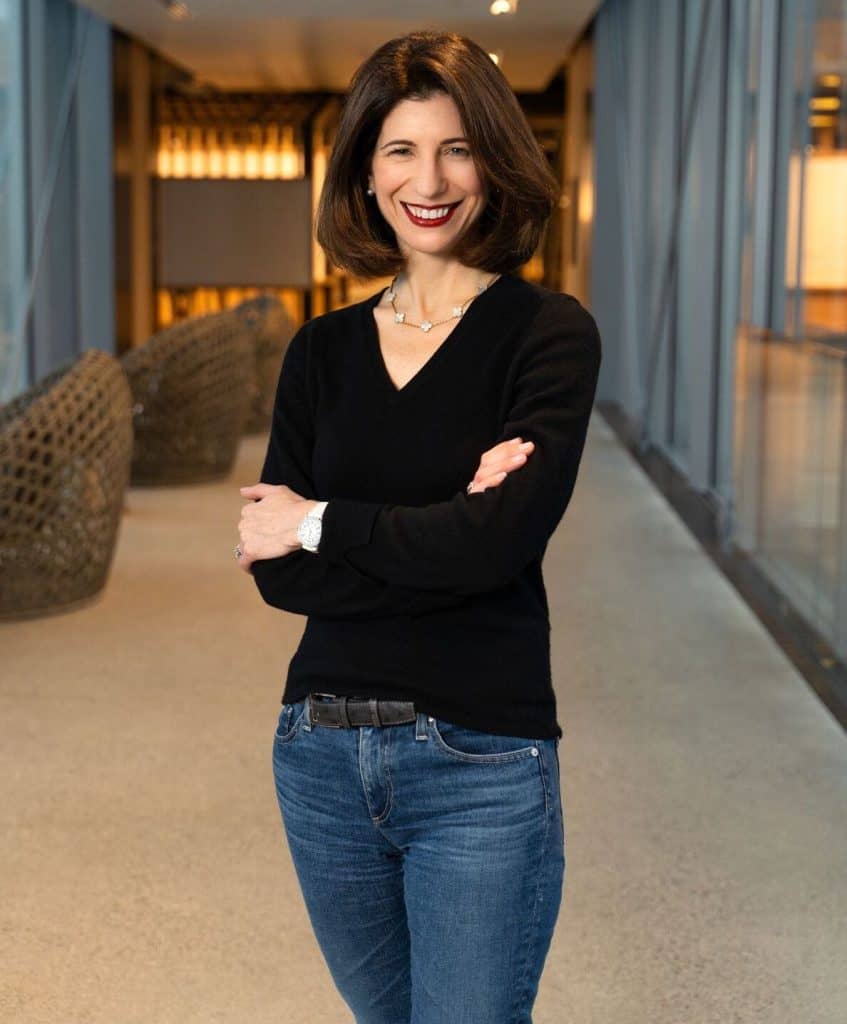
Ariane Gorin: “Sometimes it’s good to go off the beaten path, try something new, it gives you the freedom to try new things.”
Q: You’ve been with Expedia for more than nine years, joining in March 2013 as vice president, EMEA Market Management. Today, you’re president of Expedia For Business. How hard was it to rise to this level and what do you think you did right to be where you are today, especially with all the changes and cuts Expedia has made the past two years?
There was a key decision I made early on in my career, when I was asked to lead Expedia Affiliate Network. It was a business not many people were raising their hands for, a team of 250 people. It was important but it was not something in the spotlight. But it gave me the opportunity to try on new things and grow new markets. I was right to make a bet on it. A couple of years later, my scope got expanded.
I guess my vision and passion about B2B paid off. Sometimes it’s good to go off the beaten path, try something new, it gives you the freedom to try new things.
Q: Do you do that when you travel, go off the beaten path?
Typically, I am not an off-the-beaten-path type of traveller. I have teenage children and we have to plan ahead.
I can think of another decision I made. I was living in San Francisco at the time and was asked if I wanted to be part of the team to open up the New York office. I said no, I played it safe personally and professionally. I don’t regret making that decision because that allowed me to move to Paris later on.
Q: What’s the secret sauce to thriving in a time of turmoil?
Resilience – having a team of people around you that you have a high degree of trust with, that you can confront the difficult times with, and having the support network at home and at work.
We surely needed that in the early days of the pandemic when tough decisions had to be made to have a wonderful support network and real belief in the importance of what we do. Travel accounts for one in 10 jobs – we create economic opportunities and meeting in person – there’s tons of meaning in that. We had a deep belief that the world needs us to be resilient.
And this has been proven. Look at the pent-up demand and how we are now facing the situation of not having enough staff. This is an industry that can create jobs.
Q: Are you concerned that this level of pent-up demand that’s causing chaos in airports in Europe and the US could backfire on our industry?
It could. But we also see companies trying to mitigate it. Airlines, instead of cancelling flights last minute, now looking at schedules, trying to right size. Hotels that tell guests they will clean rooms every three days, instead of everyday. As long as we manage guest expectations, people can accept it. We need to look at how we can orchestrate different flows of tourists to different places? How do we make the implicit decisions explicit, so people know why it’s happening?
Q: The Expedia today is hardly recognisable from the Expedia you joined. What’s the biggest shift in thinking, and for yourself, what did you have to unlearn?
We were a company of independent brands operating in a fast, nimble, independent way. Each owned most of the tech with certain shared capabilities. It didn’t matter if we were competing against each other and there was a big shift to online happening, so that was the right way.
But with the power of data, tech and scale, scale becomes more important – how do we operate as a platform? When we can share tech, let’s do that but brands can still do their own thing.
Then it’s taking the tech to power partners – which makes the whole ecosystem better.
We had to unlearn that in order to move fast and nimble, we had to move in silos. We can move as a platform, and move as quickly.
Personally, I like to know my team, know their names, meet with partners, understand the details. But I now have a team of 3,500 people. So I now have to hire the right people who give me the details. As a leader, you don’t have to know all the answers. But build the right team and given time, they will give you all the answers. You have to trust other people.
Q: Why are you so passionate about B2B?
I always thought there was something big in B2B – I mean, why does this business exist for B2C brands? Half of travel transactions are happening offline – corporate travel, wholesale, bank loyalty programmes. I decided that B2B would go where our B2C brands cannot. Even though we own strong brands, there are so many travellers so why not build something that gives you access to other worlds?
A prime example is our partnership with Marriott which gives us an optimised distribution network.
Q: There’s a lot of talk about self-sovereign identity in travel. You are half-American, half-French, living in London – what do you identify as?
When I am in France, I identify as American. When I am in US, I identify as French. In London, I swing between the two. My father is French, my mother is half French, my husband is French … when I moved to France in 2001, I was defending the Americans and when I was in the US, I was defending the French. It’s good to have different perspectives, to be the bridge.
Q: Do people confuse you with Ariana Grande? If so, what do you tell them?
I am not of her generation, so that doesn’t happen. (Laughs)
Q: Onto Expedia, lots of changes were announced during EXPLORE (conference in May in Las Vegas) – which is THE one that excites you most and what’s the possibility it can open up for the travel industry at large?
Putting traveller experience at the heart of everything we do, looking at the traveller end to end experience and linking it with longterm loyalty. It creates traveller trust, creates great experiences. When a traveller comes to our app, they can trust the content and they get the tools to make good decisions.
Q: You were previously with the demand side, Expedia For Partners. What’s the feature/tool/service that you think partners need most now to help them with recovery?
They need more help with credit and financing. Some travel agents are asking us for tools to give better travel experiences. They want quotation tools, but executed in a simple way. And we are seeing a demand shift to wanting great inventory. Of course, people also want insights due to shifting traveller demand, insights that will help them with recommendations and products for the right traveller.
Q: You’re now president of Expedia For Business. What’s your top priority?
Three things. One, making sure I have the right team and they are empowered to get their job done. Two, delivering on content for a trusted travel marketplace and living up to all the conversations with partners. Three, bringing Open World to life. There are a lot of products we are bringing to our B2B partners, working with our tech and product teams. What are the best ones to bring market?
Everyone is coming out of Covid and focused on doing the things that differentiate us. If there’s tech that differentiates us, we will work on it. We tell our partners, ‘only you can figure out what the traveller experience is. You don’t really want to differentiate the booking experience’.
Q: APAC has been the laggard in recovery and Expedia Group had to scale back dramatically in the region. Even now, some parts of the region remain closed. What’s your commitment to build back in Asia Pacific?
We’ve appointed a new head for Asia Pacific, Michael Dykes, who led market management for North-east Asia. It’s important to have someone from the region, who knows the business, to step up. Our partner business has continued to grow and do well, even when international travel stopped. Fifty percent of our business in Korea and Japan is domestic, and it’s 75 percent of business in Australia – so it’s quite robust.
We are very committed to the region, through our own brands, as well as to partners such as Traveloka and Flight Centre, who are our local champions.
Q: In your speech at EXPLORE, you spoke of your sister’s dying wish, “My wish for you is to travel more, more travel equals more memories, travel creates memories.” What’s the best memory you have created recently – after lockdowns, and you were able to travel again?
My best recent memory – last summer, I went to Venice with my husband and our two boys and had the most marvellous beach vacation. I love the magic and culture of Venice. I first visited Venice when I was 13 and retain vivid memories of that visit.