
We know who the new travellers are but where do we find them? Where do we fish and cast our nets?
Obviously, marketing isn’t easy, otherwise companies wouldn’t hire specialists to oversee marketing campaigns and optimise brand presence across multiple online and offline channels. But, the sheer number of omnichannel streams may have divided consumers across multiple platforms, making targeting a tricky process for marketers in the field.
Cue Sir David Attenborough’s voice. “There are, without a doubt, new travellers out there in the wild. They are unfamiliar, eager, and excited to explore the new world. Many of these travellers are from a relatively new species called Gen Z. They’ve recently matured into the working class, and are ready to spread their wings.”
Other new travellers may not be so young, but are just as enthusiastic about seeing the world. They might have developed a newfound appreciation for travel during the pandemic or they may have finally found the time to plan a holiday. Or, they were inspired by something they saw on social media.
And this is an important trend for brands to focus on as rightfully pointed out during WiT Singapore 2022 by Hermione Joye (Sector Lead, Travel & Vertical Search APAC, Google), that at least 98% of all travellers are researching and making travel purchases online, and over 56% of them are using video touchpoints in their travel journey.
A shift in marketing culture
“When the pandemic began we saw a massive digital transformation happening. Three-year digital plans shifted into a month or two months”, said Tejveer Singh Bedi (Head of Travel, SEA TikTok) during the ‘Hello, New Models: Finding The New Travellers’ panel at WiT Singapore 2022. “Two clear opportunities emerged. The first opportunity is – how can brands engage with communities on their digital platforms. At TikTok, we have very unique communities. TravelTok is a community online which has 3.5 billion views. The second opportunity was the rise of short-form ad videos and travellers wanted to be entertained by short-form ad videos.”
Tejveer was not only speaking about the new ways in which brands are connecting with potential customers, but what potential travellers are looking for when they’re online. Video content, especially short-form video content, is known to be an extremely effective way of engaging with consumers in a substantial way.
According to a 2020 study by Wyzowl (via Hubspot) people share videos at twice the rate than any other form of content. The study also found that a whopping 84% of people surveyed were convinced to buy a product or to engage a service based on the brand’s video. This makes short-form videos a potent component in a brand’s content marketing strategy moving into 2023.
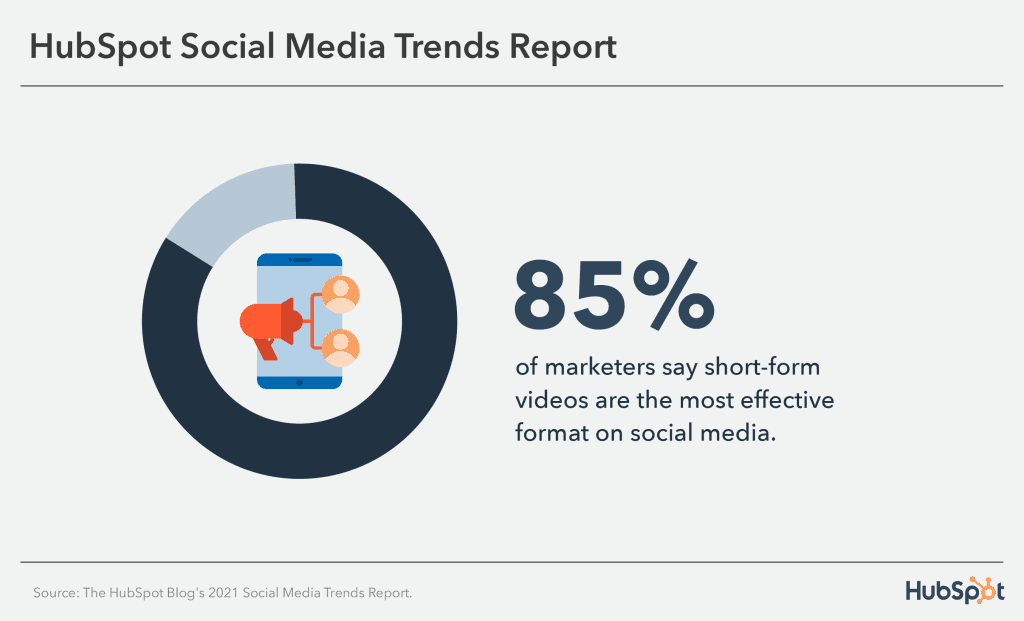
The data gathered from the HubSpot Blog’s 2021 social media trends report and 2022 video marketing report also paints a picture that overwhelmingly supports the efficacy of short-form visual content.
The data states that 54% of marketers surveyed say their companies leverage short-form videos. Short-form ranks #1 for lead generation and engagement, and predicted that marketers would invest in short-form video more in 2022 than any other content format. Furthermore, nearly half (47%) of marketers surveyed believe short-form videos are most likely to go viral.
Production value and cost
Another aspect that makes short-form videos so appealing to brand marketers is its relative cost, in that, they can be relatively cheap to produce. Social media has normalised low-budget production value to the point that it’s almost charming and more “human” to be on a budget than it is to create high-end, million-dollar videos for platforms like YouTube Shorts and TikTok. This was highlighted in our article on “flawsome videos” not too long ago.
“Right now, we started seeing videos that are not created as high-production, very curated videos but what we call in TikTok as flawsome videos, very authentic kinds of videos” emphasised Tejveer. “People want to consume that content, and these are the changes that happened in the pandemic, and these are the opportunities and challenges that marketers have.
The next wave of social media and travel
“One thing about digital, online… it moves so quickly”, said Trevor Spinks (Commercial Director, APAC, Sojern) during the ‘Hello, New Models’ panel at WiT Singapore 2022. “It’s going to keep happening and you’re going to have to keep your finger on the pulse.”
The speed at which social commerce is evolving means that branding and marketing needs to keep evolving with it, or get left behind. Both Tejveer and Trevor made this very clear during their panel, that any particular entity that fails to see the growing reach and influence of social commerce is in danger of falling behind.
Furthermore, it’s important to know what’s “in”. TikTok isn’t just a platform for lipsyncing and dance videos anymore. YouTube Shorts isn’t just a TikTok “copycat” anymore – in fact, there’s a strong consensus that YouTube Shorts will overtake TikTok in popularity in the next year. The value of Instagram’s algorithm cannot be understated, either.
Finally, the value of digital information seems to be a goldmine that marketers are beginning to tap into.
Tejveer says, “We’ve seen brands engaging with their associates, their employees, and training people through TikTok videos. We have creators who specialise in travel tips like saving money, and these are extremely engaging content for the travellers, and we see a huge opportunity in this type of content.
We’ve uploaded WiT Singapore in its entirety on YouTube. Check out more panels here.