“The revenue did surprise us, so did the engagement”
IT’S important to understand this single fact about the metaverse that has been echoed by many experts, analysts, and industry leaders – technically, it does not exist. Yet. At least, not in its complete form.
What does exist, though, are early adopters of this upcoming virtual world. Brands and companies have started to build pocket universes within this space – virtual reality playgrounds and workspaces that create new channels of interaction with customers and act as building blocks to, possibly, the future of the Internet. And in the case of M Social and Millennium Hotels, Singapore, they’ve connected with a highly niche segment through their own metaverse project.
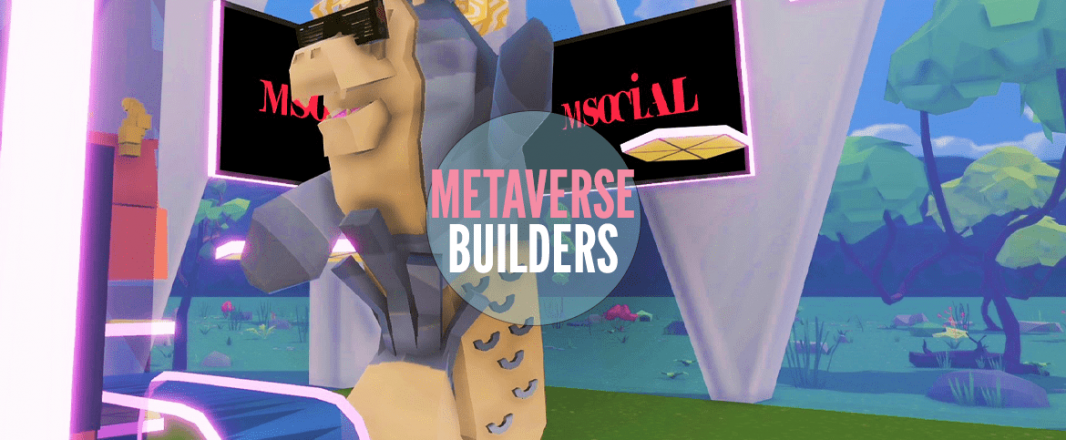
Last year, Millennium Hotels and Resorts launched M Social Decentraland, making it the world’s first hospitality group to operate a hotel in the metaverse. M Social Decentraland is essentially a virtual hotel that’s modeled after different M Social hotels around the world.
“The expectation was that it’s a brand-building exercise,” explains Saurabh Prakash, Group Senior Vice President, Commercial, Millennium Hotels and Resorts. “We were the first hotel chain that entered the metaverse and built our ‘hotel of the future’. Our purpose was very simple – we want to find new customers, we want to create experiences, we want to engage with customers, and we want to be a progressive brand. We achieved those objectives and the PR value of M Social was roughly half-a-million dollars worldwide, so we saw the value in terms of PR value and brand impact.”
However, what Saurabh and his team didn’t expect was the trickle-down effect the virtual hotel would have on revenue and engagement. Their foray into the metaverse would soon garner the interest of the Singapore Tourism Board, which tasked Millennium Hotels with the ‘Merlion on Vacation’ campaign to celebrate the icon’s 50th Birthday. The idea was to enable players to explore Singapore in the metaverse.
“We saw over a thousand new, incremental customers that engaged with the Merlion 50th Anniversary page that we had on our side in just the month of December. That’s a high-impact campaign. In terms of numbers, we increased visitation to our M Social website by 129% over pre-pandemic levels. Revenues doubled from our brand.com channel for M Social Singapore for the month of December, compared to 2019.”

Saurabh added, “So, yes, the revenue did surprise us to an extent, but also what surprised us was the engagement. The various games that were played during this campaign were close to 15 minutes. We were anticipating that customers would drop off at 5 or 10 minutes. We had customers who played for 30 minutes in a single session in order to win. To me, that was a huge surprise, that you could engage customers to that extent.”
A place to get playful – that’s not a bad thing
The experimental nature of the metaverse is what makes it so appealing. If you’re in charge of marketing a brand, there’s really nothing you can’t do within the confines of infrastructural limitations. As in, you can’t construct a world that current internet bandwidths simply cannot support. As a workaround, you create a world that’s playful – cartoony, colourful, vibrant, and unserious.
And that’s not a bad thing.
Despite the acclaim that games like The Last of Us, God Of War, and Uncharted get for their breathtaking photorealistic efforts, the most popular games in the world are Minecraft, Roblox, and Fortnite, which all share a similar lo-fi aesthetic with the metaverse. It Takes Two, with its simplistic design and animation, just hit a milestone this month by selling 10 million copies.
That’s also how M Social discovered a new consumer segment within their primary target market – avid gamers.
“M Social as a brand already attracts millennials as a primary demographic, in addition to Gen X, so on and so forth,” elaborated Saurabh. “However, the Merlion campaign gave us a unique subset audience under the millennial demographic – which were those customers who are avid game players and those who love to engage in that space.”
Creating customers of the future
What’s most interesting about M Social Decentraland is the longevity of the goals behind it. Because the Metaverse is, in essence, a futuristic concept, early adopters like Millennium Hotels seem to have grasped very quickly that the ones engaging with them on this level are also customers of the future.
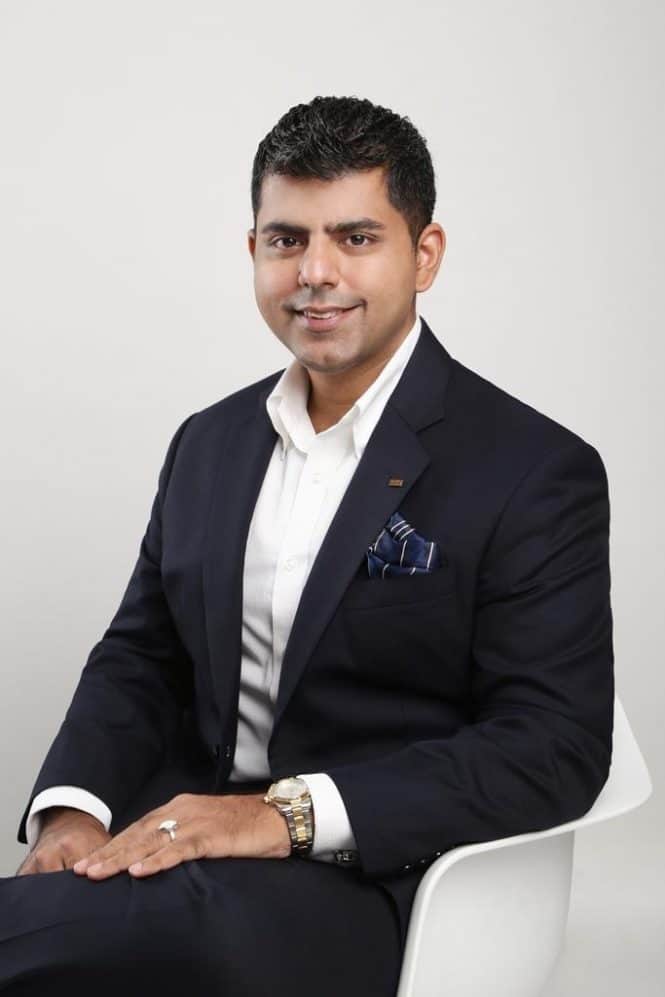
Not a gimmick – “a campaign like that showed us metrics that were a success in terms of visits and revenue”: Saurabh Prakash
In Saurabh’s words, “There were two key reasons why we entered into this space. One, was to find new customers. Two, by creating new experiences, make them customers for tomorrow. They may not be hotel stayers today, they may be a very young audience, they may not be travelling a lot, but they certainly will be in the future. This particular campaign was a glimpse of what can be done.”
It may not be a new marketing strategy by any means, but in an age of instant gratification, it’s not one that’s common either, outside of mega-brands like Disney.
The metaverse itself is a concept that has been around for decades; it only regained popularity due to Facebook’s rebranding to Meta and the company’s heavy involvement in the arena. In fact, the term “metaverse” was coined in 1992 by sci-fi author Neal Stephenson in his book, Snow Crash, about a dystopian future in which rich folk escape into an alternate virtual reality.
While its fictional origins aren’t peachy, the metaverse we’re aiming for is one that turns the entire online world into a virtual space. Websites and shopping platforms will become 3D spaces, accessed via 2D monitors or VR headsets for a more immersive experience. Hence, it’s a highly lucrative segment.
According to the analysis, the largest segments in terms of revenue in 2030 will be gaming ($163 billion) and e-commerce ($201 billion). By 2030, the metaverse’s reach is projected to be 700 million people worldwide, with the highest penetration rate forecast for South Korea.
Intention behind the project more important than semantics
It seems as though brands like Millennium are fully aware of the hints of pessimism associated with the metaverse. It is, after all, experimental and will be for some time before the vision is fully realised.
“Simply doing a campaign like that showed us metrics that were a success in terms of visits and revenue,” Saurabh emphasised.
“Many brands have entered the metaverse and one of the trends that has emerged is that it’s a gimmick and it’s not about monetisation and it’s just about brand-building. What Millennium did was something completely out of the ordinary and didn’t only use this space for brand-building and finding new customers but also to monetise the space and make an impact on the ground-level for the hotel.”
At present, metaverse forays can be easily mistaken for cloud-based gaming or gamified websites. According to Saurabh, the semantics and terminology of the situation isn’t as important as the intention behind the project.
“Whether it’s a VR platform or within the metaverse, it’s about how to engage with the audience in a way that they have not seen before. That’s what attracted us to the metaverse – this is a place that, we believe, is here to stay.
“You can see the reports from McKinsey that say metaverse is to be a trillion-dollar industry in time to come. We looked at those data points. Back in December 2021, it had 800,000 users, and that had grown by 3000%. Every month it gets another half-a-million users. We see that the platform is growing, and it has potential, we saw the feeling around it, and we believe that was the key pull when we launched this campaign in partnership with STB and using metaverse as a platform, and therefore was more successful than if it was just a cloud-based game.”
So, where does one go to learn the ropes when they’re the first at something?
Being an early adopter, or a trailblazer for more panache, can be tough yet rewarding. As the first hospitality brand to try their hand at the metaverse, Saurabh confirms that the team didn’t have a guidebook or a compass to rely on. While they could look outward to retail giants like Nike, Samsung, and Gucci, who had also hopped into the metaverse, M Social Decentraland would be a unique development.
“If you see our M Social in Decentraland, it’s a hotel without rooms and it has floating beds. It’s a canvas. And you can do what you want with that canvas. Therefore, the idea of floating beds came up. We could easily convert that space. So, no playbook. Full creativity. And that’s why we love it.”
————-
Metaverse Builders in Asia is an ongoing series chronicling the people and brands within travel, hospitality, activities, and experiences in Asia who have formed the digital building blocks to what many believe is the future of the Internet – the metaverse. Follow this thread for more articles and keep tabs on us via our socials for more content.