Still a role for DMCs who stay two steps ahead of customers, says veteran
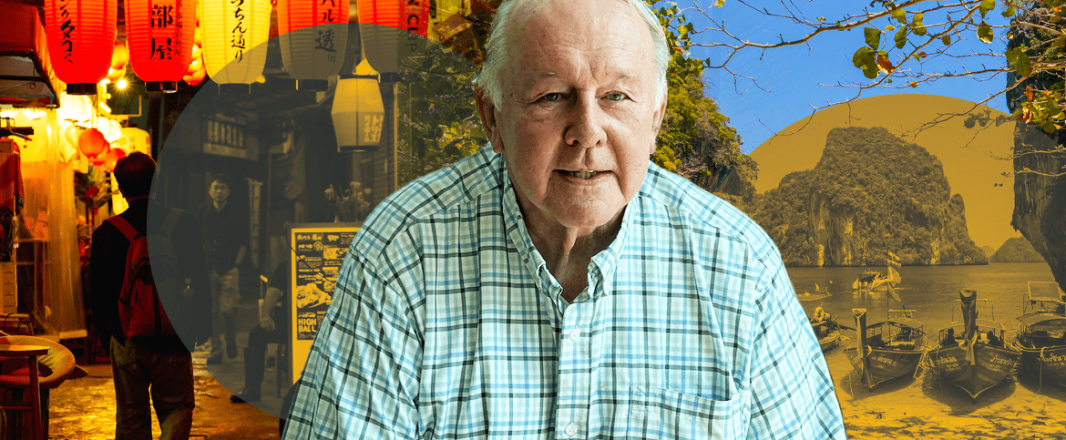
Bob Guy, the “Mr Asia” of the DMC industry, shares his insights on the changes in the travel industry and why DMCs still have a role to play in the digital age. Despite the disruption caused by the pandemic, Guy believes that businesses that are trusted sources of referrals and recommendations can thrive. He also highlights the importance of being an incredible specialist or generalist and paying attention to customers. While technology has transformed the way people travel and buy travel, Guy believes that the real magic of places in Asia has yet to be uncovered.
He’s made three exits from three DMCs in Asia – Tour East when it was sold to Jetset, Pacific World in which he was a co-owner when it was acquired by First Choice Holidays and Destination Asia in which he was a co-owner in Malaysia and Singapore when it was acquired by Dnata Travel Group.
So, you could say Bob Guy, known as “Mr Asia” in Western markets or “that Travel Guy” to his friends, knows a thing or two about the destination management world. He’s seen and lived through how it’s changed and been disrupted by technology and, not to mention, the pandemic – Pacific World was a Covid casualty – and his key lesson – “I don’t know if large companies are good owners of DMC businesses because their wish for consistent profit and cost controls works against developing new customers and markets.”
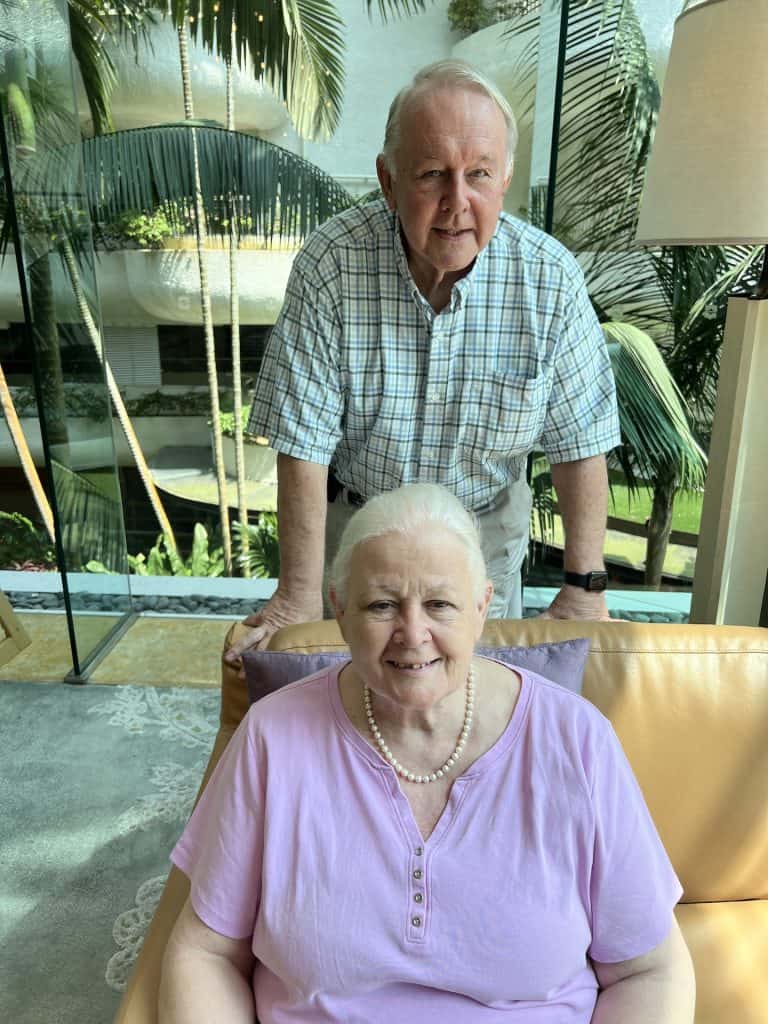
Bob and Gillian Guy: The original digital nomads, living between Bali and Santa Barbara.
Catching up with Guy at the Shangri-La Hotel, Singapore, was like a walk down memory lane – “so much life has happened in this hotel” – and yet with a pretty firm footing in the present and future because Guy, even though he’s retired with wife and constant companion Gillian by his side, still keeps very much up to date with industry trends and friends.
In fact, you could call him and Gillian the original digital nomads because the couple now lives between Bali and Santa Barbara, with Singapore the transit “watering hole”.
Yes, he acknowledges how much technology has changed travel and the way people buy travel but for him, the biggest shift happened the last two years “when Covid forced people worldwide into a technology uplift – from the way they work, consume, communicate and live”.
“Many people now no longer consider a travel agent because they can book online but that has pitfalls and people with a bit more money know they need help. Online reviews and influencers don’t always tell you the truth so people still need a trusted source. But the underlying trend is, people have rethought the way they travel and who they use.”
Find your narrow segment and serve it well
Which is why when I asked him, if he were 30 again, would he set up a DMC in this day and age, he said, “No.”
However he said, there was still a role for businesses, whether you call them DMCs or concierges, who are trusted sources of referrals and recommendations – “the best restaurant, where’s cheap and good” – in destinations.
“If you are going to be a DMC, you have to do one of two things – either be an incredible specialist for a narrow market segment or a generalist that can do multiple things at the same time.
“You have to be two steps ahead of your customer and pay more attention to your customers more than ever. People are short of time and are eager to have people help them as long as the cost is not too high.”
He cites the example of Asia Concierge, launched last year by former leaders of Destination Asia who want to create a “travel design company” that reimagines the DMC model and the Asia travel experience for luxury clients.
“If you can serve a narrow segment, and be the right hand of these customers, and be ethical, consistent and authentic, then you can build a successful DMC.”
Exotic Singapore with A&W root beer a popular R&R spot for soldiers
Which is actually the personal formula adopted by Guy throughout his career. In the Western markets, he was known as Mr Asia. In the Asian markets, he was known as Mr Incentive or Mr Cruise because he was the trailblazer in opening up those two markets for destinations in Asia, from Singapore to Hong Kong, Thailand and Malaysia.
Guy first visited Singapore in 1971 when he was serving as a military personnel in Vietnam and one of his tasks was to check out R&R spots for the military. Back then, the key places were Singapore, Pattaya, Sydney, Honolulu and Danang.
“Honolulu was most popular for those with families and Sydney was popular too with all that was going on at King’s Cross,” he said. “Pattaya was paradise and Singapore, only six years after independence, was exotic but yet you still had A&W root beer, hamburgers, cheap beer and good noodles.”
When his military career ended, he decided to become a tour leader for Travcoa based out of Chicago. “I wanted a good way to see the world, I had no money and my military stint had given me a taste for travel.”
He returned to Singapore in March 1972 with a tour group. “I stayed at Singapore Hilton East (which is now Voco). It was seven years after independence, a lot of areas were still undeveloped, but you could see that good government was leading the country in the right direction. They started talking about building a new airport in Changi that year and I could see this was going to be a place of opportunity.”
Thus, when the position of director of marketing for Tour East came up, Guy recommended himself for the role and moved to Singapore in September 1979.
So, what did a typical tour itinerary of Singapore look like then? “We toured Chinatown which had authentic communities, it wasn’t done for tourists, and we saw real kampongs (village) in Kampung Glam. In a four-hour city tour, we saw this mix of races and colour. We would do a trishaw tour of Chinatown, finishing off at Raffles Hotel and dining at the Elizabethan Grill. There’d also be a seafood dinner – yes, chilli crabs – in Ponggol.”
So really essentially things haven’t changed that much in terms of itinerary – yes, today’s tour might be by sidecar rather than trishaw – but the essential pieces are similar. What’s changed, said Guy, is the surroundings and the landscape. “Gardens By the Bay is very special by any stretch of the imagination and Marina Bay Sands, with its three towers, is the new icon.”
Guy ushered in the beginning of American incentive travel to Singapore. When he attended IT&ME in 1979, he brought a map to show customers where his new home was. “We just knew it was the right time for incentive travel to take off in Asia. With bigger airplanes and longer flights, people would come to South-east Asia to do things. The big car companies had exhausted their destinations.”
His first big sale was Chevy who brought about 2,500-3,000 people to the Hyatt over three to four weeks. “I remember STB (Singapore Tourism Board) calling us, asking, where did this come from? It was the beginning of a good relationship with STB to develop new markets.
“I was fortunate to be here at the right time. I could bring skills and experiences of previous businesses and apply them, and I could see where the market was going. We started cruise ship handling in 1982 at Tour East which has turned out to be an incredible business for Singapore and the rest of Asia.”
Many hidden gems yet to be uncovered in Asia
Despite all the advances in technology and the maturity of inbound tourism in Asia though, Guy believes the real magic of places in the region has yet to be truly uncovered.
“Magical places like Georgetown (Penang) have so many hidden gems. Traditional Asia is hiding behind Marina Bay Sands somewhere. Many tourists who come to Bali are no longer interested in the cultural experience – they go to be with families in villas, and they don’t leave the villas.
“That’s sad to me – the culture of Bali and Penang is so rich, to miss it is criminal.”
And unfortunately we cannot leave it to the DMCs to find these hidden gems, said Guy. “You don’t have time as a DMC to unearth these hidden gems, because the people who run these gems are not commercial people – but maybe that’s the secret of travel, that despite the technology uplift of the world, there are still these secrets to be uncovered by those who care to find them, however they find them.”