
The one thing you can count on when you speak to Bobby Healy is, he’s a straight shooter. When you ask him why he founded Meili Travel Technology, his new car rental business in direct competition with CarTrawler, the company he helped build over 15 years, his answer, “It was the right thing to do. We want to do better by car rental customers.”
In fact, it is clearly stated in his LinkedIn profile that Meili, founded 18 months ago with former CEO of CarTrawler, Mike McGearty, at the helm has “a mission to end the fiasco of car hire brokering”.
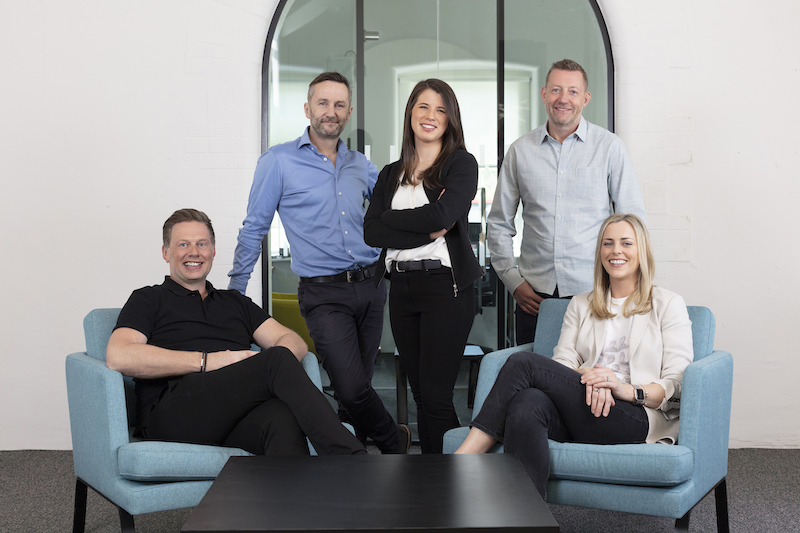
Meili Travel’s team: From left, Mike McGearty, CEO; Bobby Healy; Carol Keane, chief financial officer; Ady Guthrie, chief commercial office and Margaret Kearney, Chief People & Legal Officer. “Mike and I built CarTrawler from the ground and it’s never perfect the first time. This is our chance to get it right.”
Both Healy and McGearty left CarTrawler in 2018, six months apart. Said Healy, “Mike and I built CarTrawler from the ground and it’s never perfect the first time. This is our chance to get it right. Meili is the right thing for the right time, the world has moved on.”
Plus, he added, “I felt it was my duty to fix the damage I caused. The broker model is ugly, layers of intermediaries, it’s of no value to the consumer.”
Explaining, he said, “When I joined CarTrawler in 2005, it had a B2B and B2C business but B2C was always the biggest – Holiday Autos, Argus. We had the ability to price rapidly for metasearch and we competed with the car hire companies. As time went by, margins came down with competition and we had to look for other sources of revenue.
“Insurance is a big part of the broker margin. It’s an attractive business but terrible bother for consumers. We became the biggest competitor for the car hire companies. But when Covid came in – I had exited prior to that – I saw an opportunity to do it differently, to rebuild with roughly the same tech stack but a different business model.”
So while Meili does not compete directly per se with CarTrawler, it enables car rental companies to compete with his former company. “We give them the tech, it’s more like the GDS model.”
Lighter tech stack needed, and with AI, “easier to build a scalable platform”

Bobby Healy on what AI can do for startups today: “I recall Darren Huston (former CEO of Booking.com) calling Booking a translation company, not a booking company.”
It’s also a lighter weight model. It currently has 26 staff members, half of whom came from CarTrawler, and the other half from Rentalcars.
The tech stack is also lighter, he said. “It’s a straightforward tech stack. We spin off Meili on Amazon servers, saves us millions of dollars on infrastructure. The ability to build one user interface across one platform is also more straightforward. We have five to six UI developers and about 10 backend engineers.
“That’s because we don’t need to build all the stuff you need to have to be a broker competing with the suppliers; it’s a lightweight functional model, and it is easier to build a scalable platform today.
“We do everything the consumer, airline and supplier need – we don’t need a call centre. A customer of Hertz goes to Hertz. It’s a direct channel booking and we charge per transaction.”
Meili has raised £15 million in Series A funding and Healy said it will be profitable by this year end. “It continues to grow and we have great clients”, as he named Lufthansa, Air Baltic, Ethopian, Finnair among them.
Healy is excited about AI technology and what it can do for not only Meili but other startups. He believes it will make programmers 10 times more effective.
“Where AI does come in for Meili is in revenue management, our ML guys can do it easily as opposed to the past when you needed data analytics, process servers that cost millions of dollars with questionable results.
“Now you can ask ChatGPT to build and write code for you in Python and Java in 60 seconds and it’s nearly perfect. It’s definitely cheaper to build a startup now.”
For Healy, there’s no negative to AI. “I recall Darren Huston (former CEO of Booking.com) calling Booking a translation company, not a booking company. AI will do this perfectly now, write better copy for hotels. Now I can do a startup to compete with Booking – multi-language, verbose, different descriptions and I wouldn’t need a single human. If I had more time, that’s what I’d do.”
Meanwhile, Manna – “either the biggest tech company in Europe in five years or invisible”
Healy does have a lot on his plate – other than Meili, he started Manna Drone Delivery four years ago, pioneering drone delivery in Ireland and it’s now the second largest drone delivery company in the world after Google. Its mission is to “improve the world by making lightning-fast suburban deliveries affordable, green and safe”.
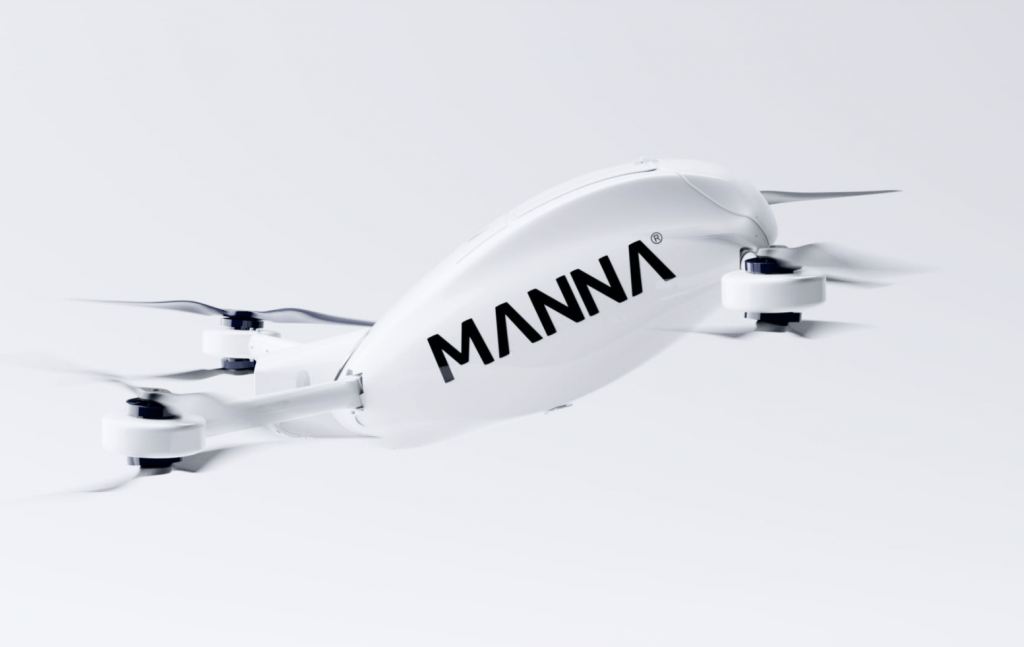
Angry, tough physical thing: Most popular delivery is coffee, in 2m 40 seconds.
By next year, he said it will be equal to Google in scale and complexity. “It’s a nascent industry and it is important we work together to remove fear, to move it forward. Then we can compete viciously in five years time.”
Manna now operates with 50 drones and is looking to add another 500 next year. It is looking to operate in 25 locations in Ireland by 2024 – up from two locations – and will open its first location in the US – in Hill Valley, Texas.
It’s raised $50m thus far and is looking to raise significant new Series B funding early next year to begin its growth phase. According to ARKs latest Big Ideas 2023, the meal and parcel drone delivery market could scale to $700 billion in revenue by 2030.
Manna’s most popular delivery is hot coffee. “The flight time is 2m 40 seconds and your hot coffee arrives perfect, this didn’t exist until drone delivery.
“The hard part is the IP – design of the aircraft and software to make it safe. There’s a lot of tech and software, looking at issues on the ground. It’s worse than a plane – you are working with electric motors and carbon fibre. It’s an angry, tough physical thing.”
Acknowledging the challenges ahead, he said, “Despite the tough market, cheques are being written. There is lots of belief in our space. We want to change the world of delivery. We are either going to be the biggest tech company in Europe or invisible in five years.”