
Three trends driving the region – digital wallets, efficiency, app/mobile
On the back of the accelerated travel recovery being seen in Asia Pacific, Worldline, the fourth largest payments company in the world and number one in Europe, wants to expand its footprint in the region.
At its Rise Travel conference in Phuket, Thailand, which was attended by more than 120 merchants, Andrew Monroe, vice president, direct sales, said the company, which had revenues of 4.4 billion Euros in 2022, said, “We want to drive a lot of expansion in Asia Pacific. We understand they are less matured, more complex markets and we want to develop the right payment methods for each market.”
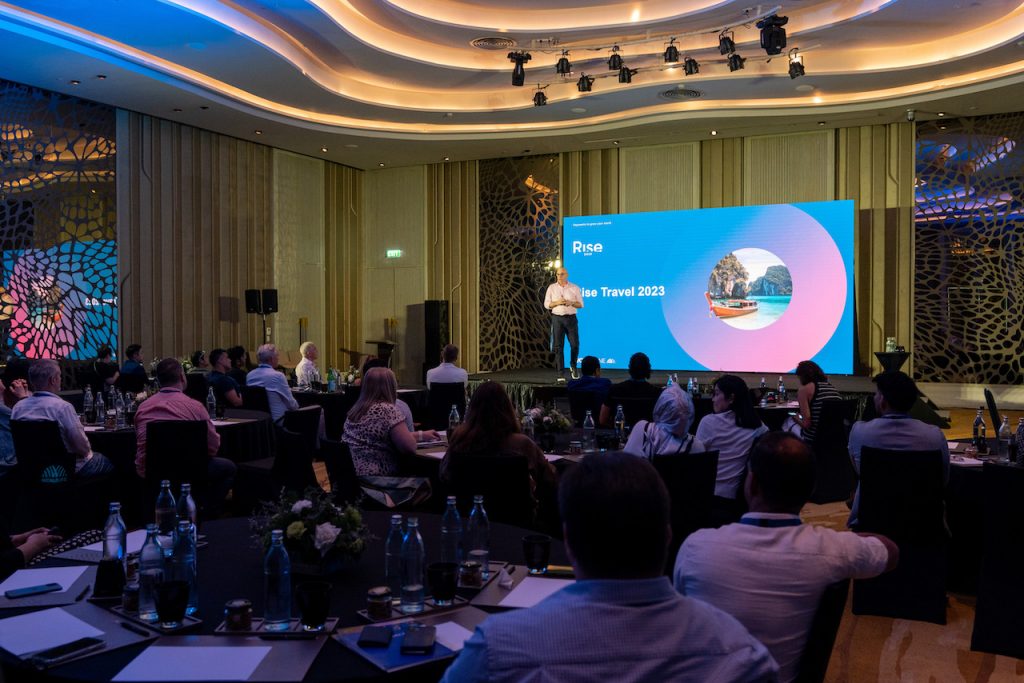
Damien Cramer speaking at Rise Travel in Phuket.
Speaking to WiT after the conference, Damien Cramer, global head of travel and airlines, Worldline, said, “What I personally found particularly interesting was that while Asian travel had been one of the slower sectors to bounce-back from the pandemic, it is now enjoying an accelerated recovery which is outpacing much of the rest of the world.
“It therefore offers excellent opportunities to those well placed to grasp them. With consumers’ increased expectation for a seamless, secure and trusted payment experience when purchasing large ticket items like travel, operators in the sector need to cater for this to ensure they can continue to serve their existing client base as well as expand upon it.”
He said that Worldline (and prior to that, Ingenico) has been operating in the APAC region for almost 40 years.
“In particular, we have a strong presence supporting banks, financial institutions and global merchants throughout Asia. Our presence includes the ownership of Paymark in New Zealand, the Worldline-ANZ Bank joint venture in Australia, and in 2022 we became a licensed acquirer in Japan. In Turkiye, additionally, Worldline has recently partnered with Lidio, one of the leading regional fintech players to offer a solution to help international online businesses enter this burgeoning market.
“In the world’s third-largest fintech hub, namely India, Worldlines Digital Commerce business, previously known as TechProcess Payment Services, has grown to 1,900 employees, developed its own IT platform and owns its IP.
“Worldline’s strategic approach is to help global online businesses enter these and other high growth markets such as China and Brazil to support merchants in their efforts to penetrate these unique ecosystems and APAC is at the heart of these ambitions.”
He noted there were three key trends driving payments in APAC.
- Diversity: APAC is much more of a digital wallet market than other parts of the world.
- Efficiency: Alongside diversity comes the challenge of ensuring that merchants manage their payment services efficiently as well as offer the right solutions for their market. Traditional cards still remain the primary payment option within the Travel sector in Asia.
- App/Mobile: The diverse digital wallet options in Asia developed primarily in a mobile (rather than card driven) world. As a result, payments are much more app and mobile focused. This is demonstrated in the extensive use of superapps across the region.
As for the challenges facing travel suppliers, he called out two.
- Management of cost and inflation. “This would include the intrinsic costs of accessing and delivering local payment capabilities and processing. Likewise the negative impact of reduced approval rates brought by cross-border transactional activity.”
- Managing cash flow to optimise financial operations. “Businesses often face challenges when making international transactions due to cross-border fees that are charged by payment networks, increasing the cost of cross-border payments. This is in addition to the ever-present exposure to Forex risk Ensuring you can attract and retain the right staff.”
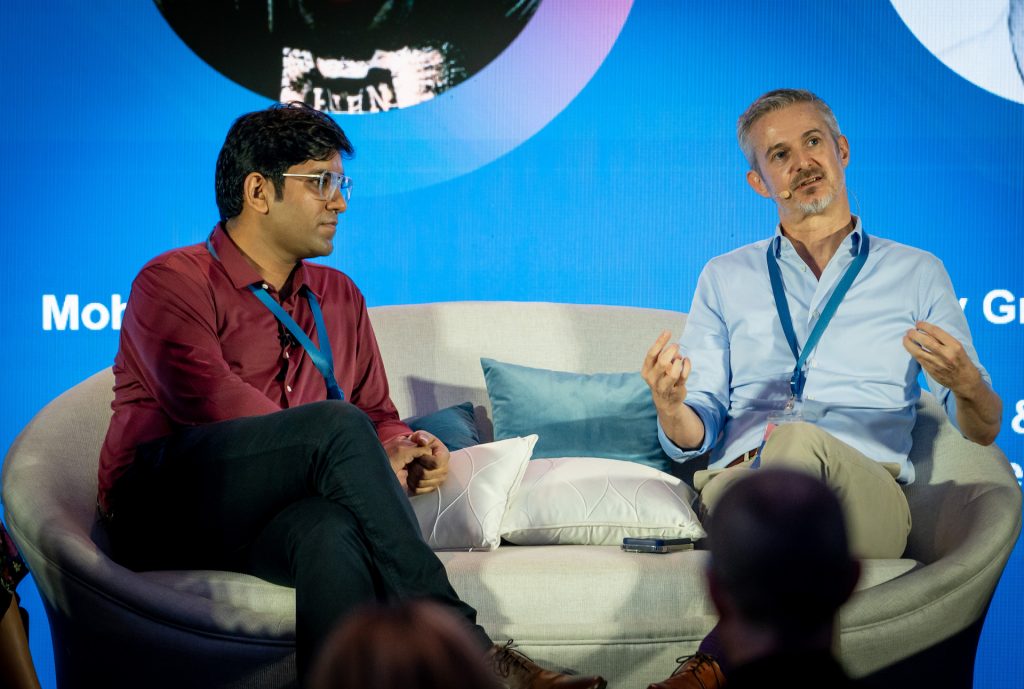
Mohit Goyal (left), of MakeMyTrip, and Anthony Green, Minor Hotels, speaking of the challenges they face developing payment products in a fragmented environment.
At Rise Travel, Mohit Goyal, associate director, product management of MakeMyTrip said that three trends were driving the Indian payments landscape – acceleration of digital adoption is accelerating as users become more comfortable with online payments, sales of ancillaries taking place on WhatsApp “this is here to stay” and a change in consumer mindset from savings to spending, encouraged by the BNPL (Buy Now Pay Later) model.
Goyal, who is developing a travel fintech product, TripMoney (Neo Forex Cards, Checkout Finance, BNPL & Insurance) for MakeMyTrip and Golbibo, said,“Consolidation will happen in India – there are now more than 100 payment methods and everyday we see something new coming up. Humans are getting the best of the discounts, the best of the deals now.”
Anthony Green, vice president digital & distribution, Minor Hotels, said he found the idea of 100-plus payment channels in India “terrifying”, and therein lies the challenge of hotel groups such as Minor on “how to scale and centralise and also give customers the right payment choice”.
“Payments is core to our overall strategy,” he said. “It is a core driver of growth and the biggest challenge will be to balance between customer experience and back office servicing.”