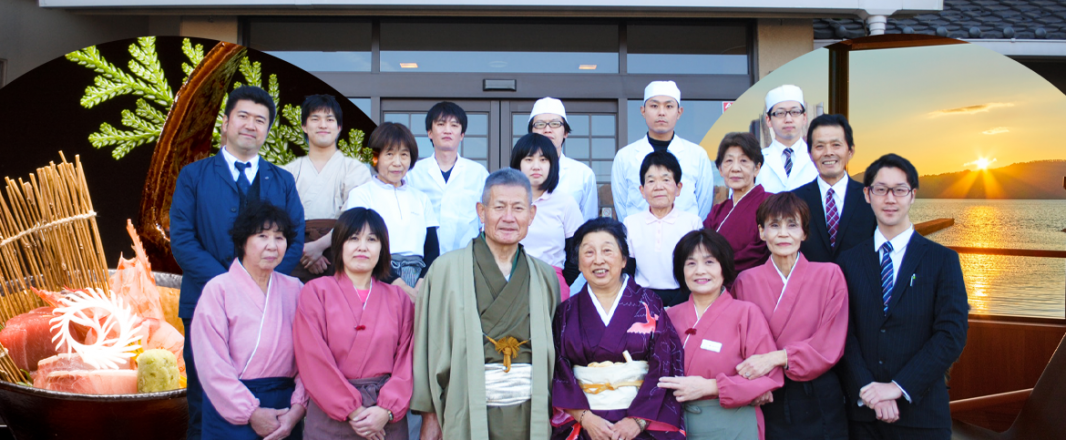
Having dusted off the aftermath of the pandemic, Nihon Aji no YADO, an alliance of 35 ryokans is ready to step up its efforts to increase their share of international travellers, as well as promote the “real ryokan experience” to foreign guests.
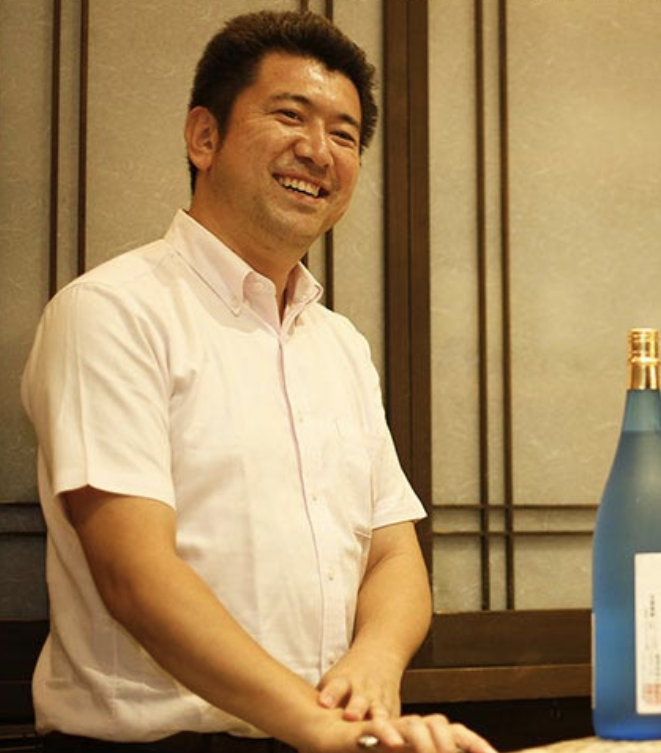
Kyohei Yamamoto: “We want to increase our efforts to promote the alliance to international markets.”
Head of the alliance, Kyohei Yamamoto, third-generation owner of Ryokan BENIAYU, located on Lake Biwa, near Kyoto, told WiT, “We celebrated our 10th anniversary on July 5, the same day as WiT Japan & North Asia, and we want to increase our efforts to promote the alliance to international markets.”
It was at a WiT Japan & North Asia event that Kyohei first saw the potential of the international market to ryokans, which are typically small and family-owned, with most catering to domestic travellers. “My interest in the international market was stirred at the event when I heard that travellers were looking for authentic Japanese experiences and what could be more authentic than the ryokan experience – our customs, traditions, original food.”
He said international travellers were also willing to pay more for ryokans than domestic guests who, due to familiarity, may not put the same premium on the experience.
“Our challenge is, we are all small ryokans and we do not have the resources to market internationally, individually. Each owner/family also has different cultures and policies.”
Hence, he thought the idea of an alliance in which they could jointly promote as well as cross-promote could work better. He is working on expanding the number of ryokans in the alliance. Members pay a one-year fee of 70,000 yen to belong. “It’s not a big sum, but we do what we can with it.”
Kyohei admits it’s not been easy putting together the alliance and marketing it and of course, the pandemic didn’t help “because all ryokans were badly affected”, he said.
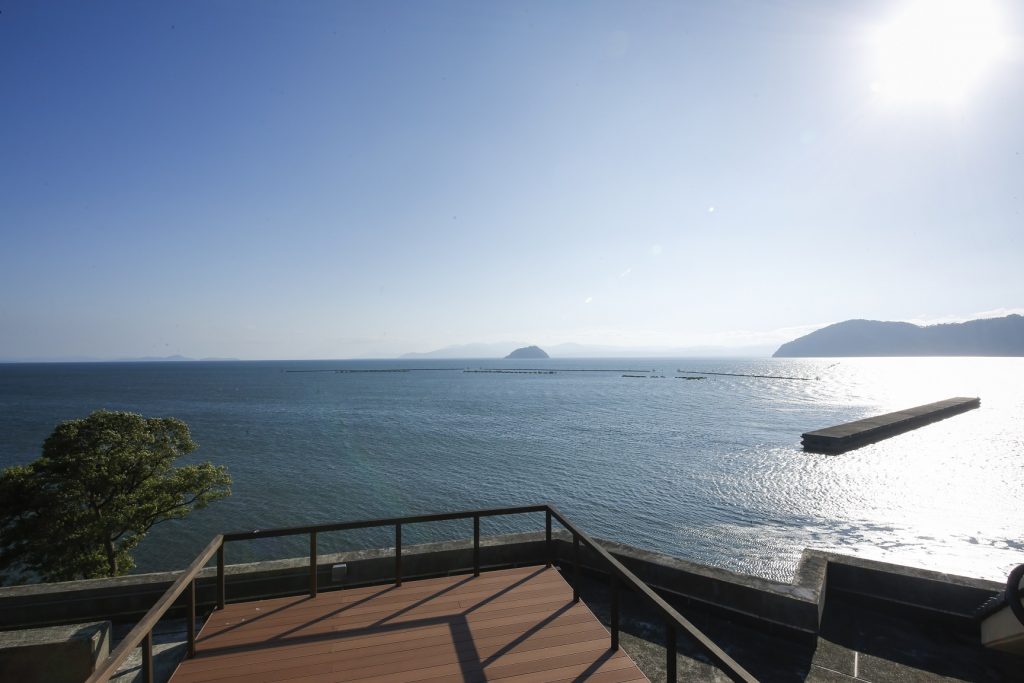
Ryokan Beniayu, overlooking Lake Biwa.
“We’ve had many crises in Japan before – earthquakes, tsunamis – and those affected particular places but with Covid, all people cannot move,” he said. “My father said, it was a really unbelievable time.”
They closed their 15-room ryokan for one-and-a-half months. Kyohei, who assists his father in running the business, said, “I sent many letters to our customers to invite them to stay after Japanese people could travel again – fortunately our customers trusted us and came to visit us.”
Domestic guests kept the business going during the time when Japan’s borders were closed. Prior to the pandemic, Ryokan BENIAYU had 10% international business.
“Since last autumn, after Japan opened, we have seen guests returning from Hong Kong, Singapore and Taiwan, our three biggest markets, and we now have almost 10% international guests again. We want to increase this.
Locally, most domestic bookings come from the big three OTAs – Rakuten, JTB and Jalan. Most of the international guests also come via OTAs but lately, he said some customers were “finding us themselves and booking direct”.
“We need to find other channels to get customers from abroad,” he said, citing Booking.com as the main OTA it gets bookings from.
Compared to other ryokans, which can go back several generations – in fact, Hoshi, reputed to be one of the oldest, was founded in 718 in Ishikawa Prefecture, Japan, and is 46 generations – Kyohei’s Ryokan BENIAYU is a babe in the woods, so to speak.
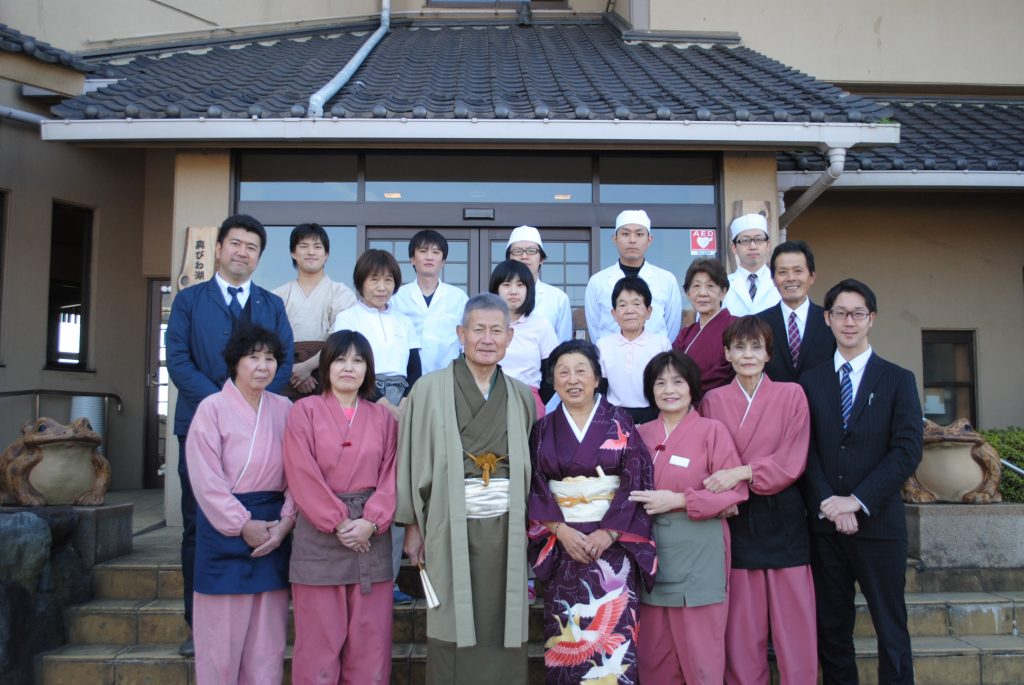
Kyohei Yamamato, second row, extreme left, with his family and team members. “You learn to live with it, and enjoy it. It’s part of your life.”
The ryokan was started by his grandfather in 1958. “I grew up in the ryokan, our house and ryokan are the same place. As a kid, I didn’t like it – there was almost no privacy at home. The staff were always there, we ate three meals a day with the staff and they were there until midnight. And then there were the guests, all the time.”
Now that he’s involved in the business, he appreciates “having visitors all the time”, he laughs. “You learn to live with it, and enjoy it. It’s part of your life.”
Kyohei, the eldest of three siblings – he has a younger brother and sister – did not join the business right away. In his younger days, he worked in Croatia, and later Tokyo for eight years, where he did several jobs such as waiter in a French restaurant and a tour coordinator. He returned home 12 years ago to help run the ryokan.
“I thought it would be easier to run a ryokan,” he laughed, “but it’s very hard, especially now. We have trouble finding employees now because many left during the pandemic and because we are in the countryside.”
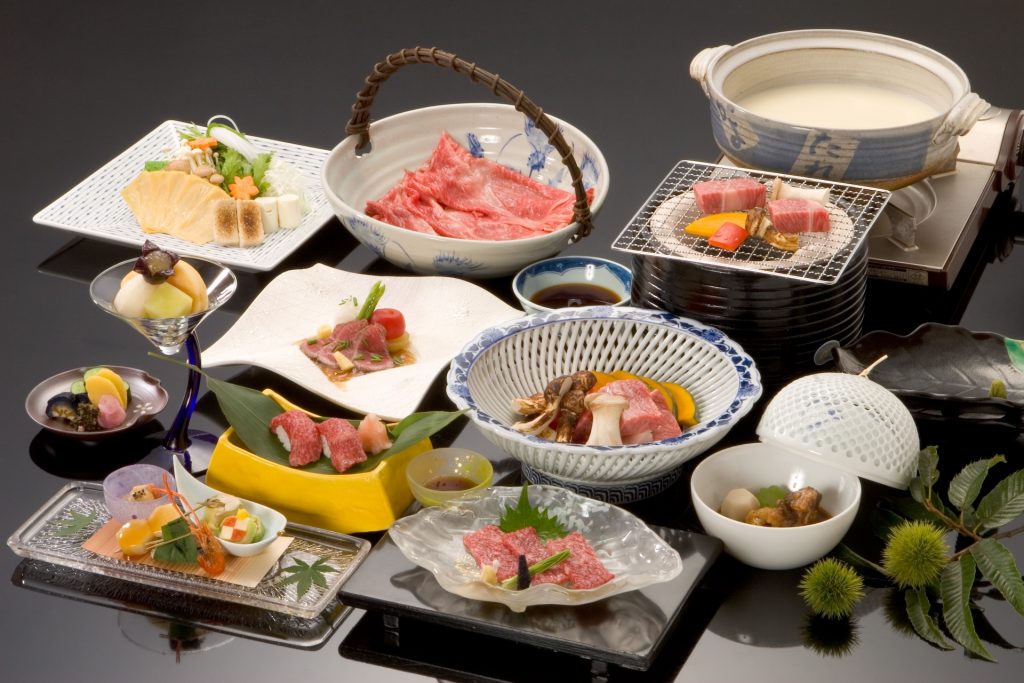
Dinner at Ryokan Beniayu: “We have to provide a high level of service because people expect “omonetashi” level hospitality, so it’s not easy to run a profitable business.”
The family employs 11 fulltime staff with 37 on part-time payroll. Costs are also increasing and Kyohei said, “We have to provide a high level of service because people expect “omonetashi” level hospitality, so it’s not easy to run a profitable business.”
As an example, he said in his grandfather’s time, guests would pay 1,500 yen for accommodation and two meals. Today, it’s 25,000 yen. “My ryokan is at the lower end of the alliance,” he noted.
The positive thing is, he said, with more international travellers staying in ryokans and paying higher prices, “Japanese customers are also recognising the value of it”.
Asked if running a family business was tough, he said, “The good point is one person can decide everything, no need for meetings or committees. The bad point is, we can misjudge and once we take the wrong path, it’s very hard to recover.”