
The mobile content and gaming market is estimated to be worth over US$6 billion and growing at 15%. Profit margin tends to be around 50% on an operating basis and two public companies typically demonstrate this.
DeNA for instance has US$530 million of sales and growing 30%, $230 million of operation profit and its current market cap is nearly $5 billion.GREE reports US$390 million of sales growing 150%, $210 million of operating profit, and its current market cap is $3.5 billion.
It was this thought that was behind Travel.jp’s decision to partner with Colopl.jp to access this huge market where young Japanese are spending a lot of their time in.(See report)
Said Kei Shibata, CEO of Travel.jp, “Colopl.jp has been successful in creating new demand for travel/tourism industry by hooking up their users with local merchants (typically local souvenir shops) and travel related companies.
“In recent cases, they claim that they could generate over $1 million of new demand in one month by bringing users to railways, local shops and other travel/tourism related companies.”
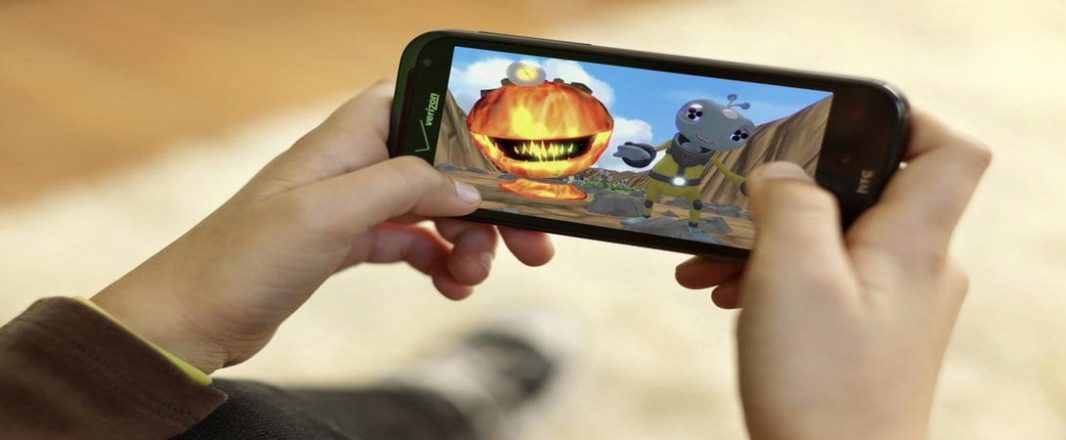
Ichige (“location games”), a type of online game that utilizes location data provided through their phones’ GPS function, has caught on big in Japan, especially with young workers in their 20s and 30s as a past-time on their daily commutes to work.
In the games, players receive virtual currency according to where and how far they travel; they can then use the currency to “buy” virtual items and souvenirs.
Colopl, considered the pioneer of this genre, launched Colopula, short for Colony Life Plus, in May 2005.
In this game, users receive a “colony” to develop. The colony grows as the player accumulates various items, including land, buildings, water, and food. Items are purchased with pula, the game’s currency. Players who register their location information through the GPS function on their phones can receive pula for the distance between their current locations and a previously registered location. Players’ stocks of pula increase the farther they travel and the more often they register their location.
There are also area-specific “souvenirs” that can be purchased only if the player is physically in or near a particular place, a feature that gives players extra incentive to travel to these locations to collect these prized items.
Colopl.jp has two billion monthly PVs, 1.8 million registered users and 40 million monthly checked-ins. Its travel-related clients include Japan Railways (Kyushu), Tokyo Metro(subway), JTB, Recruit (Jalan) and HIS.
Following the earthquake and tsunami in March, Colopl started providing an Internet-based service that shows the location of game users on a map. The new service, called “Location Registration Record Map,” is for PC users and can be used with Internet Explorer 8, FireFox 3.6, Chrome 10, Safari 5 and their later versions.
“Location registration data is data indicating that users actually existed in certain places,” the company said. “Because it provides clues about the statuses of base stations for mobile phones, roads, etc, it is helpful for disaster victims and those who are heading for afflicted areas.”
In February, Japan Tourist Bureau launched a GPS game integrated vacation package called “Colo-Tabi” (“Tabi” means trip in Japanese). The first such tour, originating in Tokyo with Iwate, three hours north of Tokyo, as its final destination, was made available for reservations on Feb 15.
With the package, travelers take the Tohoku-Shinkansen from Tokyo to Ichinose-station in Iwate prefecture. There they change on to a tour bus. As they travel around the Iwate prefecture, the travelers then send in their GPS location information to complete the game’s “Iwate area”.
The next area of interest that is how location-based social networks like Foursquare can be layered onto these games. A report,quoting Papaya Mobile CEO Si Shen, suggests the US gaming industry is behind Japan and China in the marriage between these two services and that Colopl was ahead of the curve in this execution.
The author suggests, “Location-based gaming is the only way to go when thinking about the evolution of social games. It’s about time social game creators and companies like Foursquare get to talking.”
I suggest it’s also time travel companies get to talking with social game creators as well.