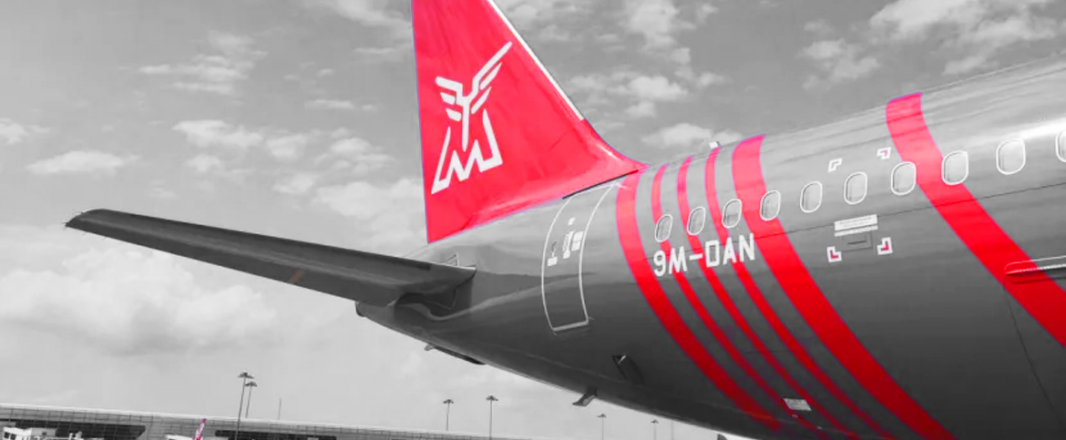
Financial pressures force Malaysian budget carrier to halt flights, prompting assistance from other airlines and regulators.
In a decision that has blindsided the regional aviation industry, MYAirline, a Malaysian budget carrier, has abruptly suspended its operations due to financial pressures, leaving thousands of passengers stranded. The airline’s decision to halt 40 flights came as a shock to both the government and travellers, further emphasising the challenges faced by budget airlines in a competitive market.
Where did it all go wrong?
MYAirline made the announcement on social media, expressing regret for its “extremely painful decision” but attributing it to “significant financial pressures” that necessitated the suspension. The airline’s board of directors stated, “We have worked tirelessly to explore various partnership and capital-raising options to prevent this suspension. Unfortunately, the constraints of time have left us with no alternative but to take this decision.”
The suspension followed closely on the heels of MYAirline’s announcement that it was in advanced stages of finalising a strategic partnership, raising speculation that these talks might have collapsed.
Speaking to WiT, Hannah Pearson, founder of travel market research company Pear Anderson, pointed out that MYAirline made critical mistakes in its approach to the aviation industry. “One of the biggest mistakes that MYAirline made was not having enough of a differentiator in the already-crowded Malaysian aviation space,” Pearson explained.
“If the only difference is the airfare cost, then you will need to continue to be the cheapest in the market, which erodes your profit margin. Airlines who have emerged from the pandemic, in general, have had to grow stronger, leaner – they’ve already cut the fat from their operations, and now they have more of an eye towards profitability.”
She highlighted the airline’s ambitious expansion plans, aiming to have 20 planes by the year-end, as another factor contributing to its financial challenges.
What about the CAAM certificate extension?
What’s even more perplexing is the fact that just days before its sudden suspension, MYAirline received a two-year extension to its air operator certificate (AOC) by the Civil Aviation Authority of Malaysia (CAAM), which allows MYAirline to continue its commercial airline operations until 2025.
Pearson questioned whether there were warning signs leading up to the suspension. She said, “It’s hard to know what had been communicated between MYAirline and MAVCOM – certainly rumors had started to fly around over financial instability over the past couple of weeks. But it looked as though MYAirline was hopeful of funding coming through, which it seems was pulled at the last minute.”
Meanwhile, Brendan Sobie, independent analyst at Sobie Aviation, told WiT, “MYAirline’s initial business plan was based on what it assumed was a weak post-pandemic AirAsia. But a weak gorilla is still a gorilla. Not surprisingly, AirAsia dumped fares and capacity on all MYAirline routes – which is how it has responded to new competition previously. Overlapping routes were also unprofitable for AirAsia despite load factors of virtually 100% but it was able to cross-subsidize due to profits on other routes. The strategy worked.
“Two of MYAirline’s 9 domestic routes – KLIA2 to Miri and Sibu – were already suspended earlier this month,” explained Sobie. “It also had cut frequencies on several remaining routes for the winter schedule, including reducing from 2 to 1 daily flight its 2 international routes (KL to Bangkok Don Mueang and Suvarnabhumi).”
What happened to damage control?
Logistically, the situation presented a significant challenge, as thousands of passengers found themselves stranded and in a state of disarray. Affected passengers have since flooded social media with videos of shuttered booths and offices at airports, with no indication on what they should do next.
Malaysia Airports Holdings Bhd (MAHB) reported that 5,000 passengers have been affected, with 39 flights serving local destinations and one international route to Don Mueang Airport in Bangkok, Thailand impacted.
MAHB urged MYAirline customers to reconsider their travel plans and seek alternative options if they had not yet embarked on their journeys. They recommended exploring alternative flight choices through other airlines’ websites and provided resting areas at Kuala Lumpur International Airport to ensure stranded passengers can wait for their next flights comfortably.
Meanwhile, Malaysian Aviation Commission (Mavcom) quickly addressed the situation, stating that MYAirline must refund consumers who purchased tickets and were affected by the sudden suspension. Transport Minister Anthony Loke emphasized that MYAirline would need to engage with Mavcom and present their issues to the commission before any assistance could be provided.
Swooping in to the rescue: A PR goldmine
In the wake of MYAirline’s suspension, several other airlines stepped up to assist affected passengers. Malaysia Airlines invited MYAirline’s management to collaborate in reallocating passengers on its available flights and also offered a 55% discount on flight tickets for passengers holding MYAirline tickets for travel up to November 2023.
AirAsia extended its support to MYAirline passengers by providing a 50% discount on base fares for one-way flights to and from select destinations. AirAsia’s CEO, Bo Lingam, said, “We deeply empathise with all affected MYAirline passengers and their staff. We would also consider hiring eligible and qualified individuals from MYAirline who share our passion for the industry and are willing to contribute their skills and expertise to our team.”
“As soon as I saw the news, I’d had my money on AirAsia swooping in to help, and wasn’t disappointed,” said Pearson.
She continued, “MAVCOM is typically the authority who looks out for consumer rights in these types of situations, and they have already been clear that MYAirline will need to refund those customers who have bought tickets. They’ve also set up a hotline dedicated to MyAirline passengers. In reality, whether the consumers will get their funds back is another question.”
Did MYAirline have the odds stacked against them?
With MYAirline’s sudden halt, concerns have arisen about the robustness of the Malaysian market to support newcomers, especially in the low-cost carrier (LCC) segment. Pearson expressed doubts, stating, “No – for four airlines to compete with one another on similar routes, using similar aircraft, without any clear differentiation in product offering – there is simply not enough demand.”
She did, however, name a company that might stand a chance to differentiate itself and target different domestic airports in Malaysia. “SKS Airways may have a chance, with its new fleet of Embraer aircraft which in theory could allow them more flexibility to target different domestic airports in Malaysia. But, if you compete simply on price, it’s not going to work.”
Meanwhile, Sobie told WiT, “MYAirline had about a 10% share of Malaysia’s domestic market, which in July and August consisted of about 2 million monthly passengers (about 80% of 2019 levels). It carried almost 2 million passengers in the 10+ months it operated (1 December 2022 to 11 October 2023). The suspension does not come as a surprise as MYAirline has been struggling financially for several months, sparking concerns with suppliers and employees.”
He continued, “MYAirline also had been trying to pivot in recent months to the international market, including charters, as its domestic operation has been extremely unprofitable. While its average load factor was about 90% yields were very low. AirAsia is the domestic market leader with more than a 50% share. Malaysia Airlines Group accounts for almost 35% and Batik Air Malaysia (formerly Malindo Air), which now focuses on international, almost 5%.”
Will MYAirline fly again?
Looking ahead, the fate of MYAirline remains uncertain. With the challenges of a crowded market already highlighted by two key analysts, and stiff competition by industry giants like AirAsia, it’s hard to say where the 10-month old airline, which was once poised to take over regional skies, goes from here.
Pearson stated, “I think it would be incredibly hard to build back trust from consumers if they do reboot – and also to convince investors that they have the right business model in place and can actually operate an airline.” She pointed out that MYAirline faces challenges regarding unpaid statutory payments to employees, which the Malaysian Aviation Commission (Mavcom) is investigating. AirAsia’s open call for MYAirline staff to explore opportunities with them further complicates MYAirline’s path to recovery.
“Ultimately the Malaysia market is just not big enough to sustain more than 3 main competitors,” concluded Sobie. “As was the case in 2017, when Rayani Air suspended operations, there will be lessons learned for Malaysia.”
Photo credit: MYAirline X @MYAirline