
Culture is the critical piece, says Jason Sui
Once operating fairly alone in the global air aggregation and distribution space, Shenzen-based PKFARE now finds itself in increasingly competitive waters as more China-based flight platforms expand their wings beyond their home market.
Said Jason Sui, co-founder of PKFARE, “We started in 2014 and from the start, we wanted to do flight content and comparison for international travellers – to provide global travel agents with air content.”
As for why it’s gotten so competitive suddenly, Sui said, “Previously Ctrip absorbed a lot of the content and supply and only Trip.com had a business outside China. But the Chinese market is extremely competitive, low margin and recovery is still soft. PKFARE is a good model, we were the first to do it, and now everyone is following us.”
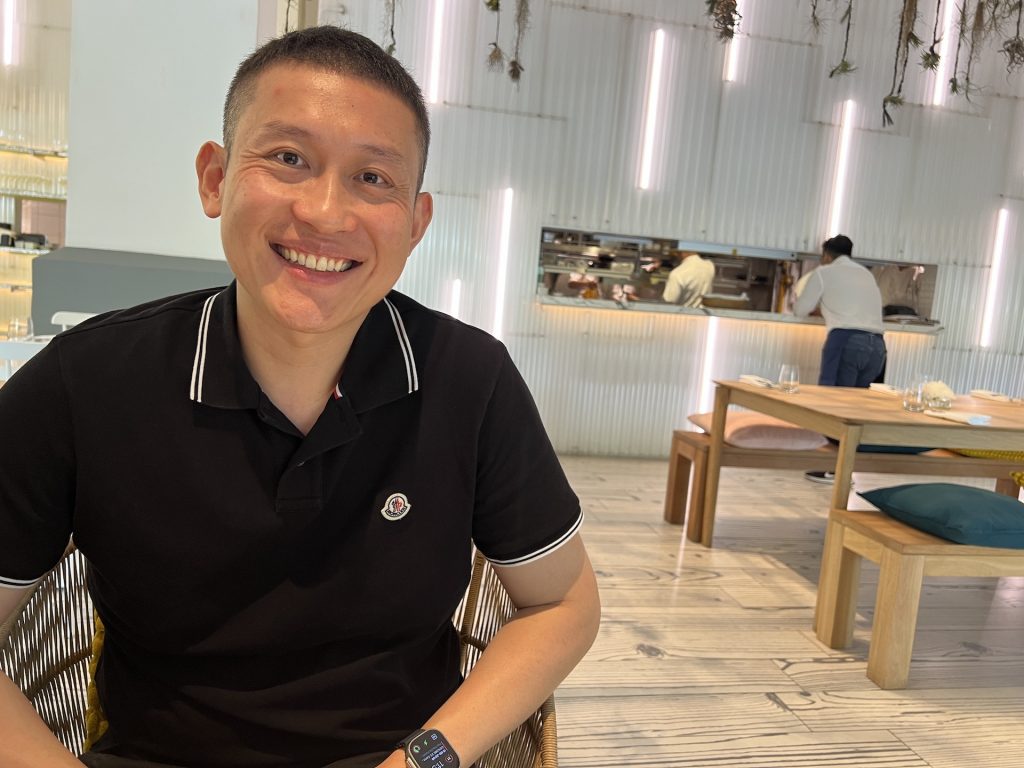
Jason Sui: “In the beginning, we tended to recruit Chinese people for familiarity, but we realise it’s about identifying the people who believe in what we are doing. We now hire local people with local knowledge in local markets.”
Sui, who ran a traditional travel agency in Beijing before starting PKFARE, saw the opportunity of scaling the travel agency model with tech. “I was doing flight consolidation and corporate travel and after 10 years, I wanted to do something new and disruptive – finding the right flight content and competitive fares was difficult for travel agents.”
That’s when he met co-founder Jason Song, who was then product manager of ZTE, the telcom company. “I was his client, he knew about tech, and I knew about travel, and we thought we’d merge our skills.”
From the start, PKFARE had a strong global business mix – 60% international, 40% China. “That’s why we were less affected during the pandemic than other companies that had a higher Chinese mix but still, I have to admit, it was tough. From March 2020 to end of 2020, we were just handling a huge amount of refunds.”
It cut its staff count from 300 to 120. At that time, majority of its revenues came from flights and the rest from hotels and during the pandemic, it grasped the opportunity to get into local hotel content – thus leading to a new business model post-pandemic. “We now have flights and hotels, which makes us a stronger, more resilient business,” said Sui.
For global accommodation content, it partners with bedbanks and for unique properties, it has direct contracts. “These are usually our top sellers. We have 3,000 hotels on direct contracts – the total active number of hotels is 650,000. Hotels have higher margins and they helped us survive the pandemic.”
Currently, majority of its total revenue mix is from the global market. “International hotels deliver higher margins, our profitability is enhanced by it” said Sui.
Flights remains key focus – first, post-servicing, then, ancillaries and virtual interlining
But it’s not taking its eye off flights, which is getting increasingly competitive with more players, both Chinese and international, entering a space that is undergoing disruption in the transition to an NDC and low cost-dominated world.
Asked how it would differentiate from the others – you have Flightroutes24 expanding globally and adding hotels, Dida Travel is expanding from hotels to flights and possibly tours and activities – Sui said, “We have early mover advantage, and we know the flight market well. We are also very clear about what we want to do.”
This year, it will focus on post-servicing of flights. “With the diversification of content sourcing – NDC and EDIFACT, post-servicing has become complicated, and we believe 65% of the post-service process can be automated.”
Next year, it will focus on ancillaries and the following year, virtual interlining.
Asked if this was a fast enough pace to compete, given the rapid pace of change, Sui said, “We want to focus on one thing and make it the best. The learning curve on each product should take about a year too, and we don’t want to rush into things with half-baked solutions.”
As it looks at accelerating its global expansion, PKFARE is eyeing new markets such as Latin America and MENA. “We are strong in South-east Asia, relatively strong in North America and Europe.”
As for what lessons he’s learnt from the pandemic, Sui said, “It’s given me a deeper understanding of our customers and clients. The majority of people compete on price. But in the end, what is their business, how do they make their money, what’s their revenue and cost? We have to understand that and how to help them.
“We have to learn to work better in international environments”
He accepts though that technology cannot be the key differentiator because everyone of its competitor also claims best tech. “I think it comes down to culture, as the key differentiator and the greatest challenge. We have to learn how to work better in international environments and recruit local staff in places such as Seattle, Barcelona, Paris and Dubai where we have offices.
“In the beginning, we tended to recruit Chinese people for familiarity, but we realise it’s about identifying the people who believe in what we are doing. We now hire local people with local knowledge in local markets.”
Asked if it was more challenging for Chinese companies to hire foreign talent – given the perception of a tough work culture and long hours, Sui said, “It is true, there is a perception and Western societies are big on life-work-balance, but we have learnt as we expand that we need to be results-driven, not hours-driven.
“Chinese brands are also known for our competitiveness and some airlines think, Chinese companies are not as well-regulated as Western ones, but we value our reputation and credibility and once they work with us, they know we can be professional and efficient.”
PKFARE is now back up to about 220 staff, of whom the majority are based in China, with 10 staff out in the world.
Asked how it manages such a global business with such a ratio, Sui said, “Pre-Covid, I travelled a lot, probably 300 days a year. But we are profitable now and we will be expanding our overseas team. We want to find the appropriate people who believe in our culture and take the adventure with us.
“Our true value is simplicity. We want to help travel agents and OTAs, and suppliers like airlines and hotels, be more cost-effective. We have to be profitable and not bleeding cash.”
Image credit: PKFARE