In a review commissioned by the Aviation Studies Institute, Sobie Aviation explores the future landscape of super short-haul air transport in Southeast Asia.
This analysis, the first of a two-part series, delves into the dynamics shaping the region’s aviation industry, with a focus on flights covering distances of up to 500 km. Against a backdrop of evolving environmental priorities, advancements in high-speed rail infrastructure, and emerging aircraft propulsion technologies, the report navigates the trajectory of super short-haul aviation, with key observations and providing strategic recommendations for policymakers.
It asks the question – what does the future hold for super short-haul aviation in Southeast Asia?
Here are some key takeaways from the white paper:
- As sustainability becomes more important in Southeast Asia it is inevitable that there will be shifts in the domestic super short-haul segment.
- There has been a significant decline in the number of super short-haul routes, coincident with a reduction in turbo-prop fleets.
- The introduction of jet operations at some airports can compel existing turbo-prop operators to convert their fleets to jet aircraft, even on super short-haul routes.
- The introduction of physical infrastructure for high-speed rail is on its own not sufficient to displace demand for air transport.
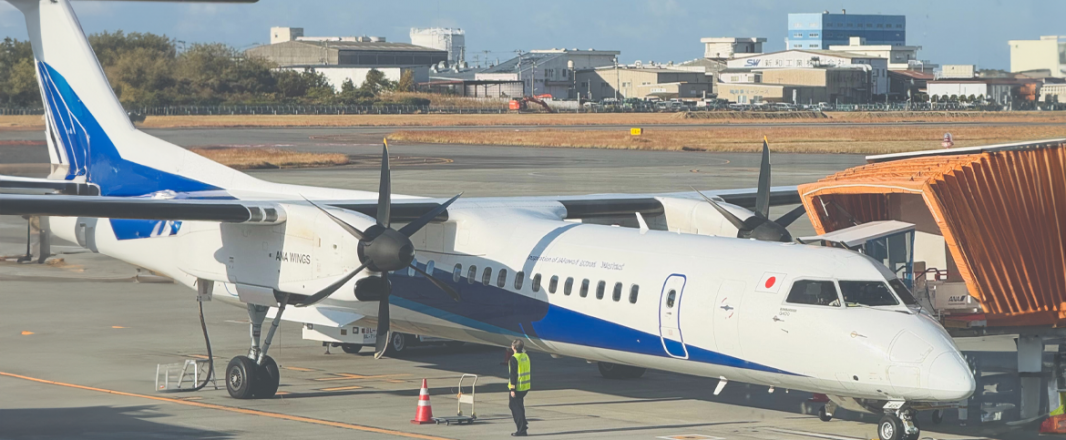
- Turboprop fleets could facilitate improvements in super short-haul international connectivity whilst limiting environmental impacts as an interim measure until new propulsion technologies and associated infrastructure are available.
- Elimination of aircraft emissions through electric or hydrogen-powered aircraft should be easier on ‘thin’ routes serving small islands, rather than island destinations with large markets. However, requirements for aircraft diversions needs to be considered and may put some routes beyond the reach of these aircraft.
As environmental concerns continue to influence key travel markets in Southeast Asia, the study identifies shifts in the domestic super short-haul segment, such as the decline in super short-haul routes, coinciding with a reduction in turbo-prop fleets. The introduction of jet operations at some airports has spurred the conversion of turbo-prop fleets to jet aircraft on super short-haul routes. However, it’s also emphasised that high-speed rail infrastructure alone is not enough to displace the demand for air transport.
Globally, the super short-haul segment has been slower to recover from the pandemic compared to other segments. The recovery rates for both domestic and international super short-haul flights remain below the overall market average. In Southeast Asia, recovery rates for domestic super short-haul flights lag behind the overall market. The seat capacity recovery rate is higher due to an increase in average aircraft gauge.
Turboprops and sustainability in question
The paper underlines the influence of policies shaping the super short-haul segment and outlines several suggestions for policymakers. Jet operations at certain airports have led to the conversion of existing turbo-prop fleets, even on super short-haul routes.
The shift away from super short-haul flights in Southeast Asia, coupled with a decrease in turboprop fleets, indicates a potential conflict with sustainability considerations by passengers. Interestingly, the recovery rate for super short-haul jet flights is almost 80%, outpacing the turboprop recovery rate by 20 percentage points.
While Southeast Asian airlines have committed to sustainable aviation fuel (SAF), the report highlights a surprising lack of commitments to zero-emission short-haul aircraft in the region. The report emphasises the potential of turboprop fleets in facilitating improvements in super short-haul international connectivity while limiting environmental impacts. However, it also magnifies the surprising lack of commitments from Southeast Asian carriers for zero-emission short-haul aircraft.
Despite advancements in electric and hybrid electric aircraft, including conversion kits for turboprops, there remains an untapped potential for zero-emission options in the super short-haul market.
What can policymakers do?
The report advocates for a mindset change among airlines, airports, and governments in Southeast Asia. It underscores the importance of reconsidering policies to facilitate smaller aircraft, including a revival of turboprops in the short term and the adoption of new propulsion technologies in the medium to long term. The declining popularity of turboprops and increasing reliance on jets pose challenges to the region’s decarbonisation and sustainability goals.
The report also calls on Southeast Asian governments to adopt comprehensive green aviation or aviation sustainability strategies. It recommends a focus on decarbonising super short-haul routes through partnerships, standardisation of regulations, and investments in the necessary infrastructure.
Highlighting the potential of zero-emission land-based aircraft, the report envisions a future where these technologies replace conventional aircraft on super short-haul routes, aligning with sustainable aviation and tourism objectives.
Sobie Aviation’s full white paper can be found here.