
Dynamic duo CFO Siew Kim and CCO Bee Leng unite to innovate at Ascott
Technology has not only transformed hospitality in the past decade or so but it has also made conversations easier between finance chiefs and brand marketers, two usually divergent camps because, to put it simply, one counts money, the other spends it.
In the case of Beh Siew Kim, Chief Financial and Sustainability Officer of CapitaLand/Ascott and Tan Bee Leng, Chief Commercial Officer, The Ascott Limited, CapitaLand Investment, technology in the form of digital marketing and now AI have helped them align their respective goals and execute on a common vision of brand building and continuing innovation at one of the world’s leading international lodging owner-operators.
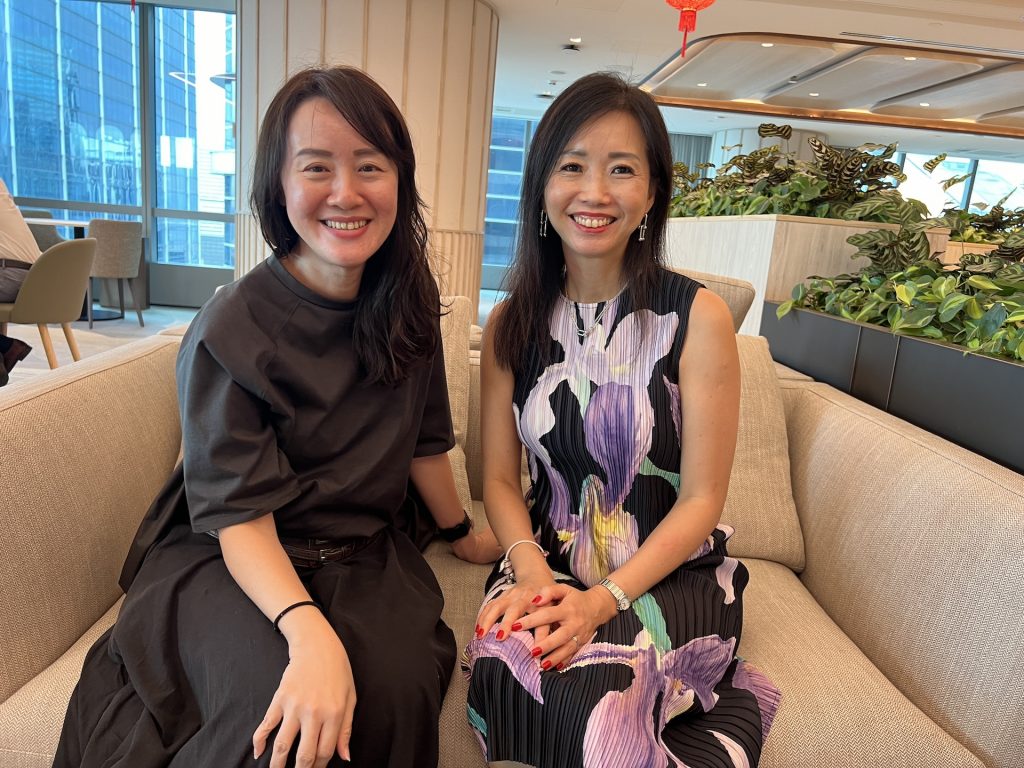
Tan Bee Leng (left) and Beh Siew Kim: Tech and trust combine to form a working partnership that’s delivering returns on innovation
It helps of course that the two have built a relationship of trust over 17 years of working together in the same organisation. That foundation, of longevity, has created a dynamic duo who, over the past few years, has come up with some pretty cool brand marketing ideas and digital experiments around AI.
Don’t get me wrong – in case you think Siew Kim will dip into her pockets for any cool projects, think again. She is still all about returns on investment and accountability. She’s worked with CapitaLand for 17 years, running its real estate businesses, and the last seven in the hospitality division where she ran the Ascott Residence Trust Management.
Says Siew Kim, “Any kind of expense must always have a return on investment. Usually with brand and marketing, it is harder but there are now more measurable returns with digital marketing. My questions are always, why are you spending this? How much revenues, returns? Can I increase your target?”
Asked if she found these questions irritating, Bee Leng laughs, “The good thing is, we know each other well. When I first came into Ascott in 2019, I was asked, ‘do you have to spend?’ My reply was, ‘I don’t have to spend but we do need to spend because the company needs to grow’.”
Bee Leng became managing director, brand & marketing, of The Ascott Limited, in July 2019 after spending 17 years at the parent company CapitaLand where she was managing director (digital ventures). This February, she was promoted to Chief Commercial Officer, and she comes from a background in corporate communications and marketing.
She said, “In the early days, brand and marketing was more intangible but digital marketing is trackable and measurable, and thus conversations are now easier. It’s in a language finance folks comprehend.”
That doesn’t mean that the group is spending less on the intangibles of brand marketing, they say. Typically, they say, its brand and marketing spend is 50% on direct marketing, 25-30% on brand building and the rest on public relations.
Says Bee Leng, “There needs to be a mix between tangible and intangible. Direct marketing gives you instant gratification, conversions. But you need to invest in your brands, so we have not reduced spending on brand building. Last year, we did a 360 degree brand refresh on all our brands. I am fortunate to have an enlightened CFO who believes in spending on intangibles.”
Ascott Limited (Ascott) has over 900 properties in over 220 cities across more than 40 countries in Asia-Pacific, Central Asia, Europe, the Middle East, Africa and the USA. Its serviced apartment, coliving and hotel brands include Ascott, Citadines, lyf, Oakwood, Quest, Somerset, The Crest Collection, The Unlimited Collection, Préférence, Fox, Harris, POP!, Vertu and Yello.
Investing in experiments: Cubby web chatbot to move to bookings in Phase 2
With such a vast and diverse brand portfolio, it is imperative the group remains agile and innovative and experiments with new technology. This is when it can get harder to request for budgets.
Says Bee Leng, “It’s hard to guarantee returns especially with new projects. How do I articulate the intangible value of an experiment?”
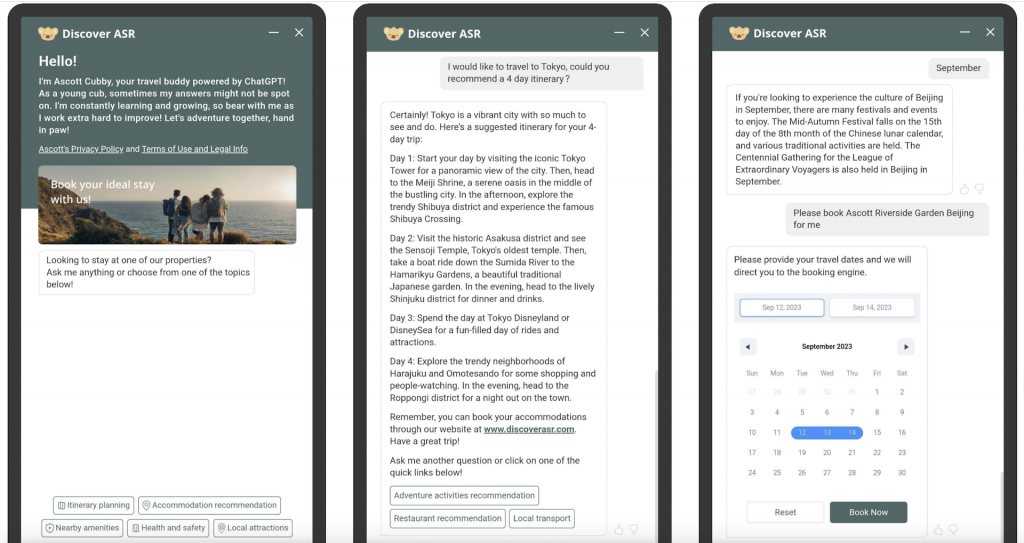
Cubby: Positioned as an experiment and now moving onto second phase to include bookings within the chatbot.
For example, Bee Leng’s team wanted to launch a ChatGPT-powered web chatbot, Cubby, to play the role of a “travel buddy” to its guests. “AI is still a nascent technology and we wanted to learn the tech first, and so we positioned it as an experiment and set certain KPIs, and we asked for the funds.”
The project was approved. With a twinkle in her eye, Siew Kim looks at Bee Leng and says, “She’s very lucky because I am enlightened.”
She adds, “I am pro-innovation. However I have killed projects that don’t make sense, for example, when they wanted to introduce a feature in our app. I questioned them as to why they wanted to enhance just to satisfy a small number of users. Our CEO Kevin Goh is also pro-digital and innovation, and so we do have budgets for innovation, we’ve always had it. We believe in AI and we felt Cubby would be a good way to engage our guests.”
Clearly, Siew Kim’s happy with the return on investment because Cubby, from handling customer service enquiries, is now going into Phase 2 to include bookings and reservations functions.
Says Bee Leng, “The response has been good, our guests like it, it solves pain points. There is good traction and good user adoption. We got 60,000 guest messages on Cubby within three months, it saves a lot of human time. Now we are ready to add a booking feature and we are establishing the ROI in this phase, to set revenue targets.”
Adds Siew Kim, “AI is here to stay and we need to invest in brand, technology and sustainability.”
In human vs AI marketing campaign experiment, AI won
Both executives are actively advocating their teams to embrace AI in their work. Says Bee Leng, “Our social and marketing teams now use AI to create assets, EDMs, processes – it gives us faster time to market. Revenue management tools have become more sophisticated, more predictive, more accurate. AI is bolder than us – it sets bolder rates and it sells out.”
Siew Kim acknowledges that there may be anxiety among staff that AI could displace some jobs. “But AI can take away manual work and give us more time for more creative work,” she said.
Bee Leng’s team recently ran an AI versus human marketing campaign. Both launched the same campaign with the same offer at the same time. Says Bee Leng, “The AI team was faster in getting it to market and the conversion was better. The time saved was the most important. The humans waited because they wanted to design a better version.”
Chimes in Siew Kim. “Agility improves ROI.”
The team is now reviewing its Discover ASR (Ascott Star Rewards) app, launched October 2020, with the aim of moving it from mobile-responsive to native. Says Siew Kim, “Right now, the app is more for bookings, we want to build e-commerce into it – so the native app will have the best of both functions.”
New revenue streams from Rae, the virtual influencer
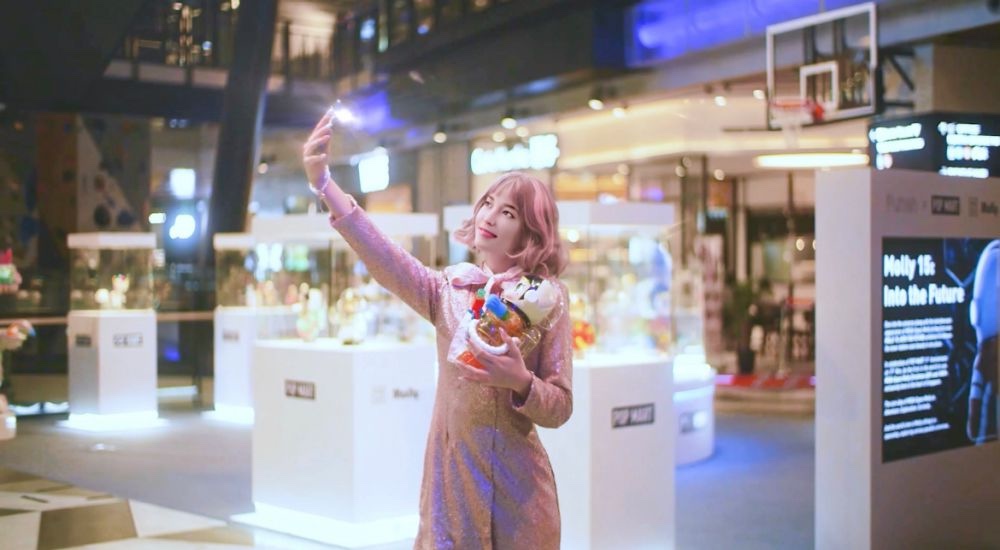
Another successful experiment initiated by Bee Leng, when she was with CapitaLand, is Rae, the virtual influencer, which was created by CGI technology and powered by AI, during the pandemic as a means for CapitaLand to reach out to its tenants.
Says Bee Leng, “Retailers couldn’t open their shops, nobody was in the offices. We had a blank canvas to work on and our task force came up with the idea of a virtual influencer to keep people informed and to create a sense of community.”
They decided to deploy Rae without any association to CapitaLand. Her first Instagram post was in October 2020. “We wanted to see how the market would react to a virtual person. To our surprise, people started relating to her, told her their problems and her following increased. We then tried her in different activities and hobbies and the first breakthrough was a collaboration with a local shoe designer, Local Sabotage. We launched an exclusive series of Rae merchandise which sold out.”
In December 2022, it disclosed its association with Rae and by then, she had grown to become one of Asia’s most popular virtual influencers, with more than 1 million followers across Weibo and Instagram.
It then awarded the usage rights of Rae to global marketing and advertising agency network, Dentsu, in a strategic partnership to advance the innovation of virtual identity technology.
“This (rights) goes straight to our bottomline,” says Siew Kim, “so I am very happy. We like it when innovation creates new revenue streams.”
Move to shorter stays brings it in direct competition with OTAs
Another area the duo is aligned on is increasing direct bookings through its brand website, Discover ASR, which it launched in July 2021 to unify its 14 lodging brands onto one platform.
Currently, group-wide, 70% of bookings come direct with the rest through OTAs and other wholesale channels. The high percentage is due to Ascott’s strong corporate base, thanks to its strong long-stay portfolio, but as the group has increasingly moved into shorter-stays with its other brands, it has gotten into competition with OTAs.
“OTAs are important,” says Siew Kim. “They have more money than us and they bring in new fish – guests who are not in our ecosystem. After that, our job is to get them to book directly. As we grow bigger too, we can better manage the relationships with OTAs – command a better pricing on distribution costs. Scale is important.”
Adds Bee Leng, “We have to think about co-existing in a manner that helps us. For example, in new markets like South America and Africa where we are just beginning and we don’t have as entrenched a network as them, they can drive customers to our properties.”
Its aim is to maintain the 70% direct booking share, even as it moves into different segments of travel with the various brands it is developing. “Long stays are our bread and butter, and we are flexing to short stays now,” says Siew Kim.
Both executives are excited about the growing “bleisure” segment, as well as the rise of digital nomads, two trends that play well into the group’s brands such as Oakwood and Lyf.
“We want to keep our corporate customers with us when they travel for leisure,” says Siew Kim. “For example, Oakwood is a big champion for bleisure and we are telling new leisure customers, even if you are not doing long stays, you can stay with our brands too. You don’t have to go to OTAs to book us.”
Sustainability is a business imperative
And now Siew Kim has a new responsibility added to her financial role – sustainability. “This is no longer a cost or revenue issue, it is a business imperative.”
It has received Global Sustainable Tourism Council (GSTC)-Recognised Standard status, and it has set clear targets outlined here, one of which is, by 2030 to “achieve 100% green building certification for all owned properties”.
In terms of measuring returns on investment on this journey, Siew Kim says, “There is low hanging fruit, and you don’t have to spend too much. Waste collection, recycling – that can be implemented easily. Occupancy sensor, water filters, tracking systems – the payback has reduced over the years as technology has improved. Before it would take six to seven years, now it’s four to five. With electricity bills going up, sensors in room make sense. You reduce operating costs and you save the environment.”
Within the group, Bee Leng says Somerset is its champion brand for sustainability “with brand values anchored around harmony and a strong wellness focus”.
Adds Siew Kim, “For us, it is not a marketing journey, it is a growing concern and we have set clear milestones.