Marketing and understanding traveller demand are key to sustaining surge in visitors
The third season of HBO’s hit show, “The White Lotus”, has cast a spotlight on Thailand, igniting a surge in global interest, particularly for Koh Samui. The hotels featured in the series, like The Four Seasons Koh Samui, have reported a 40% increase in bookings.
The “White Lotus” effect is even extending beyond tourism into real estate. The show has sparked a surge in interest for luxury properties in Thailand, as some travellers are going beyond set-jetting and looking to purchase vacation homes in paradise.
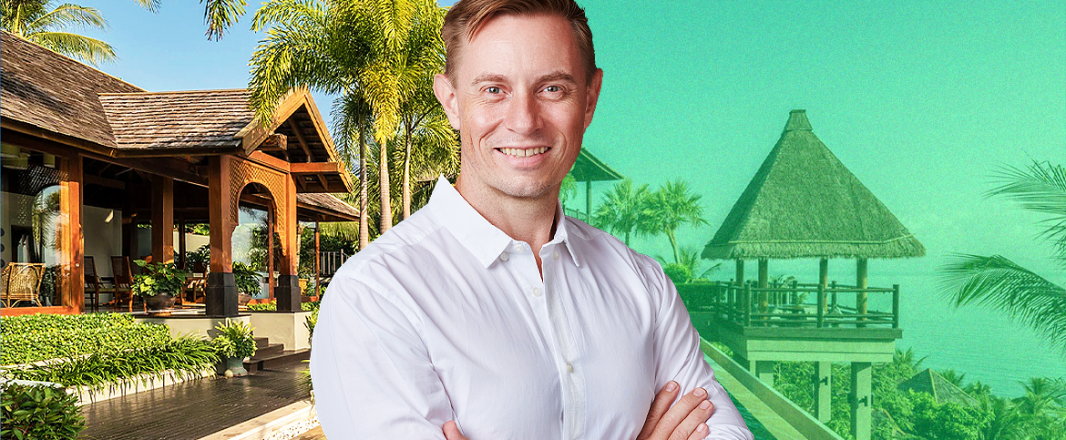
But is this just a fleeting trend, or can Thailand translate this wave of attention into long-term tourism growth? “A great learning can be taken from the way that the show was filmed,” says Andrew Smith, Senior Vice President, Supply at Agoda. “So much care goes into every shot and the director has a real knack for capturing the beauty and exotic nature of the island, whether it’s a close up of a wave or the haunting whistle of an island bird. These TV experiences are timeless and will never go out of fashion,” he adds.
Smith recently offered WiT his insights on how destinations can capitalise on pop culture-driven travel trends while ensuring sustainable growth.
The power of the ‘White Lotus Effect’
Popular media has long influenced travel decisions, from “Eat Pray Love” boosting Bali’s tourism to “Game of Thrones” transforming Dubrovnik. According to Smith, “The White Lotus is probably the best example so far of a TV show with international appeal that showcases Thailand’s cultural and visual identity.” He notes that the show acts as “one long advertisement” for Thailand, capturing the zeitgeist and driving sustained interest.
“It showcases Thailand’s cultural and visual identity and promotes its soft power through its constant focus on stunning locations – the exact opposite of movies like “The Hangover Part II” (2011),” says Smith. “It is highly likely that this halo effect will last, particularly as content about the show is widely shared on social media.”
Agoda’s data reflects this impact, with a 65% increase in searches from the U.S. alone. While the U.S. market’s interest is rising, intra-Asian travellers continue to dominate Thailand’s inbound tourism. Smith points out that South Korea, Malaysia, Japan, Singapore, and India are the top five inbound search markets, with the U.S. ranking ninth. “Hotels should cater to both intra-Asian and international visitors who will have similar requirements,” he advises, emphasising the need for a balanced approach.
“For example, Korean travellers value accommodations with breakfast, pools, and spas, while Japanese visitors are drawn to local prices and authentic cuisines,” Smith explains. “Malaysian travellers prioritise relaxation and value for money, and Indian travellers focus on safety, and cultural or religious experiences.”
Set-jetting, trends and double-edged swords
Koh Samui is already experiencing intense tourist density, with 40,111 visitors per square mile – nearly four times that of Paris. Recognising this, Thailand’s Tourism Authority is pushing to highlight hidden gems like Krabi, Hat Yai, and Hua Hin. By diversifying tourism beyond Koh Samui, the country aims to distribute revenue more evenly and prevent congestion in high-profile areas.
“Where it exists, overtourism needs to be recognised as an issue by local governments, and they must lead the solution,” Smith asserts. He adds, “It’s important to remember that travel and tourism play an important role in boosting local economies. Online platforms like ours have the potential to help spread tourism and enable travellers to discover lesser-known destinations. This approach can build on visitors’ excitement about a market as well as their thirst for discovering new places, which can in turn help redistribute incoming revenue from tourism as well as reduce the number of people visiting high-profile and better-known attractions.”
Pop culture-inspired travel also brings changes in traveller demographics and expectations. “Be prepared to see an uptick in requests for wellness, massages, educational trips to temples, wildlife spotting, and authentic Thai food,” Smith predicts. “International travellers tend to stay for longer periods, given the long-haul flight commitments at either end. So, in that sense there is no change in what we are seeing. It’s worth hoteliers watching the show just to get in tune with the kind of services it is showcasing.”
Luxury accommodations are already on the rise, but Smith emphasises that “value for money options” remain key for all traveller segments. “Travellers of all kinds will continue to seek value-driven pricing in their plans,” he says. To appeal to both budget-conscious and high-end travelers, hotels must strike a balance between luxury and affordability while offering authentic Thai experiences.

“[White Lotus] showcases Thailand’s cultural and visual identity and promotes its soft power through its constant focus on stunning locations – the exact opposite of movies like The Hangover Part II (2011). It is highly likely that this halo effect will last, particularly as content about the show is widely shared on social media.” – Andrew Smith, Senior Vice President, Supply at Agoda
Data-driven sustainable tourism that’s beyond the buzz
While the ‘White Lotus hype’ won’t last forever, Smith cautions against short-term, reactionary strategies. Instead, he advises hotels and airlines to take a long-term view by leveraging compelling visual marketing. “The real star of “The White Lotus” is the natural beauty of Koh Samui,” he says. “The key is to capture the beauty of Thailand in the same way, whether through images or videos.
“This really centers on being ready to receive travellers who are mirrored in the show. Given the plot of HBO’s White Lotus, Thailand could expect to see the same, with a focus on the high-end luxury market, too,” Smith explains.
He adds, “Hoteliers should also get ready to introduce White-Lotus-themed experiences, focusing on the wellness aspect and offering tours to areas that mirror some of the beautiful settings in the show. However, it’s key to retain an authentic Thai vibe and avoid becoming too generic in terms of the experience people receive.”
Smith also encourages decision-makers in the Thai hospitality scene to learn from other regions that have enjoyed set-jetting success of their own, such as the aforementioned “Game Of Thrones”; yet another HBO show that made its filming locations iconic.
“Dubrovnik was quick to build themed tours based on “King’s Landing” with photo opportunities at key filming locations. From a government perspective it will be crucial to extend visitor interest in other locations in Thailand by tapping into the same themes to ensure that the revenue opportunity is spread more evenly,” says Smith.
For hotels and airlines looking to retain interest from U.S. travellers, data-driven strategies will be crucial. Agoda, which was the most downloaded OTA app in APAC outside China in 2024, processes two billion customer interactions daily. “By analysing customer behavior, we identify preferences on destinations, amenities, price points, and more,” Smith shares. “Predictive analytics allow hotels to create targeted promotions during peak booking periods, while airlines can refine route planning and adjust capacity to attract U.S. travellers,” he says.
Reality, TV, and everything in between
Historically, filming locations for The White Lotus have done exceptionally well thanks to the show. The original White Lotus, which is the Four Seasons Resort Maui at Wailea, Hawaii, reported a 425% uptick in website visits and 386% increase in availability checks. The second season, which saw the Four Seasons San Domenico Palace in Taormina, Sicily, act as the White Lotus, reported it was booked out for six months after filming wrapped.
But while most of the scenes are filmed on location, it’s important for travellers to remember that filming locations aren’t always as they seem on screen. Mark Kamine, an executive producer on the show, told the BBC that, “Anyone who has been to the Four Seasons in Sicily that we used in the show will know that the beach isn’t where it seems to be.
“Some scenes in season three are shot at one hotel, and some aspects are filmed elsewhere. The common spaces need to have real impact, that’s a driver here. Overall, the main thing is that it looks beautiful.”
For destinations looking to ride the wave, Smith’s advice is clear: focus on sustainability, invest in infrastructure, and embrace digital platforms that help spread demand beyond the usual hotspots. “Hotels should be ready to capture demand for authentic local experiences – while surfing the White Lotus wave. The show also reflects well on Thailand’s natural hospitality and its high levels of customer service, another huge selling point,” he adds.
“And don’t forget to prepare as many Instagrammable opportunities as possible,” Smith reminds hoteliers. “User generated content (UGC) is playing an increasingly important role in promoting the appeal of destinations. It’s a great chance to refresh owned content as well as build up a bank of visitor generated content.”