So much has changed in the travel arena in the 20 years since Web in Travel began – but the centrality of the Online Travel Agency (OTA) to the travel conversation remains a common thread. Yet just as those behind former brand giants like Pan Am, Blockbuster, BlackBerry or Compaq will tell you, nothing about business is ever guaranteed.
In this story, we speak to some of the biggest OTA brands both globally and locally, to understand what drivers are determining their flight path towards the future. We look at what factors are impacting the B2B space for one of the world’s biggest OTAs. Then we profile one regional player seeking to help her company’s social travel platform dominate the airwaves for potential customers.
Next, we step into the fast-growing Indian OTA marketplace and look at a country likely to dominate headlines for the next 20 years in travel. And lastly, we hear from two industry veterans previously from the metasearch space, who share a firsthand account of an important part of today’s OTA journey – which is considering your post-exit strategy.
Can the OTA optimists help to power a more frictionless travel world?
For Alfonso Paredes, President, B2B of Expedia Group, speaking at his first Web in Travel, his wish, if given an Aladin’s lamp for travel and technology, would be to ensure that we all can speak each other’s language, then move forward with the kind of optimism that is clearly his unique trademark.
“The most important thing to me is to make sure we have the same type of language across our travel ecosystem – thanks to an open technology that we all can benefit from, and travellers can benefit from. And then it’s about making sure there is less friction on their journey.”
A frictionless experience is likewise what he envisages for his company’s leadership too. “Between 90% to 95% of why companies fail is because of their management teams, because they’ve taken the wrong decisions – so I think the biggest enemy is always just us when it comes to the company.”
“That said, I’m super optimistic. In the new Expedia management team, you can feel that there’s less friction, less complexity – and we have a very clear objective,” he enthuses. “We’ve done our homework. The B2B side is not something that’s just starting out now: though I think it’s getting more popular, because we’re growing faster than the consumer business,” he smiles. “But equally I will just say it’s not just about growing. It’s about the things that keep me very optimistic about the future, which is how we’ve been able to diversify.”
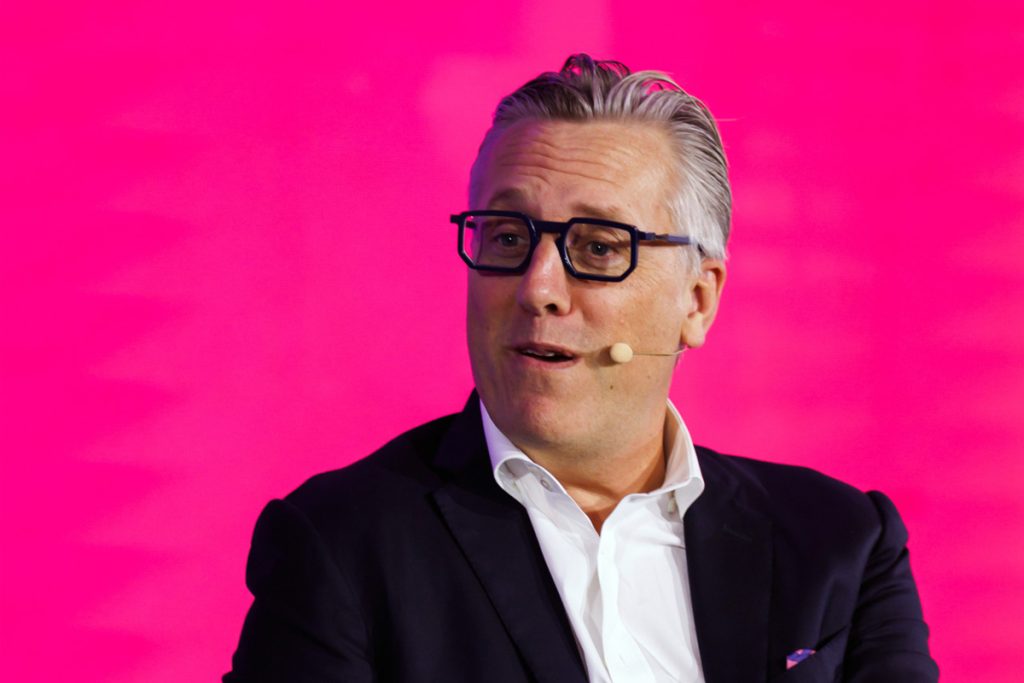
The notion of not powering Expedia’s potential competitors too much, is something Paredes clearly seems less concerned with than some. “We made this business successful by building bridges,” he affirmed. “It’s not about cutting, it’s expanding the pie, making sure that in this two-to-three trillion-dollar business, there is a space for everybody – and that’s what we continue doing through our new APIs.”
Having recently signed deals with both Perplexity and Open AI, Paredes feels these tools can help travellers to go off the beaten path – improving the types of reports that tell us that 10% of destinations still receive 80% of the traffic.
“The first time was in Japan, I was there with my family for 15 days,” recalls Paredes. “I went to Tokyo, Osaka and Kyoto – and that’s what everybody does,” he says. “So, I think it’s on us.”
“We have a responsibility to go to newer places, mix with the people there. Stay for two days, and experience their culture, all the dishes and food in their prefecture,” he says. “We need to create that culture for us – and for our kids as well.”
Mobilising a social travel platform of 30 million Movers
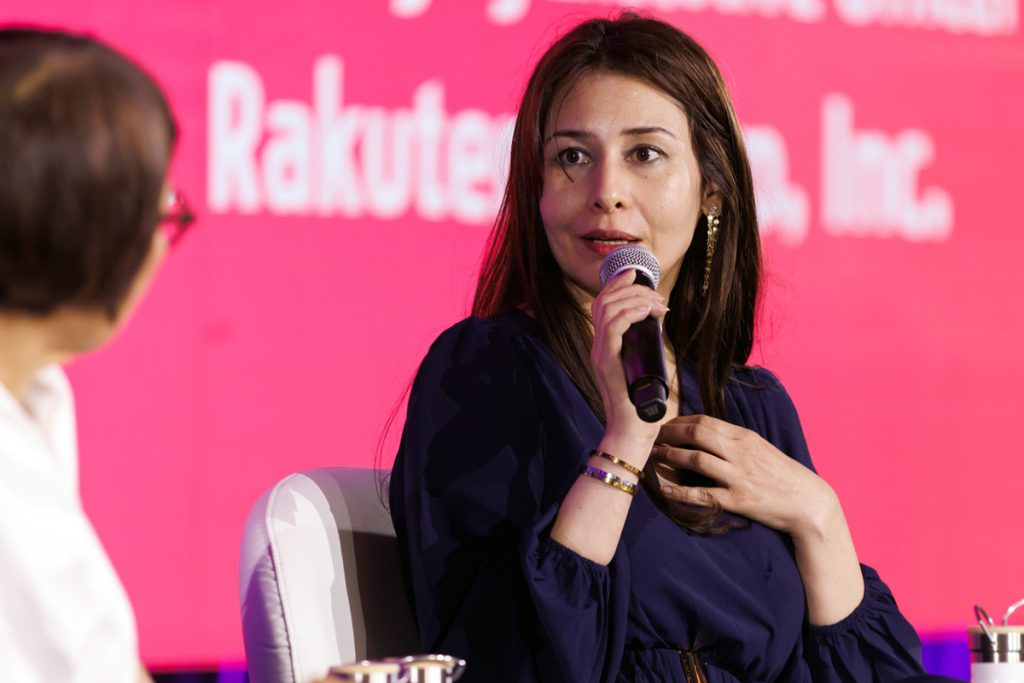
For Nadia Omer, the CEO of Malaysia’s AirAsia MOVE, the opportunity before her team is to mobilise the 30 million users in AirAsia MOVE’s digital platform’s database to book, share and recommend excellent experiences – and do so better than the Malaysian OTA’s social commerce competitors.
“The opportunity that we have inherited, or the gift that we have gotten, is huge,” Omer told Yeoh Siew Hoon onstage at WiT Singapore.” Our goal is to make sure that we stay relevant to these 30 million Movers that we have today – and find more people like them as we expand.”
With 75% of current transactions still on AirAsia after two years in business as an OTA, Omer says that her team needs to stay focused on fulfilling the brand’s core mission. “For us at MOVE, we can be our own worst enemy. I don’t think we are. But there’s enough room for a unique positioning, and we have to stay true to it,” she insists.
“Sometimes you see somebody bigger and you think, ‘Oh, wow, I wish I could do that, and beat them’. Yet as humans, we know we need to stay true to ourselves, and that’s our superpower.”
“My biggest problem is to make sure that the team and I stay true to our DNA, which are the Movers. We need to serve their needs, and find more people like them, versus get glittery-eyed with all these other shiny things.”
She cites as her the North Star the “social travel platform” that MOVE is building. “We have figured out that people are coming to us even without us spending money on Google for instance. And we are seeing that they have started building communities. So, we’re going to pivot more towards social, as a transaction type of a format.”
“Our user-generated content is our customers going out and doing things. If I want to get a truly authentic Isaan experience, I’d rather go to a peer-to-peer platform where real people in Isaan are telling me what to do – versus an influencer, a marketing person or some paid content coming in.”
As such, the travel which will define MOVE’s growth in the next five years will be its current segment of budget travellers, who the OTA dubs “Movers”. “There are many unmet needs: our current travellers, moving them from just the functional needs of travel, to actually building a MOVE brand with them.”
“Because today, if you look at most of the OTA brands, what comes to mind is hotels, price, flights – but there is no emotional association with any of the brands. And I think that’s an opportunity I really want to pick up together with my team.”
Technology set to power India as travel’s growth hub for the Next 20
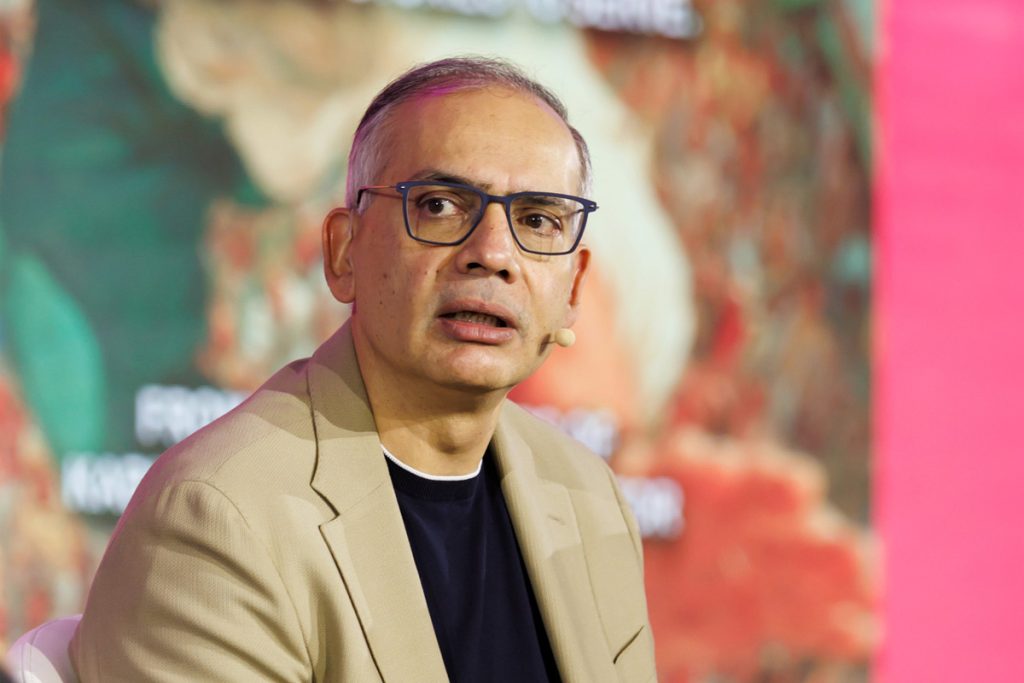
Speaking onstage as part of a panel titled ‘India Rising: The Next Growth Superpower in Travel’, Deep Kalra, Founder & Chairman of MakeMyTrip, discussed whether, just as China powered the last 20 years for travel growth in Asia, could India likewise shape the next 20?
Following its IPO in 2010 and investment from Trip.com, MakeMyTrip was one of those seen to have “lit the sector on fire”, as WiT’s Yeoh Siew Hoon described in her introduction. So what might be the secrets to India dominating the next 20 years?
According to Kalra, one key to outbound travel will be trust – as well as the ability for brands to respect the Indian traveller’s preferred timing for booking what eventually becomes a connected trip. “I think multi-product in India is really key,” he says. “People are looking for one trusted brand for booking almost everything.”
“And of course, in different geographies, it’s very often, ‘Let’s lock in the hotel stay first’, particularly in Western Europe. If you look at India, it’s definitely ‘How to get there’ first. It could be by flight, it could be a train, it could be an intercity bus or car. And then it’s where am I going to stay?”
MakeMyTrip is determined, he says, to be India’s trusted brand for what is becoming a more connected trip. “I think we were very clear that we want to have every part of that, and also what they do when they get there – we can help them get to that later,” he says.
While comparisons to China’s development a decade ago are natural, India is behind where China was at a comparable point a decade ago in terms of per capita income. “We are about $2,500 per capita income, and China at that point of time was probably more like $6,000.”
That said, India is ahead of the curve in terms of access to technology and payments infrastructure. “I think firstly, digital is even more pronounced already,” he said. “There are far more people who are ‘comfortably online’ today, and that’s because of the young population.”
“Smartphones and apps are pervasive already – and the payment infrastructure is very beautifully fixed. India has UPI, which has done a phenomenal job of allowing micropayments. People without bank accounts can still use their e-wallets if they want to.”
“We’ve also got very vibrant domestic air movement, with the one nationalised airline also going private, given that Tata bought it,” he notes.
Where is the weak point? If there is one, he says, it lies in the accommodation section. “Where we lag behind, I think, is hotel infrastructure – both for domestic and inbound. And that, I think, could be the one thing which can spoil the story in terms of how we move forward.”
The post-exit gameplan
Whether it’s a successful sale you’ve planned for since starting the business, or a surprise acquisition that comes out of the blue, exiting a business as an OTA is so common, you’d think more people would speak more about it.
Yet often “success matrix” is firmly focused on the sale: and most assume that things will be perfect after that bank account bulges with additional funds. Yet the issue often is that many of us who work well with structure and a clear gameplan, respond far less to the unstructured landscape beyond the sale. This is especially true where peace of mind is concerned, given that much of our day-to-day happiness revolves around our work-life satisfaction.
For the Skyscanner team, co-founders Barry Smith and Gareth Williams, the £1.4 billion buyout of Skyscanner by Ctrip in November 2016 is almost travel industry folklore by now. But when panel moderator, Agoda’s Timothy Hughes asked the pair during WiT Singapore’s Innovation Day about life after the sale, you suddenly realised that this was not a question that is often addressed from a human level.
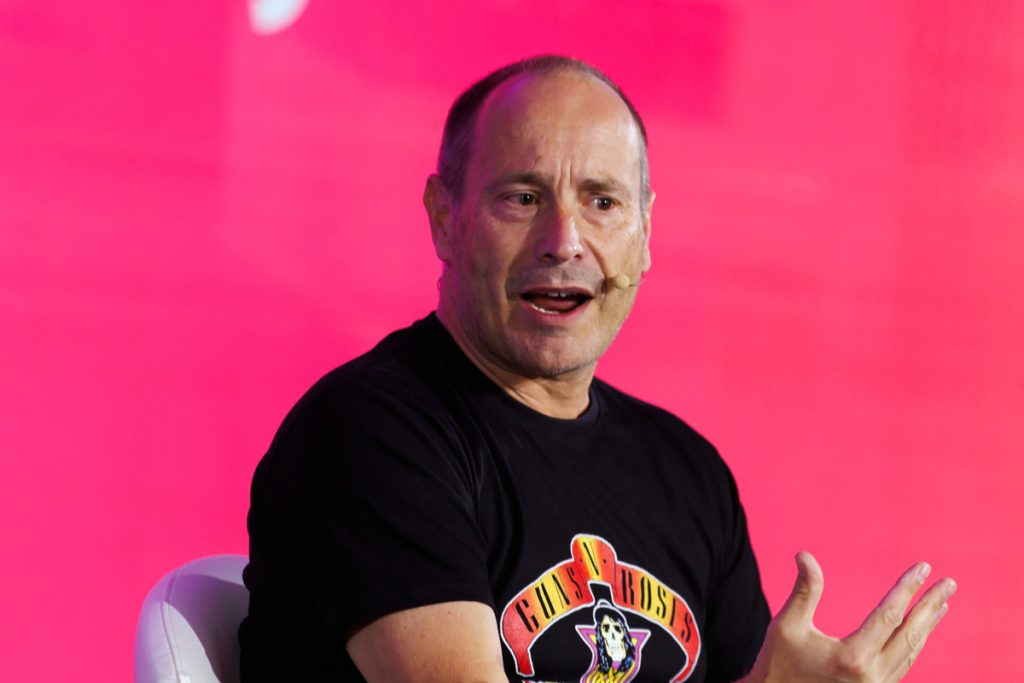
Interestingly too, the answer was different for each founder. For Gareth Williams, who remained with Skyscanner immediately after the acquisition, the experience was a positive one. “That worked out really well,” he recalls. Due to a great board structure, the process for Williams granted him the ability to maintain good relations with the Ctrip team.
“It was important to me that it was a good acquisition for the buyer – because they’re putting up a huge amount of money,” he notes. “And I was really pleased to see from a distance that it was equally positive for the people that remained in Skyscanner, which was an incredibly high percentage, and for Ctrip. So that’s quite gratifying to see,” he says.
For departing co-founder Barry Smith, departing after the acquisition proved far less positive. “I was absolutely rubbish,” Smith recalled. “Everything I was told not to do when selling a company, I did – including a few investments into companies I really shouldn’t have done, and advisory stuff that I really didn’t want to do.”
He recalls quite viscerally, the physical absence of the role. “I felt this personal need of; you’re travelling X number of miles an hour to put everyone in this sale room – and then it stops. So, it was kind of feeling the need to ‘do something with meaning.’”
“And also my wife was saying to me: you’re going to be home too much, aren’t you? I felt like I needed to be ‘doing’ all these various bits and pieces,” he recalls. “But everything I was told not to do when selling your company, I pretty much did.”