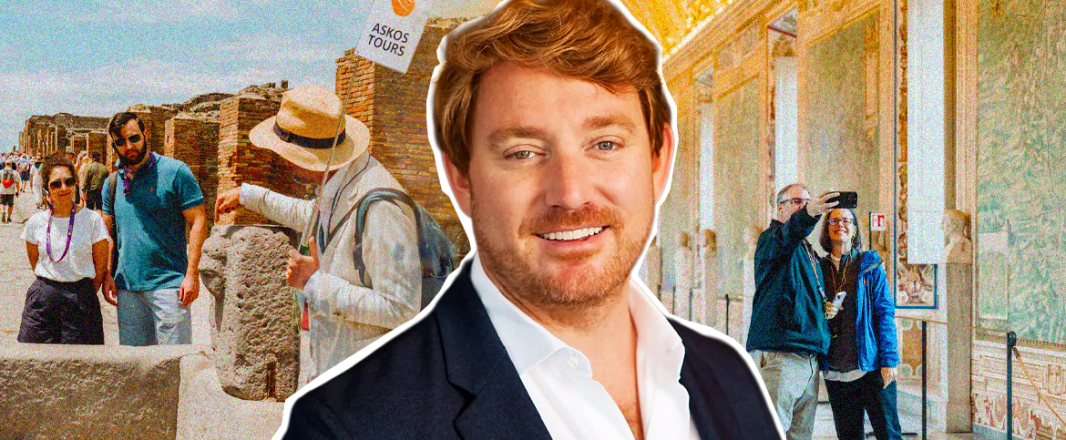
When I put it to Stephen Oddo that buying back into the tours and activities business he’d built and sold looked a lot like unfinished business, he answered rather reticently. “To a certain degree, for sure,” he said, and then proceeded at some length to explain it off as a “happy coincidence”.
It sounded like a bit of a hedge to me.
His co-founder however did not let him get away with the qualifier. “You used the words unfinished business, and that’s exactly what Stephen told me,” Charaf El Mansouri said, a few minutes later into the interview, unprompted. “Those are the exact words he used when we got on our first call and talked about Flagship for the first time. He’s like, ‘I feel like this is unfinished business for me.’ That’s exactly the words he used. You got it right on the nose.”
It’s a small moment but for me, it tells you something about the two men now trying to build the “Champions League” of day tour operators, the fastest-growing corner of travel, according to El Mansouri, and one of the most fragmented.
I felt the dynamic throughout the interview with the two leaders who were in Madrid for an event, far away from their respective bases in Boston and Abu Dhabi.
The easy, candid to-and-fro of two co-founders who actually found each other rather late in their careers and for a partnership that’s about to spend the next several years stitching together strong-willed founders who’ve never had to answer to anyone but themselves, that kind of candour between the two people at the top may end up mattering more than the balance sheet.
It also helps of course to have two seasoned advisors on their board – Rod Cuthbert, founder of Viator, alongside Richard Prosser, former CEO of TUI Travel’s Specialist Holidays Division.
In a nutshell, Flagship Group launched this week with three founding acquisitions – Amigo Tours (day-tour operator in Mexico City, one of the largest in the Spanish-speaking world), WalksDevour (the food-and-culture brand formed when Walks and Devour Tours merged in 2021), and Askos Tours (Southern Italy cultural/archaeological specialist). Together they give the new group coverage across North America, Europe, and Japan.
Two very different roads into the same business
Oddo’s route into travel was almost inherited. “I grew up in a travel industry family,” he told me. “Both my parents were in travel, and we travelled a lot growing up.” He finished university young, went travelling around Europe, and fell for Rome – working first with hostels, then giving tours at the Vatican, mostly as a way to keep living there in his early twenties.
He also had a technology background. Put those two things together and the idea was obvious. Rome’s tour scene in the late 2000s was almost entirely offline and cash-based. He thought there was an opportunity to pre-sell tours and experiences online, and built WalksofItaly.com in 2009, launching in 2010.
It worked immediately. “We connected the dots between really high-quality tour guides, reliable access to attractions, and intelligently designed itineraries,” he said – small groups of 12, at a time when 25 to 30 was standard. Direct-to-consumer for the first six years, no distribution partners, fast organic growth. The brand scaled city by city – around 30 in total at points, though not every city stuck – until Walks of Italy became simply Walks, a global brand.
Then came the sale that didn’t quite go to plan. Walks was headed toward a deal with a large European company just before Covid hit; that deal collapsed, and Oddo instead closed with Hornblower Group at the end of 2020, completing in 2021.
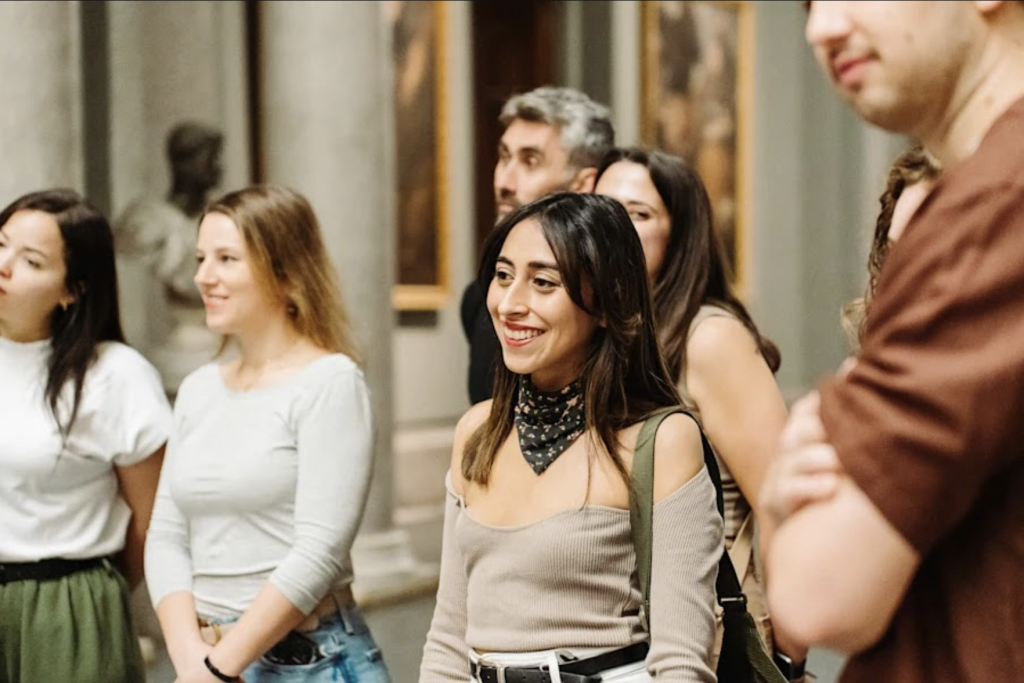
WalksDevour Prado Tour, Madrid
Part of the thesis, he said, was to build a land-experiences unit under Hornblower’s marine and water-based business – through acquisition. They started. They signed LOIs. They closed two deals. And then Covid’s financial toll on Hornblower forced a retreat into cash generation instead of expansion. “We didn’t get to finish the execution of an M&A and acquisition strategy,” Oddo said. “And I still really believed in that.”
El Mansouri’s path was not as straightforward. He started in automotive, then worked at Uber’s London headquarters, before founding two travel-tech startups – the second, venture-backed, called Dharma. Dharma built white-label multi-day trips for anyone with a passionate community: yoga teachers, fitness studios, photographers. Clients included Equinox in New York and footballer Eric Cantona. Later, Dharma licensed the official Emily in Paris day tours from Netflix and Paramount and it was in sourcing local partners for that product that the idea for Flagship was actually born.
“We thought we were going to find six to eight operators to potentially partner with in Paris,” El Mansouri said. “After a week of research, we ended up with a list of 120.”
A $270 billion-plus market, growing fast, and hyper-fragmented, which he came to see as bad for everyone: guests, operators, and the pricing wars it forces onto OTAs. The question that followed: was this the moment to consolidate the best day-tour operators in the world into a genuine global player?
How a drink in Valencia became a co-founding
El Mansouri turned the idea into a white paper, then an investment deck, then a financial model, and took it to 12 people. Three separately pointed him toward the same name: Stephen Oddo, who’d tried something similar with Walks.
They met for a quick drink in Valencia, which turned into a three-hour paella dinner. “We were really connecting on a deep level in how excited we were around the thesis,” El Mansouri said, and they decided to come together as co-founders, with Oddo as CEO. “He’s the number one operator in the space, and if anyone can pull it off, it’s Stephen.”
They formally came together in May last year, then went out to raise – with, as El Mansouri put it, “the luxury of choice” of private equity partners. They wanted a fund that understood the growth story but also had a feel for hospitality and tourism’s human side; Shamrock Capital, he said, checked every box.
The partnership closed in August or September last year, and conversations with the three target companies began soon after.
On buying back into Walks itself, Oddo made it clear it wasn’t intentional. “That wasn’t the idea. It was to buy great companies and help invest in scale. I didn’t think Walks would be available, it was a happy coincidence.”
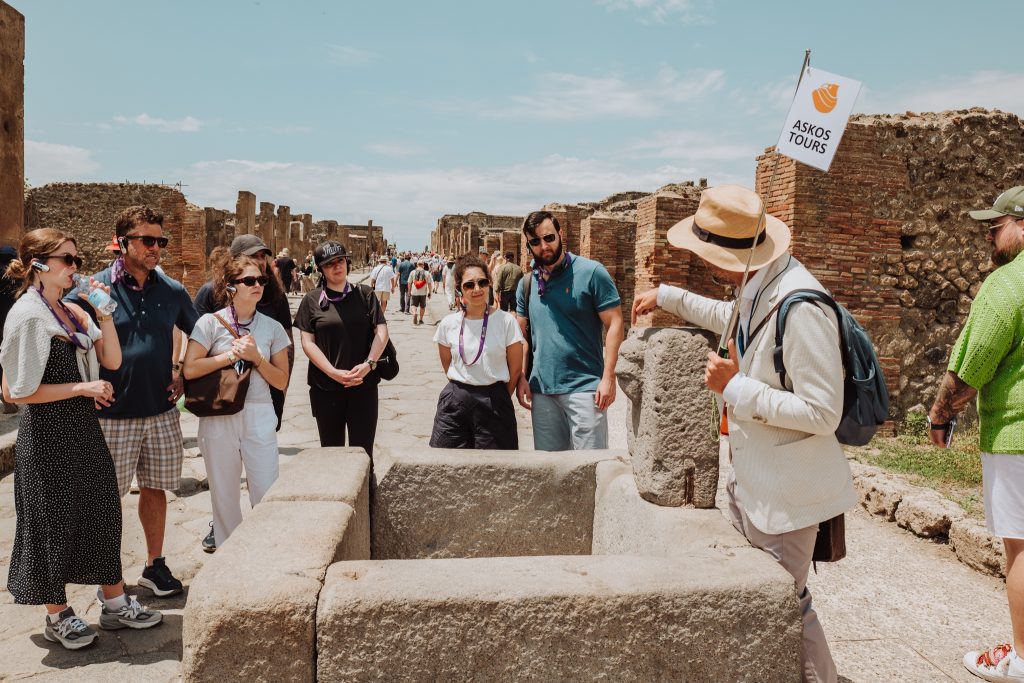
Askos Tours: Hiring archaeologists, almost exclusively, to lead tours through Pompeii.
The role model: a festival business, not a travel one
Asked how big Flagship could become, El Mansouri reached for a comparison outside travel altogether: Superstruct, the European live music and festival consolidation play, which he cited as having reached roughly €120 million in EBITDA over five years. “I think that’s a good benchmark for us,” he said. “There’s a big range in that spectrum, but if we want an anchor for our ambitions, I think our ambitions are around those anchors.”
The logic, he explained, is about borrowing a playbook where none exists yet in their own category. “There’s a first-mover advantage, there’s also a first-mover disadvantage if this hasn’t been done before. So where can we compare similar DNA?”
Superstruct – different industry, same underlying problem of independently-run, founder-led, experience-based businesses that could benefit from shared infrastructure without losing what makes each one distinct – was the closest thing they could find.
What they’re actually betting on
Both men return, unprompted, to the same phrase when asked about the biggest challenge ahead: change management. “Stitching it together is, I think, one big challenge,” El Mansouri said. “We’re going to bring together 10 or 20 or 30 companies with different cultures, different approaches, different systems. What we have to be very conscious about is communicating the plan for stitching everyone together.”
They acknowledged the challenge that could come from having strong-minded entrepreneurs come under one umbrella “but we don’t see that as a limitation but as a superpower,” said El Mansouri. “It’d be a problem if we were looking to bring everyone under the same brand or umbrella but we are doing the exact opposite of that.”
“We’re saying, let us do all the boring stuff. The accounting, the legal, the finance, the ERP systems, the payroll systems. You guys can focus on refining and growing your secret formula.”
Oddo added, “Each has different sales strategies, channels, product lines. They are all strong-willed entrepreneurs but there’s a lot of interest in growing together. No one feels like they’ve done everything they can do.”
They declined to disclose their war chest. The group is targeting founder-led, asset-light operators with $1M+ EBITDA and 7%+ growth, but Oddo emphasized it goes beyond revenue and profit. “We want a culture of openness and sharing of knowledge – a spirit of generosity, a spirit of hospitality. The numbers could be right, but a lot of things could feel wrong.”
He pointed to the guide relationships behind the founding companies: for example, Amigo Tours working with a family-run farm and a traditional sweat lodge in Mexico and Ascos hiring archaeologists, almost exclusively, to lead tours through Pompeii.
Coming from the local experiences side of the business, they’re fully behind the belief that travel should be designed to benefit not only travellers but communities. Quality, local, human-led experiences are, in Oddo’s telling, the industry’s evolution beyond “checkbox tourism,” and precisely the kind of supply that a hop-on-hop-off bus, or an AI planning tool, can’t replicate.
That’s also their answer to the AI question hanging over every consolidation story in travel right now. Oddo doesn’t dispute that AI is scrambling the demand side – how travellers discover, research, and plan.
But he’s betting the supply side is a different story. “You’re just not going to have a robot leading a pasta-making class with a local chef,” he said.
High-quality, human-led supply, in his view, wins regardless of which chatbot or OTA a traveller used to find it.
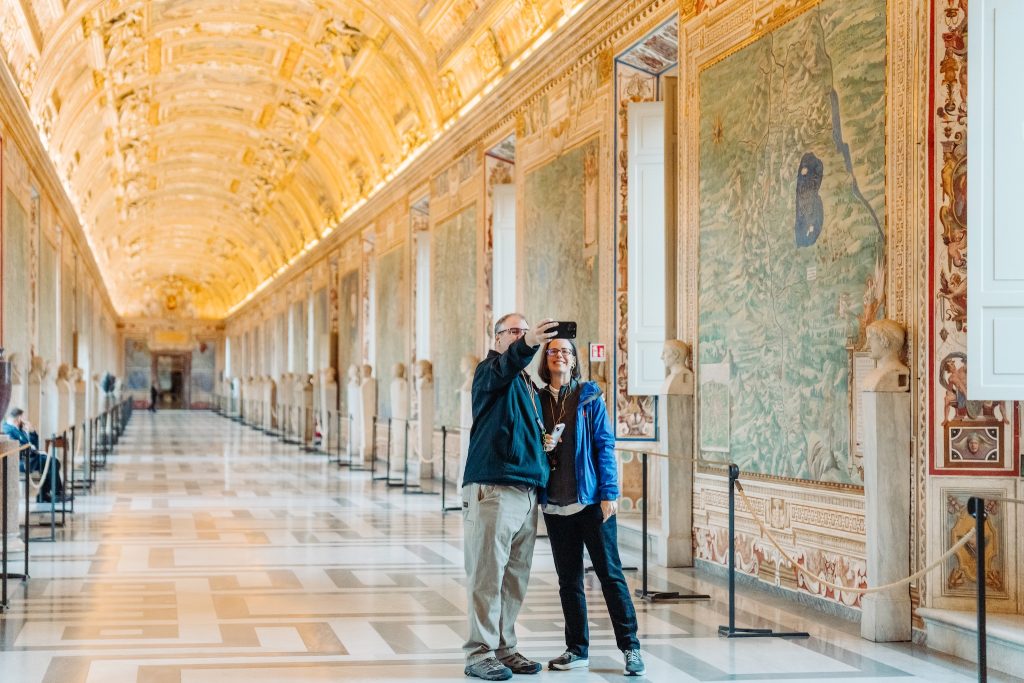
“High-quality, human-led supply, wins regardless of which chatbot or OTA a traveller used to find it.”
What’s next
The team, for now, is tiny – five people, Oddo said, essentially himself and El Mansouri doing much of the outward-facing work personally.
The ambition, though, is global: a strong position already in Europe and, through Amigo, in Mexico and Japan; a stated “huge, huge, huge thesis” around Asia – Japan, Thailand, Singapore, Hong Kong, Australia, New Zealand; and interest in the UAE, Morocco and wider North Africa and the Middle East, although El Mansouri acknowledged those markets are harder to underwrite right now.
For Oddo, it’s re-starting what he started years ago and for El Mansouri, it’s walking away from Dharma – “my wellness days are behind me” – and for Flagship Group, it’s about planting as many flags around the world to create the world’s biggest day tour operator. For sure, it won’t be a walk in the park.