(Translated from Travel Voice)
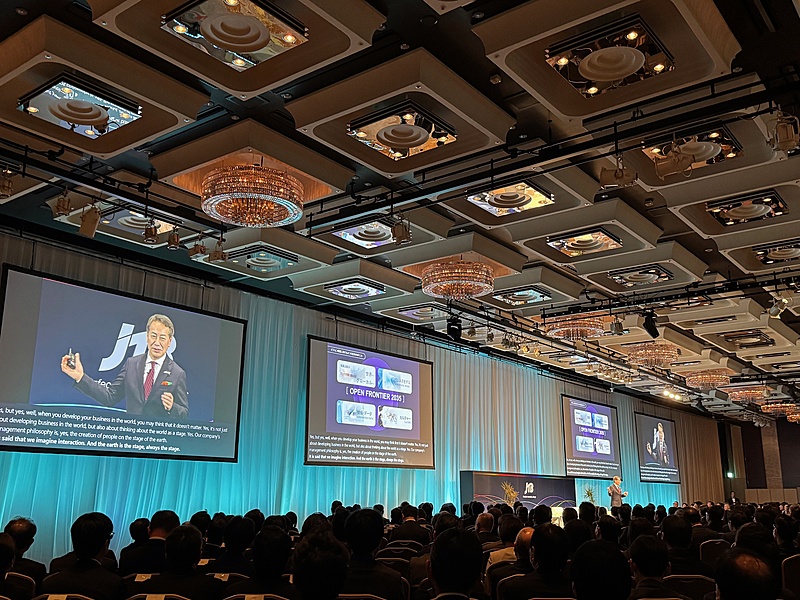
JTB has developed a long-term corporate vision called “OPEN FRONTIER 2035,” looking ahead to the year 2035. In response to major changes in the social environment and industrial structure, the company aims to clarify its direction as a value-creating business centered around exchange and to achieve sustainable growth and enhanced corporate value. Under this vision, JTB plans to proceed with formulating a new management plan.
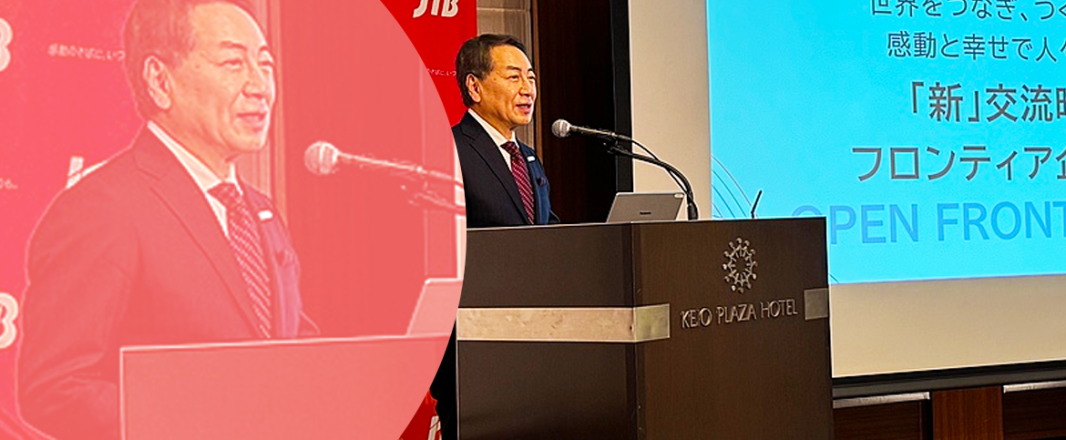
At a press conference announcing the vision, Eijiro Yamakita, Representative Director, President and Executive Officer of JTB, explained the background: “It’s important to firmly grasp what actions to take based on how society will change 10 years from now.”
He pointed to rapid progress in technology – especially generative AI – climate change, and shifts in population structure. As processes for “mobility, information & data, and decision-making” are being refreshed and social systems are being reconstructed, JTB has examined how tourism can provide value by 2035.
Yamakita also noted: “AI will soon perform many tasks – the question is how to add human strength on top of that.”
Core idea: “Exchange Creation Intelligence”
In this vision, JTB positions “Exchange Creation Intelligence” as the core of its corporate competitive strength – the foundation that supports enhanced and diversified exchange.
- This Intelligence changes how the market is understood and how customers are approached.
- It combines insight about customers, regions, and industries with the expertise JTB has developed in tourism.
- By utilizing data and accumulated knowledge, JTB intends to build a system that handles everything from designing exchange to implementation and operations.
Strategic move: Northstar acquisition
As part of this strategy, in August 2025, JTB acquired Northstar Travel Group, one of the world’s largest B2B media groups in the tourism industry.
- While maintaining Northstar’s editorial independence, the acquisition brings access to highly trusted data analysis and a global network.
- JTB intends to accelerate value creation in the AI era by combining this with its own strengths.
Organisational culture and work style
JTB will emphasize DEIB (Diversity, Equity, Inclusion, and Belonging) with the statement: “Turning differences into value, connecting the world.”
The company aims to cultivate an open, innovative culture where diverse talent can fully demonstrate their abilities, promote borderless work styles (crossing time, space, and organizational boundaries), and strengthen career support systems by making employees’ skills and experience visible and facilitating better matching.
Sustainability goals
Sustainability is placed at the core of management. JTB has established a specific target:
By 2035, 63% of transactions will be with partners actively engaged in sustainability initiatives.
Additionally, JTB will establish the “JTB Social Commitment Program – Mirai Exchange Creation Fund” in April 2026. The fund’s purpose is to continuously support activities vital for sustainable regional communities, including:
- Protection and utilization of tangible and intangible cultural assets
- Restoration and preservation of natural environments
- Measures against overtourism
Four strategic business categories
To transform its business portfolio and reduce dependence on traditional travel sales, JTB reorganized into four strategic areas:
- Global Tourist Solution: For individual travel, offering tailored tourism experiences.
- Global Business Solution: Solutions for corporate and academic clients.
- Global Area Solution: Solutions for local governments, DMOs, and regional tourism stakeholders.
- Global Tourism Intelligence: Supporting the broader tourism industry with media, events, and marketing solutions.
Portfolio transformation goals
By 2035, JTB aims for:
- 50%of its business to come from global operations (up from 14% in 2024)
• 25%from non-human-flow (non-transaction) business (up from 20%)
• 30% of revenue from recurring (stock-type) business (up from 11%)
To increase the stock-type ratio, JTB plans to build sustainable growth by investing in:
- Business assets
- Intellectual property (e.g., contracts like MLB rights)
- People and talent
Financial targets for 2035
Fiscal Year 2024 Results:
- Handling volume: ¥1.6838 trillion
- Gross profit: ¥293.7 billion
- Operating profit: ¥14.9 billion
- Gross profit margin: 5.0%
2035 Targets:
- Handling volume: ¥2.5 trillion
- Gross profit: ¥500 billion
- Operating profit: ¥75 billion (¥750 oku in Japanese notation)
- Gross profit margin: 15.0%
Through these improvements, JTB aims to establish a financial structure that can continuously invest in growth.