
What makes a hotel stay truly unforgettable?
For one panellist, it was waking to the sound of a baby wildebeest being hunted by hyenas and wild dogs just beyond the balcony railing. For another, it was the simple ritual of a cup of coffee delivered to bed at exactly the right moment, rugs laid out, the bush stirring outside. For a third, it was a resort video screening – assembled from candid footage of guests across their stay – that reduced a dining room to silence and then to tears.
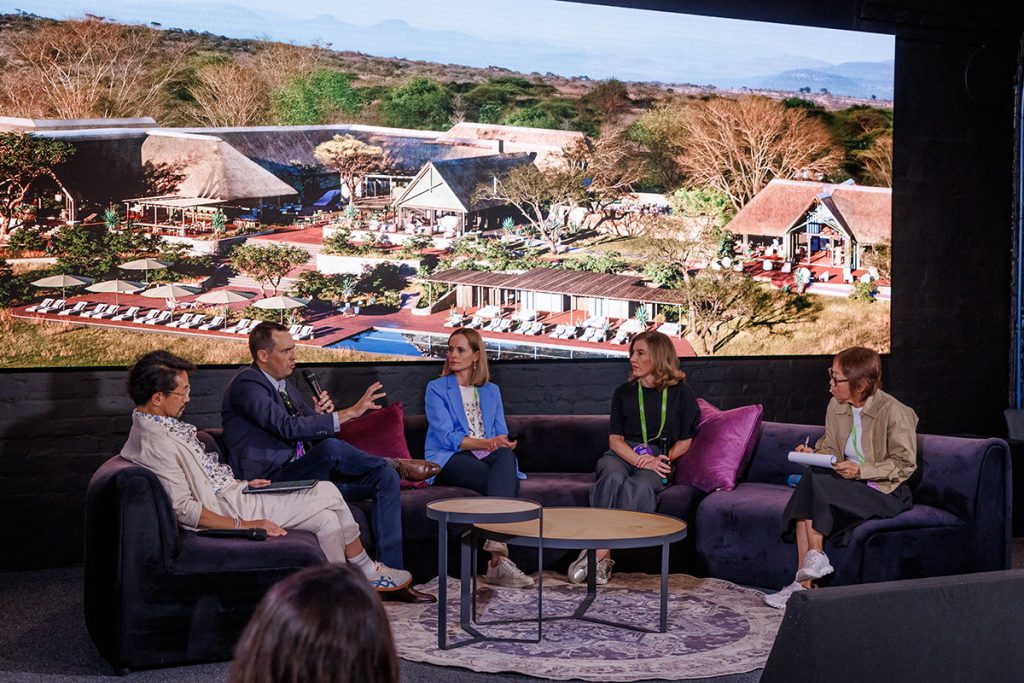
These were the opening stories at WiT Africa’s panel on “Beyond the Room: Hospitality in the New Age” and they set the tone for what followed: a wide-ranging conversation about what the hospitality industry is actually selling, who is winning, and what the arrival of AI means for an industry built, at its best, on deeply human moments.
Club Med: The experience has always been the product
Club Med has been making this argument for 75 years. Founded in 1950, it pioneered the all-inclusive resort model not as a price bundling exercise but as a philosophy: that the guest’s entire environment – the food, the sport, the entertainment, the staff – should be designed as a unified experience.
“For Club Med, the experience has always been the product,” noted the moderator, observing that the rest of the hospitality industry is now arriving at the same conclusion.
Olivier Perillat-Piratoine, Managing Director Southern Africa, acknowledged the competitive pressure this creates. In just six years, the number of upscale all-inclusive properties worldwide doubled from around 1,000 in 2019 to 2,000 by 2025. Staying ahead requires more than good facilities.
“Where the rest of the industry is still left a bit behind when it comes to experiential resorts is because they attach too much importance to the tangible assets, the building, the food. Club Med’s investment is in the experiential, the human touch,” he said.
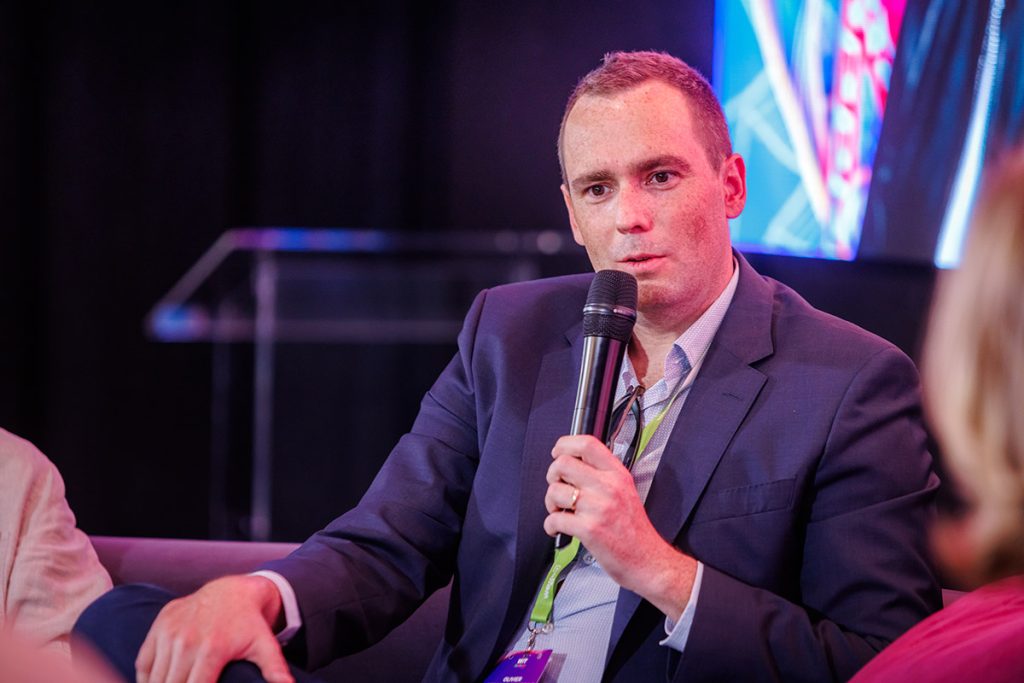
Olivier Perillat-Piratoine: “For Club Med, the experience has always been the product.”
The Club Med differentiator, Olivier explained, is its staff, drawn from around 150 nationalities, trained in a culture of warmth and spontaneity. One example: a resort tradition called “Challenge the Champion”, where guests can formally challenge the resort’s best staff member in tennis, padel, surfing, or any number of other activities. It is the kind of thing that cannot be replicated by a competitor simply by upgrading their thread count.
Club Med is launching its first South African resort, Club Med South Africa Beach & Safari, on the KwaZulu-Natal Dolphin Coast in July 2026. The R2 billion project, located 30 minutes from King Shaka International Airport, offers a blend of beach relaxation and a Big Five safari experience in an 18,000-hectare reserve.
Olivier said that its South African resort was built with 800 local hires, 90% of staff drawn from the country. And rather than positioning the resort as a sealed bubble, Club Med actively encourages guests to explore: curating itinerary extensions to Cape Town, partnering with local experience providers, ensuring that the resort becomes a gateway rather than a destination in itself.
Banyan’s “go deep and different” approach
For Banyan Group, celebrating its 30th anniversary, the philosophy has always been regeneration as much as retreat. Director of Business Development for Africa, Geri Flanagan, described the company’s founding vision: the chairman Ho Kwon Ping famously rehabilitated an abandoned tin mine in Phuket into what became one of the world’s most celebrated sustainable resorts, bringing back migratory birds that had not visited for 60 years. “We try to replicate that in every property we build,” she said.
Africa represents a deliberate move beyond the established circuits. Rather than competing for the well-trodden ground of the Serengeti or the Okavango, the company is looking at secondary and emerging destinations – places where, as Flanagan put it, other operators might not yet risk going.
“We go deep and we go different. Small development steps, in the right locations, involving the community, making a positive impact,” she said.
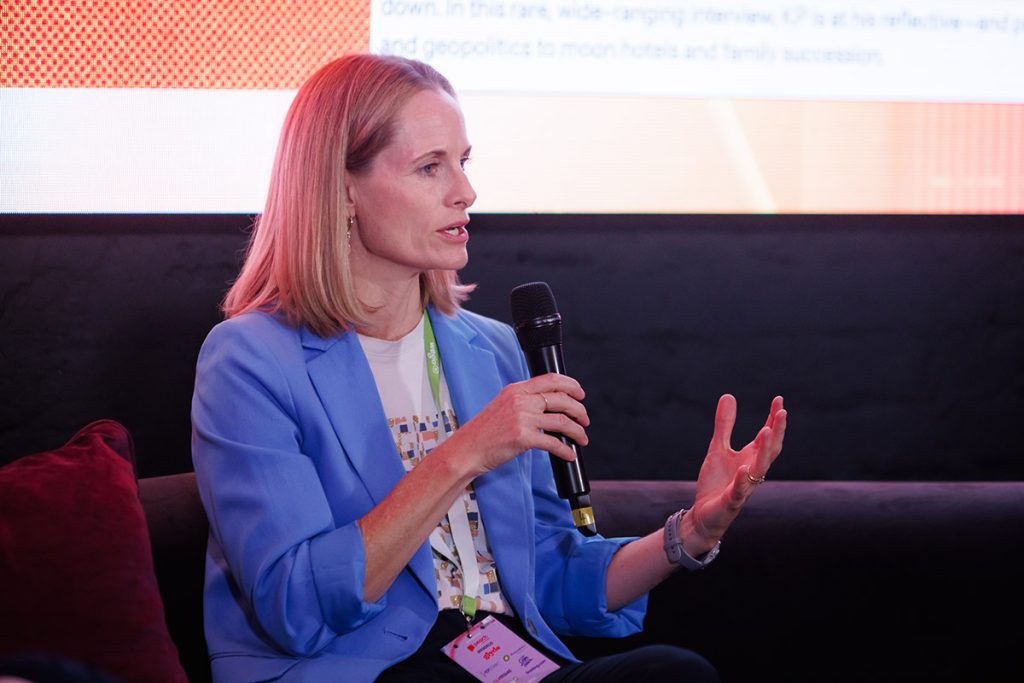
Geri Flanagan: “We go deep and we go different. Small development steps, in the right locations, involving the community, making a positive impact.”
The challenges of developing in Africa are considerable. Flanagan described the average time from signing to opening a hotel on the continent as seven years, a timeline that makes financial modelling deeply difficult. Funding access, construction costs, unreliable supply chains for renewable energy, and the complexity of sourcing locally all compound the problem. “You can never open feasibly because all your numbers are just completely off,” she noted.
Still, the pipeline is growing. Banyan Group currently has two open properties on the continent, both in Morocco, with a third in the Southern Highlands of Tanzania – Ubuyu, a Banyan Tree Escape – approaching completion.
That property, designed with no fixed windows or doors, open entirely to the surrounding bush, captures the philosophy in architectural form.
When she stayed there during the soft opening, she was woken at 6am by a hippo breathing through the mosquito net. “It really is something so different in Africa,” she said.
How independent hotels can lean into their advantage
Theresa Emerick, CEO of Nightsbridge, the technology platform serving independent hotels, guesthouses, and lodges across Africa, offered a different vantage point. Her company has spent two decades telling small operators the same thing: your room is not your product. Your region is.
“Think about somebody travelling from the UK or the US. They are not going online to search for Egyptian cotton sheets. They are looking for the experience. The independent property is a portal into a region,” she said.
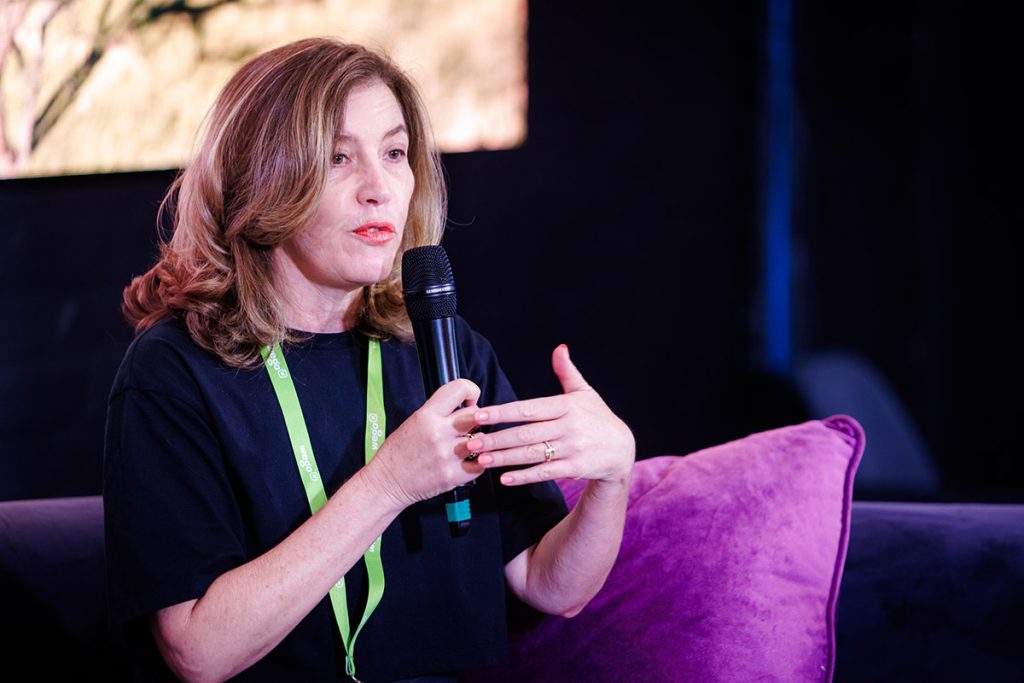
Theresa Emerick: “Think about somebody travelling from the UK or the US. They are not going online to search for Egyptian cotton sheets. They are looking for the experience. The independent property is a portal into a region.”
The operators that have thrived, Emerick argued, are the ones who leaned into local knowledge – who know where the whales are today, which restaurant the locals actually eat at on a Sunday, where the best hiking trail starts. That intelligence, once locked inside the heads of individual proprietors and shared only at check-in, can now be distributed upstream.
AI is accelerating this shift in ways that are just beginning to be understood. As AI-powered search becomes the dominant mode of travel discovery, it interrogates not just booking platforms but the full digital footprint of a property: every review, every blog post, every piece of storytelling the owner has ever published.
The independent lodge that has spent years articulating its specific character – who it is for, who it is not for, what makes it irreplaceable – suddenly has an advantage it never had in an OTA-dominated world.
“They have the opportunity to feature when they are focused on a specific experience,” she said. “And that story is now findable.”
Double down on interests and the language of love
Kei Shibata, Founder and CEO of Trip101 and a pioneer of travel metasearch in Japan since the early 2000s, brought a sobering and ultimately hopeful perspective on the disruption of travel content.
Trip101, a content-driven travel discovery platform, has been squeezed by successive waves of algorithm change, first by Google’s repeated updates disfavouring independent travel media, and now by AI threatening to disintermediate content sites altogether. “It’s pretty tough,” Shibata admitted. “AI is such a different animal, and we are still having a tough time finding our footing.”
But the response he is betting on is not scale – it is depth. The insight came from analysing the users who kept returning to Trip101 despite having no particular reason to: they were, without exception, people with a specific passion. The snowboarder obsessed with Japanese powder. The anime fan tracing the landscapes that inspired a Miyazaki film. The concept, borrowed from Japanese culture, is oshikatsu — travelling in devotion to something or someone you love.
“Accommodation is not the start of the journey. It is driven by their interest. If I were in hospitality, I would start that journey from there, from the interest,” he said.
Indeed, he believes that passionate, specific, human-made content will win in the age of AI because it will be more discoverable. “AI tends to surface content that reflects what people genuinely care about, so content created with real passion and emotional connection – the language of love – is more likely to stand out more than generic content.”
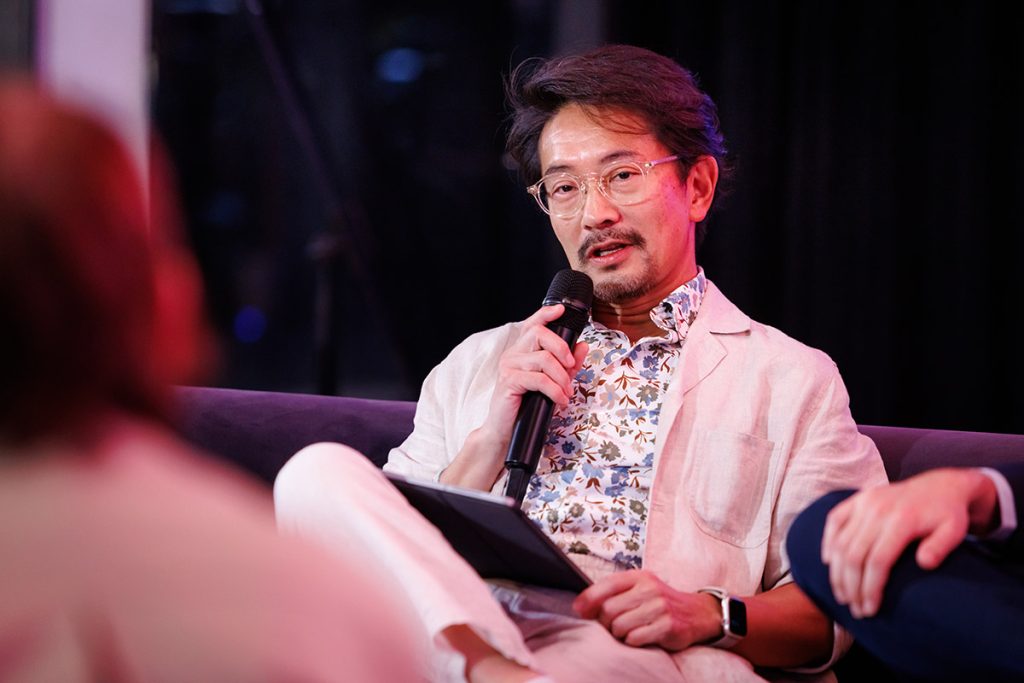
Kei Shibata: “AI is such a different animal, and we are still having a tough time finding our footing.”
The indie advantage is to be as specific as possible
The panel’s discussion of AI was neither utopian nor dystopian; it was pragmatic. Every panellist agreed that automation would absorb significant portions of the operational workload: reservations, pre-arrival communications, check-in and check-out, room controls, revenue management.
Club Med already handles around 20% of its South African bookings directly through AI-assisted WhatsApp conversations.
But the consensus was equally firm that the role of the human was not diminishing – it was clarifying. As routine interactions are absorbed by machines, the moments where human presence genuinely matters become more visible, more valued, and more consequential.
Flanagan noted that the most powerful thing an independent property can do right now is simply to be specific. Not just listing amenities, but articulating clearly what the property is, who it is for, and, crucially, who it is not for. That specificity, once an afterthought in a world of OTA grid listings, becomes the raw material for AI to make a perfect match.
Emerick agreed, pointing to pre-arrival forms as a case in point. A property that collects rich, genuine preference data before a guest arrives and then actually acts on it creates a personalisation loop that no algorithm can replicate from the outside. The data advantage belongs to the operator who has the relationship.
Back to the room: Keep it simple, please
When the panel was asked what one thing they hoped would disappear in the next 20 years, the answers converged on clutter: minibars, overcomplicated in-room control systems, excessive touchscreens.
“The number of touch controls in a room – if you still have to think before you’re going to feel it, it’s too much,” said Flanagan.
The vision for the hotel room of 2045 was equally telling. Panellists imagined rooms that know your sleep preferences and adjust temperature, light, and sound accordingly. Rooms that can transform their ambiance entirely. Rooms that simply guarantee the best sleep of your life.
“I just want to get the best night’s sleep without the pyjama drama,” one panellist summarised.