Two pieces of research launched at the Web In Travel conference reveal that travellers in Asia are not only constantly connected but also highly social in how they share and what they share on their travels.
Google’s research across 11 Asia Pacific countries, covering 11,000 interviews and conducted in July, showed that 83% use online to plan hotel stays while 28% use only online to plan stays.
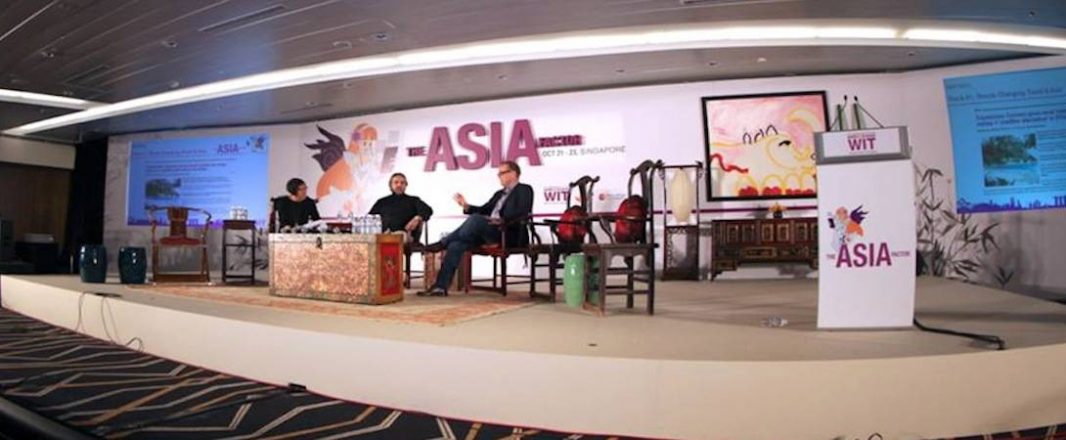
 Said Bambos Kaisharis, Head of Travel, South-east Asia (pictured left), who delivered the findings at the conference, “This APAC traveller sees the web as fundamental to their hotel staying habits.
“Whilst we’ve known for some time that online is a great platform for taking bookings (50% of APAC travellers now book hotels online) but we now seen that this new traveller uses the internet at every stage of the their trip. In fact, we’d go so far as to say he is constantly connected.”
Their research also showed that travellers want it simple – APAC travellers use on average four different sources of information when planning their next hotel stay – and emerging market travelers use more (up to five in Indonesia). Fourteen percent say they are overwhelmed by information.
Travellers also want it personal – more than a quarter of APAC travellers say that they are put off form booking hotels online because they can’t get personal consultancy – 26% cited this worry.
62% consider being recognized as a returning customer very important, while 71% consider personal recommendation very important in making hotel choice.
Given these preferences, Kaisharis urged hoteliers to tailor marketing efforts to individual users and to surface content that customers value, and that is personal to them.
Mobile came in with a strong showing with 39% having used a mobile to play their stay – 49% in emerging markets – and 59% saying they want freedom to book wherever, whenever. Travel mobile queries are rising more than 160% YOY in APAC, according to Kaisharis.
But there are challenges facing mobile – 42% think it’s easier to book on a PC, 21% don’t trust mobile payments and 19% said mobile connection was too slow.
“What does this mean for your business? One, get a good mobile site. Mobile is no longer optional, it’s a necessity. Poor usability is the biggest barrier to booking via mobile. And yet when you get it right, the rewards could be huge. CTrip makes more money on mobile bookings than desktop – 40% of all hotel booking revenue, making it the biggest single channel for them.”
.jpg) Accor Asia Pacific also launched its Social Media Monitor, the results of which will underpin its social media strategy for 2014. The results, presented by Emilie Couton, Director of Guest Experience (pictured right), show that Chinese, Thais and Filipinos are the biggest brand followers – and they follow firstly, hotels, followed by airlines and travel-related brands.
Accor Asia Pacific also launched its Social Media Monitor, the results of which will underpin its social media strategy for 2014. The results, presented by Emilie Couton, Director of Guest Experience (pictured right), show that Chinese, Thais and Filipinos are the biggest brand followers – and they follow firstly, hotels, followed by airlines and travel-related brands.
As for their motivation, most do so for discounts and special offers, followed by “get information” and “show affinity”. “Most bargain hunters are in the Pacific and users in China and India are the most sympathetic,” according to Couton.
In choosing hotels, 60% are influenced by price, 58% by location and 28% by user reviews and ratings. Singaporeans and mainland Chinese are the most swayed by reviews, according to the research, and Indians and Australians, the least.
As for the sites they trust, an equal number (40%) trust social media and OTAs, and 13% trusted hotel websites. OTAs were the most trustworthy source for Indonesians while Thais trust social media the most.
APAC travellers are also generous with their feedback with an average 65% providing feedback during their last trip. The top three feedback countries are China, Philippines and Indonesia.
And their top three channels are satisfaction survey (29%), comment card (19%) and reviews (14%). The top online reviewers are found in India and Singapore and the least are in the Philippines and China.
The survey also covered what travellers are doing on social in APAC and Couton said it was clear Facebook is the top platform while Google+ is gaining traction – Facebook being more popular with women and the latter with men. In China, Weibo overtakes popular WeChat when travelling.
An average 85% are active social media users while travelling and their top 3 Internet sources when travelling are hotel wifi (52%), local SIM card (15%) and data roaming (15%). The most unplugged travellers are from the Pacific.
The top social media activities during the trip are update status, upload pictures and publish comments/search for local information. After-trip activities are upload pictures, write reviews and update status.
Thais and Filipinos, younger folk and woman are the most snap-happy travellers during and after trips. India and China are the most likely to review hotels online.