
At WiT Indie, Klook, AirAsia MOVE and Booking.com unpack the generational, AI, supply and community forces changing how APAC travellers explore on their own terms
Hot on the heels of WiT’s newly released “The Indie Stack”, which dove into the fast-growing and equally-fast-changing independent travel segment in Asia, it was time to unpack the traveller shifts taking place within what the region’s OTAs now recognize as a significant growth opportunity at WiT Indie.
Firstly, no one denies the numbers. Our report, part of our monthly Online Travel Tracker series, showed that half of APAC travellers now book independently, and 89% have ventured off the beaten path in the last year, with even more planning to next time. Solo travel is having a real moment with up 16% across Asia in 2025, driven largely by travellers from Japan, South Korea, Thailand, Indonesia and Taiwan who say freedom and flexibility are the main draw.
And it’s not an either/or world anymore because business and leisure are blending fast, with three-quarters of Asian travellers now folding personal time into work trips.
At WiT Indie, the old idea of independent travel – a Lonely Planet guide, paper maps and a backpack – got a thorough rewrite, as three regional travel leaders unpacked what “indie” actually looks like now – AI itineraries, digital assistance every step of the way and travellers who plan with the precision of a project manager.
Sarah Wan, General Manager for Indonesia, Malaysia, Singapore and Thailand at Klook; Ben Jie-Lim, Chief People and Partnerships Officer at AirAsia MOVE; and Catherine Gao, Market Team Manager for Global Accounts & Regional Team at Booking.com walked the audience through four shifts reshaping the category: generational, AI, supply and community.
The generational shift: From bucket list to passion list
Sarah, whose business sits closest to what travellers actually do on the ground, said the defining change isn’t the number of new travel categories which has popped up – such as wellness, sports, events – but the intent behind them.
“Travelers are now traveling very intentionally, very purposefully, very passion-driven — versus the generations before, which were maybe a little bit more bucket list. Now they’re already planning ahead and already very certain about what it is that they want.”
Ben-Jie backed this up with primary research – AirAsia MOVE’s own “guerrilla” interviews with Gen Z travellers on university campuses – which surfaced two forces at play: identity and companionship.
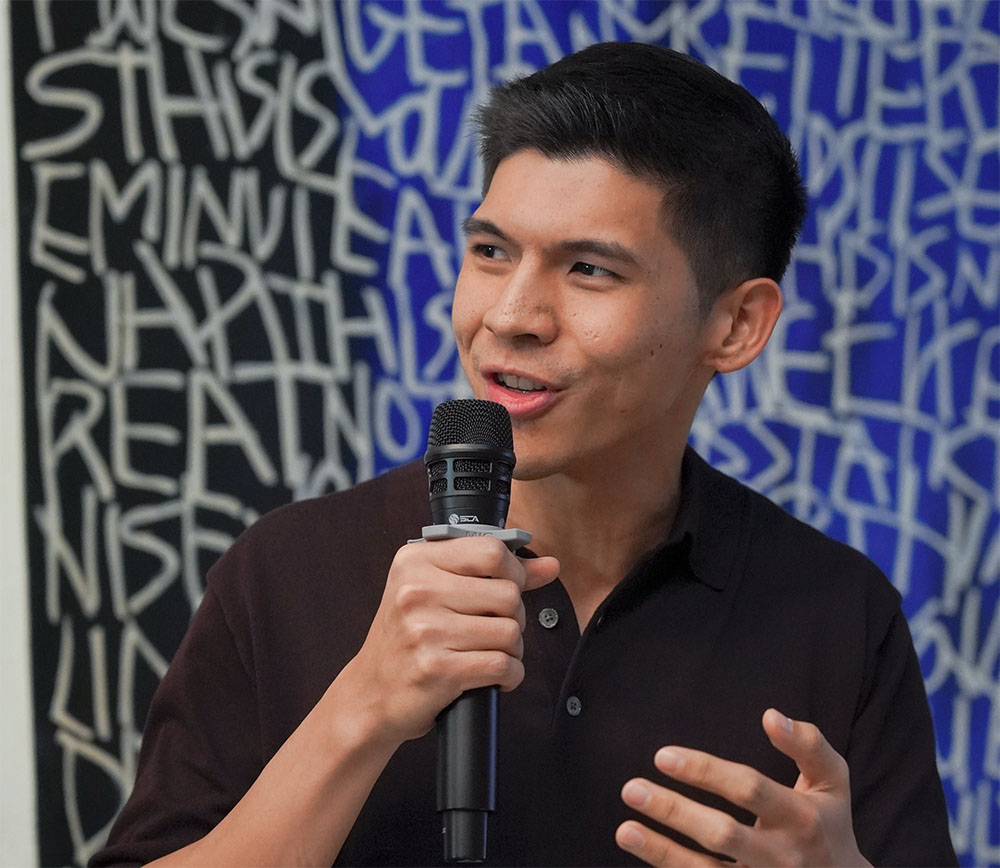
Ben-Jie Lim: “Airlines are purchasing new aircraft like the A321XLR that can fly up to eight hours in a narrow-body configuration. Destinations that once weren’t economically viable to serve directly can now be reached – IndiGo launching direct flights from Delhi to Bali is one example, cutting out what used to require a stop in Singapore.”
“A majority of them ensure identity building – they love to build an identity of themselves that is very tied to travel. They feel travel elevates them. The second is about companionship – twos or threes, family or friends. They put a lot of effort into planning and perfecting the itinerary, but on the road the fights happen, the squabbles happen, and ultimately those core memories are what stick.”
Catherine brought the conversation to sustainability, referencing Booking.com’s 11th annual Travel & Sustainability Report, and this specific finding: Across APAC, 39% of travellers want advice on the best times of year to avoid overcrowding, and 37% are looking for recommendations on alternative destinations. Meanwhile, 24% believe travel websites have a responsibility to educate people on tourism’s impact, and 31% say they trust information from those platforms.
“We wanted to provide sufficient and important information so travelers can make conscious decisions – for example, we encourage properties to have third-party sustainability certification, so travelers can prioritise that choice. We also provide data on alternative destinations and timing, to help shift demand into different places.”
The AI shift – Enhancing serendipity, or automating it away?
An audience poll set up a debate for the panel: does AI enhance the serendipity of indie travel, or automate the adventure out of it? The room leaned toward enhancement, a verdict the panellists mostly agreed with, albeit with caveats.
Catherine argued AI is changing discovery, not replacing the platform – particularly for surfacing small, niche properties that used to get buried by keyword search.
“With AI embedded, we’re able to show indie properties through customer reviews – we have over 370 million of them globally – so those properties become visible. But in terms of making the final decision, AI is still not there yet. Travelers face a lot of complexity around payment, security and last-minute changes – that still needs a human touch.”

Catherine Gao: “Travellers believe sustainability is important, but general good intentions aren’t enough – we connect them to certified properties so that belief converts into a real booking, and a real outcome for that property.”
For Ben-Jie, AI’s real value is in removing friction rather than manufacturing excitement –illustrated by a personal story about planning a multi-generational trip to the UK with his mother, who has early-stage Parkinson’s.
“I asked AI to plan a trip somewhere with hills and mountains, but flag that my mum isn’t in the best condition to walk long distances. It came back with places that were flat, easy, accessible – and that removed a lot of my fear of traveling with her somewhere that could otherwise be very taxing. It even taught me that a companion of someone less able often gets free entry at attractions, which saved us money too.”
Sarah admitted she’d genuinely wrestled with whether AI favours small players or big ones. “Unfortunately, at the current state of AI, it does help the mighty get mightier – because it still picks up the obvious. But it depends on how platforms decide to train it. We could go the hyper-personalised route and teach AI how to match passions to indie experiences, or we could end up with everyone doing the same thing. It’s really up in the air right now.”
The supply shift – building, not just aggregating
Interesting shifts are also taking place in supply – that perhaps those who own the content (physical assets) will win in the AI age. The hardware will always be experienced physically and cannot be replaced by any tech.
Sarah spoke about Klook’s latest move to create and co-brand a slide attraction in Sentosa with adventure operator AJ Hackett.
“It wasn’t really about owning IP – it was about supporting a good idea and bringing to life an activity that matched a travel passion. We’re also going a lot more into secondary cities and relying heavily on social content to discover the niche activities travelers actually want.”
Ben-Jie tied supply growth to hardware, referencing AirAsia’s recent order for 150 Airbus A220-300 aircraft, valued at approximately US$19 billion, the single largest firm order in the A220 programme’s history.
“Airlines are purchasing new aircraft like the A321XLR that can fly up to eight hours in a narrow-body configuration. Destinations that once weren’t economically viable to serve directly can now be reached – IndiGo launching direct flights from Delhi to Bali is one example, cutting out what used to require a stop in Singapore.”
Catherine added that alternative accommodation – homestays, indie hotels, non-standard stays – is no longer a fringe budget choice. It now forms 38% of Booking.com’s transactions.
“Travellers are no longer just searching for standard hotels – alternative accommodation is no longer a budget option, it’s a lifestyle. The hurdle isn’t visibility anymore, it’s trust — which is where our verified customer reviews come in, giving small independent properties the same credibility as bigger names.”
The community shift – from solo to sticky
Indie travel used to mean going it alone. Now, the panel agreed, it’s collective and communities that convert into commercial outcomes are the ones built around identity rather than discounts.
Ben-Jie cited AirAsia MOVE’s sponsorship of HYROX, the global fitness competition, as a case of brand-aligned community building translating into travel demand.
“AirAsia has always been community-centric. Our leadership is united by fitness – from CEOs to management. There are about a million HYROX athletes globally, so we built a partnership to sponsor the competition, bringing large numbers of people travelling across South-east Asia and Asia Pacific together. That fuelled a very strong community.”
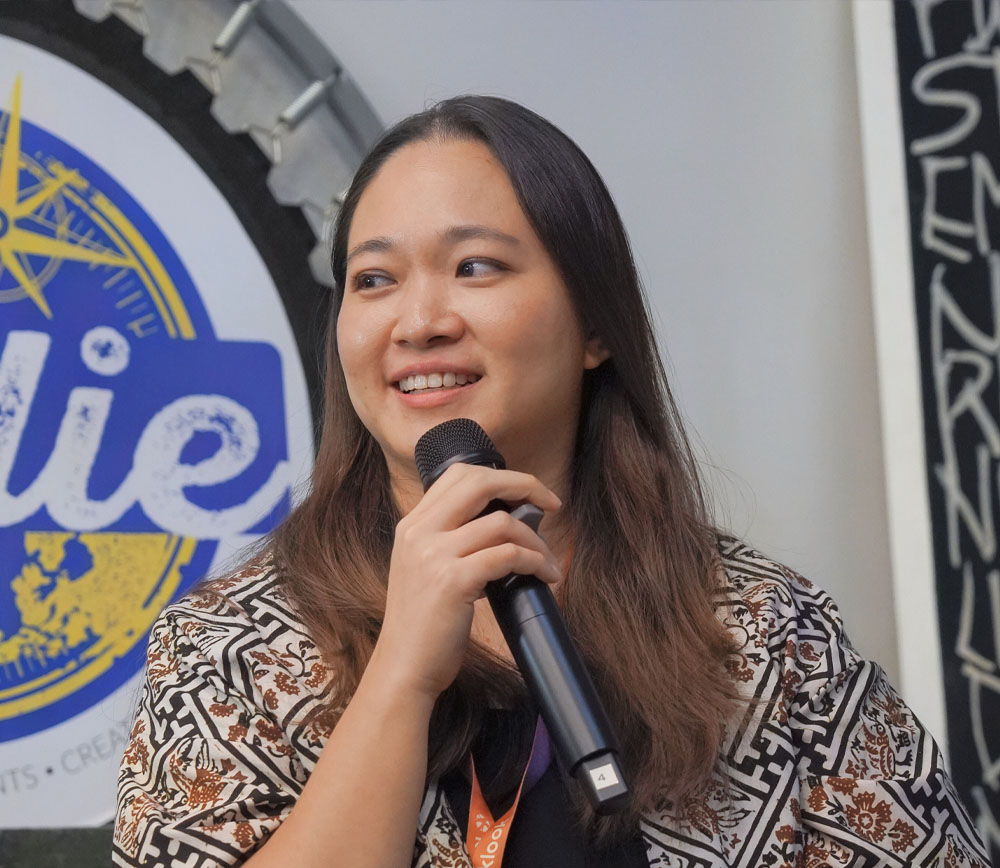
Sarah Wan: “Travelers are now traveling very intentionally, very purposefully, very passion-driven — versus the generations before, which were maybe a little bit more bucket list. Now they’re already planning ahead and already very certain about what it is that they want.”
Sarah pointed to two very different Klook wins: a BTS concert package sold out in 24 hours in Singapore bundled with attractions like Mandai, and a longer-running community – Muslim travellers – now being reshaped by a new generation of digital content creators.
“We’re seeing a new generation of digital Muslim content creators giving advice on how to travel further. When we launched a campaign with the Hong Kong Tourism Board around content creators, we saw a 43.5% increase in bookings. Community really helps build trust, credibility and the confidence to travel.”
Catherine linked community back to sustainability and inclusion, pointing to Booking.com’s work building intentional communities around both sustainable travel and LGBTQ+ travellers.
“Travellers believe sustainability is important, but general good intentions aren’t enough – we connect them to certified properties so that belief converts into a real booking, and a real outcome for that property.”
What indie travel still gets wrong
Closing the session, the moderator put each panellist on the spot for the one thing today’s indie traveller wants that their business still doesn’t do well.
Sarah: “Exotic destinations – we don’t have enough supply for them.”
Ben-Jie: “We do a great job getting you to a destination, but once you’re there, we don’t look after you as well as we could to show you the sights and sounds.”
Catherine: “For travellers, there’s still a lot of friction – flights, cancellations, accommodation, tickets. If something goes wrong, they have to intervene and come up with plan B. That’s why we’re building toward the connected trip, to make travel easier end to end.”
And the one word each would use to describe indie travel 20 years from now:
Sarah: Intentional
Ben-Jie: Instinctive
Catherine: Significant