
It couldn’t have been better planned – the Founders & Futures: Global Startup Showcase at WiT Phocuswright Barcelona. On stage were three startups covering three stages of the traveller journey and facing them, Roger Sharp, chair of Technology Queenstown and investor via North Ridge Partners.
Pete Comeau, Managing Director of Phocuswright, set it up. “Think of the traveller journey in three acts. First, they have to discover you. Then they have to trust you. Then you have to deliver an experience when they arrive.”
Angelica Handover of SocialSeal took act one – discovery. Shlomi Beer, co-founder of ImpersonAlly owned act two – trust. And Marius Nigond of iWander closed with act three – the experience once you’ve landed.
SocialSeal: The blind spot in the funnel
Angelica Handover posed a challenge. Everyone is talking about LLMs and AI search. But after travellers get served a result, they don’t book. They hop to TikTok or Instagram, they look for visual validation.
“A smaller incumbent would have positioned themselves much better at that stage – searching for a family room in Barcelona – and a big brand may not even be in the search results on TikTok or Instagram. This is a really big blind spot right now.”
SocialSeal maps that blind spot. It reads cross-platform, cross-language, cross-market video search demand and tells travel brands where high-intent travellers are looking, and whether the brand is showing up or not.
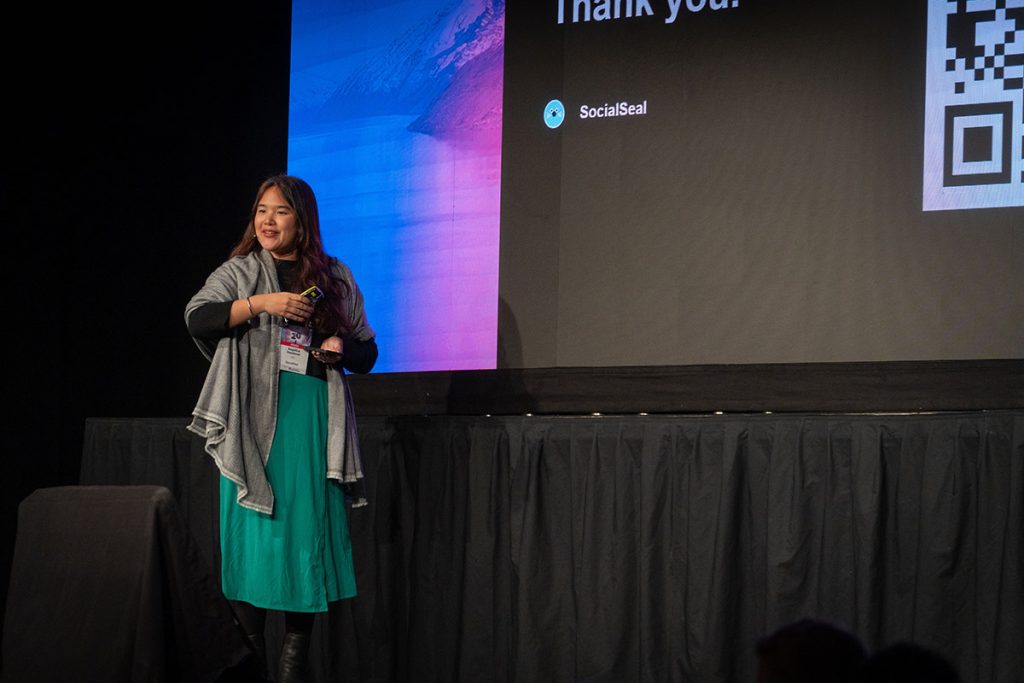
Angelica Handover speaking at the recent inaugural WiT Queenstown
She shared an example. A luxury resort group in the Maldives was invisible on social video. SocialSeal identified a surfing-related search pocket, collaborated with a surfing partner, adjusted the shot framing and overlay text based on the demand data, and within the first month the property ranked in the top 10 for that search category.
Sharp’s read: the right space, the right timing. His note of caution was scalability. “The big issue is how do you make this a scalable software product that doesn’t require services? People are buying the platform but wanting you to do the work.”
Handover’s answer – plug-in integrations directly into the AI tools brand and social teams are already using, like Gemini or Claude, so that the intelligence flows into existing processes without requiring a new service layer.
ImpersonAlly: Don’t trust. Verify. Fix.
Shlomi Beer didn’t have to explain the problem he’s trying to fix. Sharp did it for him. “The bungee place in Queenstown had $20 to $30 million worth of bookings made through a fake AJ Hackett website recently, so did Skyline. I’ve seen this firsthand.”
This is what ImpersonAlly was built for. As travel brands move online and sell direct, they’ve opened themselves to an explosion of AI-powered fraud – fake ads, fake websites, fake social media accounts, and fake responses embedded inside platforms like Gemini and ChatGPT.
Beer described organisations with hundreds of employees, making hundreds of millions of dollars, running sophisticated, fast-evolving fraud infrastructure.
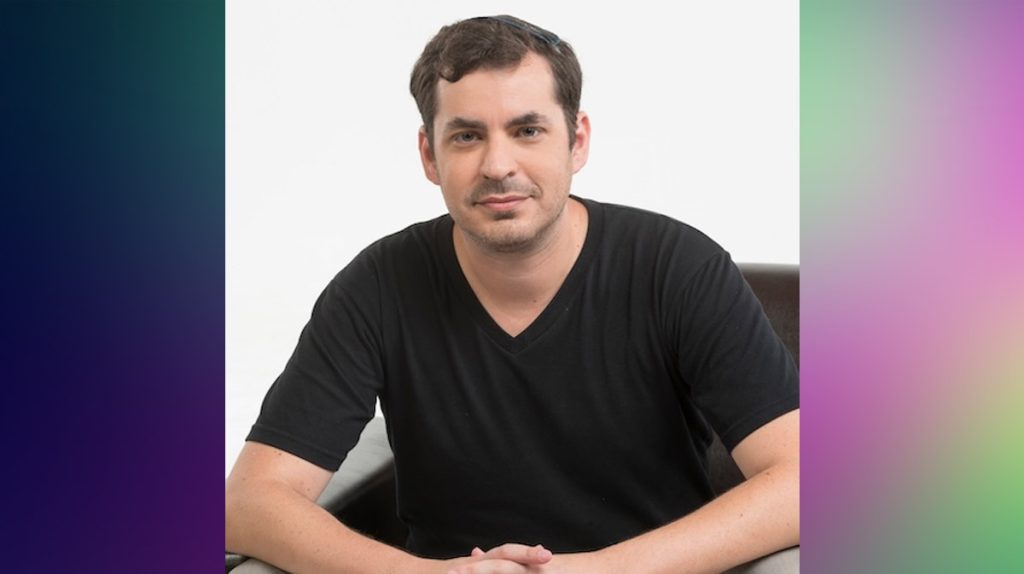
Shlomi Beer, co-founder of ImpersonAlly
ImpersonAlly’s approach is to out-operate the fraudsters at their own game. Its agents go down the rabbit hole – clicking, collecting, cataloguing – to build the data that powers both detection and takedown. The point isn’t just identifying fake domains. Fraudsters move fast; by the time a domain is flagged, they’ve shifted the attack. ImpersonAlly partners with Google to cut off the entire chain upstream of the website – the ads, the social promotion, the visibility – even if the fake site itself persists.
Sharp’s verdict: “It’s no longer trust and verify. It’s don’t trust and verify, fix.” He said equity markets value fraud detection at multiples that marketing tools don’t come close to matching. His advice was simple: get it out fast. Capital raised so far – $2 million – is lean for what the problem demands, but the demand itself is enormous and universal.
iWander: Closing the Engagement Gap
Marius Nigond started with a data point. After a customer arrives at their destination, there’s a 70% drop in travel app usage. Once the booking is done, there’s no reason to open the app again. “Most travel apps are transactional. That’s the engagement gap which we close.”
iWander is an AI travel companion that turns any travel app into a personal tour guide –generating self-guided audio tours on the fly, providing recommendations tied to bookable products, and surfacing local knowledge in real time. The critical design decision: it’s not a consumer app. It’s an SDK (Software Development Kit). Travel brands plug it into their existing apps.
The proof point is City Sightseeing, the world’s leading hop-on hop-off operator, where iWander launched a few months ago. Twenty-seven percent of customers have adopted the AI features. Average engagement has increased by 13 minutes per download.

Marius Nigond giving his insights during a Phocuswright Conference podcast recording
Roger tested it himself that morning in Barcelona and had already used it in Montreal the previous week. His take – and he’d checked it against Claude 4.6 before the session – was that the moat is real: humans have curated the underlying content. “I sat down with Claude and asked whether this was a defensible business, and it said the guy probably does have one.”
The business model has evolved. The original SaaS-and-upsell thinking has been replaced by usage-based pricing, selling minutes and credits to travel brands who then gift or package them for their customers. The brand chooses how to deploy it. iWander gets paid on engagement.
Where it goes next is the harder question, and Nigond was honest about it. Getting to more City Sightseeing-scale partnerships takes time and data. His go-to-market answer is events. Sharp ended the session by offering a direct conversation about Web Beds, which had 10.5 billion searches on its marketplace that Friday alone.
On moats, pace, and fears
When asked what their biggest fear was, each founder named the same one, just from different angles: the pace of change.
For Nigond, it’s the question of defensibility in an era where capabilities compound weekly. “The amount of stuff we got done on Friday just with the new model. It’s exciting, but it’s terrifying, because we’re all building and who’s coming around the corner?”
For Beer, the adversary compounds at the same rate. “Everything we are using for good reasons; the bad guys are using for wrong reasons. Sometimes it’s not one guy – it’s organisations with hundreds of employees making hundreds of millions of dollars.”
The pace of fraud innovation is, structurally, the same as the pace of AI innovation.
For Handover, the challenge turned ethical. SocialSeal was approached by a political party that wanted to use the platform’s demand intelligence to insert itself into public conversations about quality of life. She said no. “I have three kids. My kids will be exposed to this kind of manipulation on a daily basis. How can I make sure they’re street-smart enough to navigate this new, messy world?”