
Why quiet power may become Japan’s greatest competitive advantage
The travel industry is undergoing its biggest transformation since the rise of the internet.
The catalyst, of course, is generative AI.
Yet the most thought-provoking question I took away from WiT Japan 2026 wasn’t about AI itself.
It was this:
In a world where AI becomes ubiquitous, what remains uniquely human?
For decades, travel has been an information business.
Where should I go? Which hotel should I book? Which restaurant is worth visiting?
Online travel agencies competed by providing more information, faster than everyone else.
That competitive advantage is disappearing.
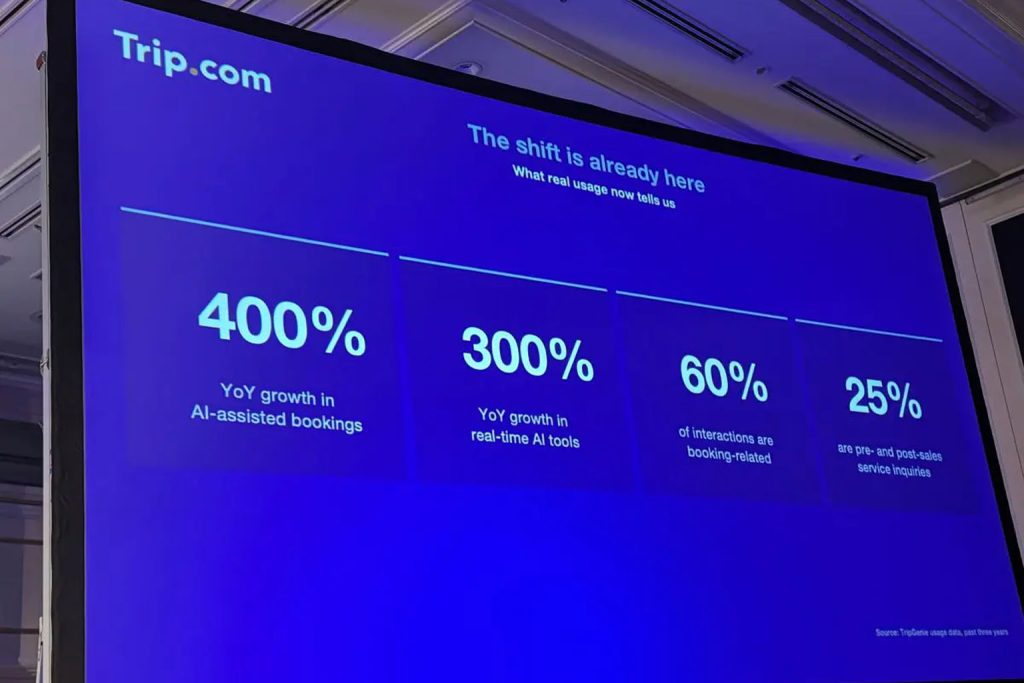
At WiT Japan, Trip.com revealed that AI-assisted bookings had grown by 400% year over year, while usage of its real-time AI tools had increased by 300%. Travelers are beginning to consult AI rather than search engines when planning their trips. AI is rapidly becoming the new travel advisor.
As AI increasingly handles search, translation, itinerary planning and booking, information itself is becoming commoditized.
The question is no longer:
Who has the most information?
Instead, it becomes:
Who can create the most meaningful experience?
AI doesn’t replace hospitality. It amplifies it.
One of my favorite sessions at WiT Japan featured Eiichiro Yamakita, President of JTB.
He described omotenashi not as a service manual or operational process, but as a mindset—a genuine desire to understand another person.

Eiichiro Yamakita, President of JTB, described omotenashi not as a service manual or operational process, but as a mindset—a genuine desire to understand another person.
That distinction matters.
Many people frame AI and hospitality as opposing forces.
I believe the opposite is true.
AI removes friction.
People create memories.
AI can translate languages, process payments, recommend restaurants and remember customer preferences.
What it cannot do is create those small moments that define a memorable journey.
A ryokan hostess remembering your name.
A spontaneous conversation with a sushi chef.
The stillness of a shrine before sunrise.
Laughing with local residents during a village festival.
AI should eliminate inconvenience—not serendipity.
The meaningful “friction” that makes travel unforgettable remains profoundly human.
That is why WiT Japan repeatedly returned to one phrase:
Quiet power
Interestingly, the conversation didn’t stop in Tokyo.
A month later at WiT Queenstown, I heard speakers from around the world naturally referring to the Japanese concept of omotenashi after WiT founder Yeoh Siew Hoon introduced it in her opening remarks.
That struck me.
What was once regarded as a uniquely Japanese philosophy is gradually becoming part of the global travel industry’s vocabulary.
In the AI era, omotenashi is no longer just Japan’s cultural asset.
It may become one of the world’s most important guiding principles for hospitality.
Soft power brings Visitors. Quiet Power Makes Them Stay.
For years, I’ve described Japan as “the Italy of Asia.”
The similarities are remarkable.
Ancient history.
Regional diversity.
Extraordinary cuisine.
Craftsmanship.
Design.
A strong cultural identity.
Two island nations surrounded by the sea.
Yet increasingly, I think Japan shouldn’t aspire simply to become the Italy of Asia.
It has the opportunity to become something even more distinctive.
At WiT Japan, economist Jesper Koll presented one of the most fascinating slides of the conference.
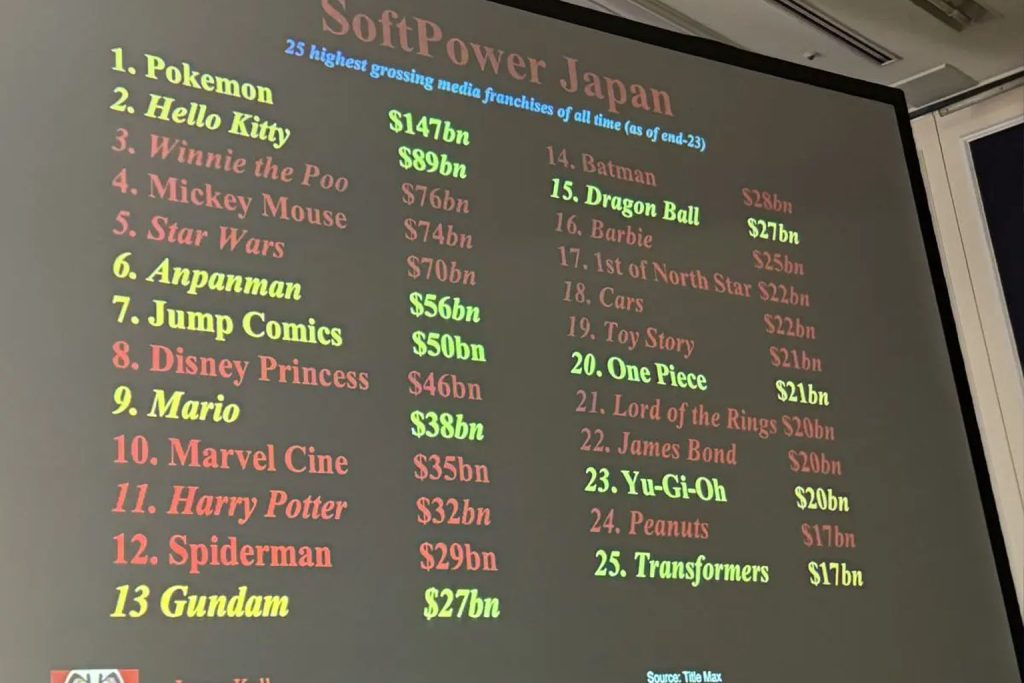
Pokémon. Hello Kitty. Mario. Dragon Ball. One Piece.
Japan has created an astonishing number of the world’s highest-grossing entertainment franchises.
Few countries possess this level of global cultural influence.
These icons inspire millions of people to dream about visiting Japan.
Yet anime is only the beginning of the journey.
Visitors may arrive because of Pokémon.
They return because of a festival in Akita.
A tiny sake brewery in Niigata.
A family-run ryokan in Kyushu.
A conversation they’ll never forget.
A place that somehow feels like home.
Soft Power opens the door.
Quiet Power becomes the destination.
Japan’s greatest AI opportunity comes from Its Biggest Constraint
Let’s be honest.
Japan is not leading the world in AI adoption. Many see that as a weakness.
I don’t.
At WiT Japan, Jesper also offered another memorable insight:
Scarcity creates innovation.
Japan faces labor shortages.
Population decline.
An aging society.
These constraints will inevitably accelerate AI adoption.
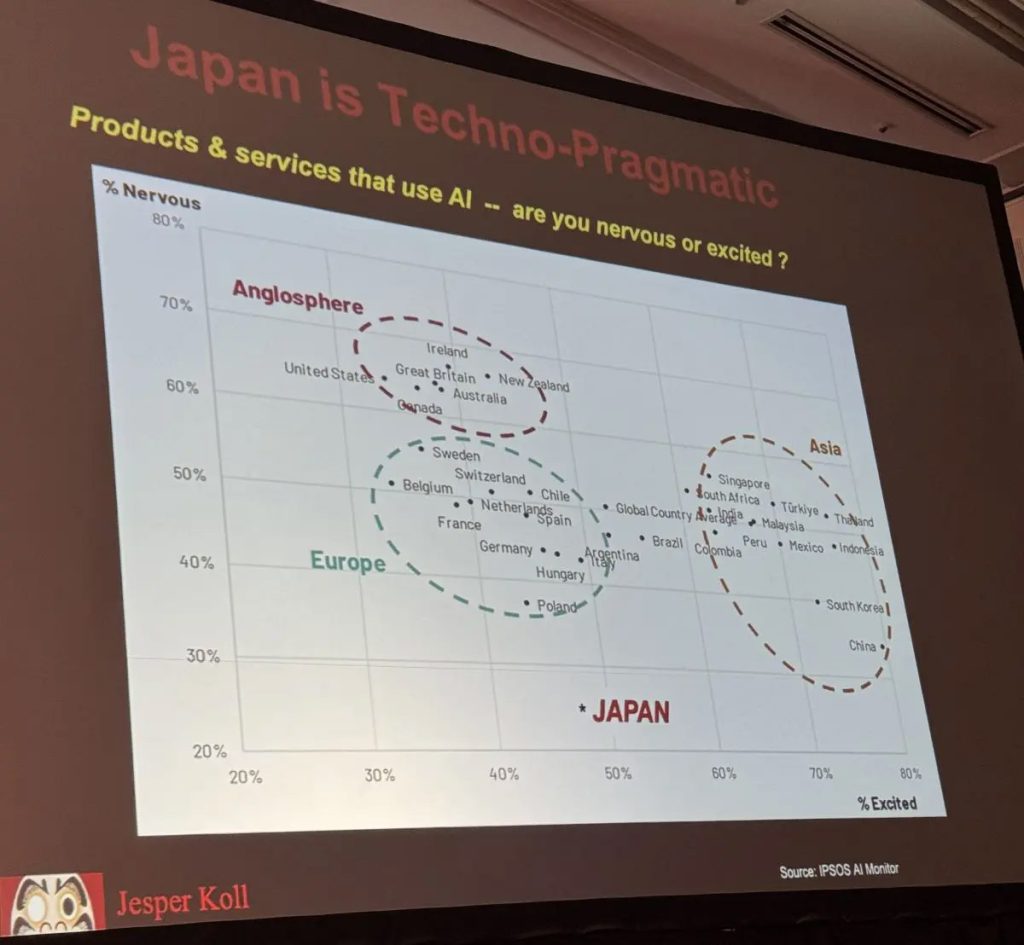
But more importantly, Japan appears unusually pragmatic toward AI.
While parts of Europe remain understandably focused on regulation and risk, Japan continues to view AI primarily as a practical tool for solving real-world problems.
That mindset matters.
AI could be the best thing that ever happened to rural Japan
For decades, reaching international travelers has been expensive.
Multilingual websites.
Online booking engines.
Digital marketing.
Translation.
Most small tourism businesses simply couldn’t afford them.
AI changes that equation.
Today, even a small ryokan or local experience provider can build multilingual websites, create global marketing content, communicate with overseas visitors and manage bookings at a fraction of the previous cost.
AI democratizes global reach.
This could become one of the biggest opportunities rural Japan has seen in decades.
But technology alone won’t determine the winners.
Eventually, everyone will have access to AI.
The real competitive advantage will come from something much harder to replicate:
The ability to translate a region’s Quiet Power into stories, data and experiences that AI can understand, recommend and personalize.
The winners won’t simply use AI better.
They’ll help AI understand what makes their destination uniquely human.
Tourism should become Japan’s talent strategy
Finally, I believe Japan’s tourism strategy needs to become much more ambitious.
Success should no longer be measured only by visitor arrivals or tourism spending.
The real question is:
How many people leave Japan wanting to come back?
To study.
To work.
To build a company.
To invest.
To raise a family.
Tourism should become the beginning of a much deeper relationship.
Visitors become repeat visitors.
Repeat visitors become members of the community.
Community members become entrepreneurs, investors and long-term contributors.
In an aging society, tourism policy and talent policy can no longer be separated.
Tourism is no longer simply an industry.

It is the front door to regional revitalization.
Beyond “the Italy of Asia”
The 20th century measured tourism by arrivals.
The early 21st century measured it by visitor spending.
The AI era will measure something different.
How many people want to build a lasting relationship with your destination?
AI is an extraordinary tool.
But it is not the protagonist.
People are.
Communities are.
Japan’s Quiet Power is.
If Japan can combine its globally recognized Soft Power with the deeply human Quiet Power embedded in its regions—and use AI not to replace but to amplify both—it won’t simply become “the Italy of Asia.”
It may pioneer a completely new model of tourism leadership for the AI era.
One where technology makes omotenashi not less relevant, but more powerful than ever.
Because in the end, AI will help us plan better journeys.
But only people—and the places they call home—can make those journeys truly unforgettable.
This article builds on ideas first published by the author in Japanese on Yamatogokoro.jp and has been substantially expanded and updated for Web In Travel. Published with permission from Yamatogokoro.jp.
Kei Shibata is a travel-tech entrepreneur, investor and co-founder of WiT Japan. He co-founded Venture Republic, operator of Travel.jp, in 2001 and Trip101 in Singapore in 2015. Today, based between Singapore and Tokyo, he invests in early-stage companies and serves as an advisor to travel and technology businesses across Asia Pacific.