
Trip To Japan is two years old, backed by the company behind Shohei Ohtani’s first club, and betting that in a red ocean of AI trip planners, real expertise is the moat.
How does an Icelander end up in Tokyo, selling Japan to the world?
On a whim, says Höskuldur Hrafn Guttormsson, managing director, Tokyo, of Trip To Japan, which was co-founded by fellow Icelander, Bolli Thoroddsen and two friends, about two years ago.
For Hoshi, as he is called locally, an undergraduate exchange in Osaka was all it took. “I just completely fell in love with the country.”
Back home, he finished his studies as fast as he could and signed up for a master’s degree in Tokyo. Then he did something, he admits, no career advisor would recommend: he offered to work for free.
It was a calculated bet. Iceland has about 350,000 people, “and everyone knows everyone,” so he went to the Icelandic embassy in Tokyo. “It turns out it’s the same thing, 9,000 kilometres across the ocean.” He found a job, and that was more than a decade ago.
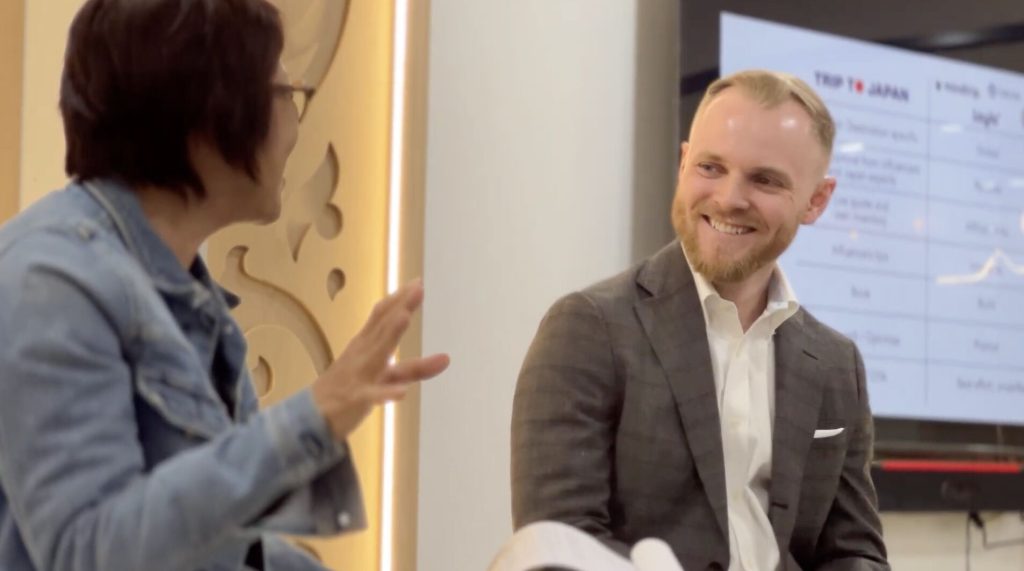
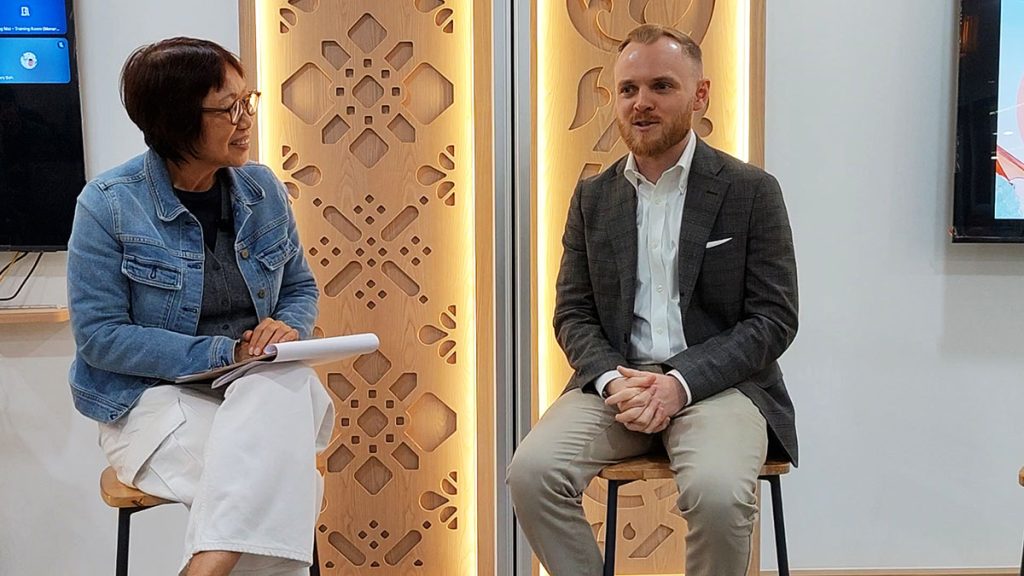
In conversation with Yeoh Siew Hoon at Travel Tech Thursdays in Kuala Lumpur last week, which focused on live events tourism, Hoshi explained how six years in the seafood trade shaped the way Trip To Japan works, and why a destination-specific OTA can stand out as AI trip planners multiply.
What fish taught him about travel
Before travel, Hoshi spent six years at Icelandic Asia, selling wild-caught fish from Iceland and the North Atlantic into Japan. He took two lessons from it.
The first is that quality matters above everything. Japan’s famous customer service, he said, is really the result of quality demands running through the whole value chain, top to bottom. Japanese seafood buyers would send their own people to Iceland to go out on the boats and inspect the fish as soon as it was caught.
The second is reputation, which comes from delivering that quality every single time. “You would hear ‘Icelandic fish’, and the buyer would just say, ‘No problem, I’ll pay a premium for that.’ That has nothing to do with marketing. They just know it’s a better product.”
He has brought that Japanese inspector’s mindset to Trip To Japan’s suppliers: the hotels, guides and tour operators it works with. “We’re very strict. If we send a customer out and the tour guide doesn’t show up, or the hotel booking falls through, that trip is ruined.”
In other words, inspect every fish.
Is there an Icelandic word for omotenashi, Japan’s anticipatory hospitality? Not exactly, Hoshi said. It’s more about being nice to your neighbour, which visitors often notice. Iceland is cold, but its people are warm. “It’s also because we’re just so few. Everyone knows everyone.”
All of Japan, one checkout
Trip To Japan is a licensed OTA focused entirely on inbound travel to Japan, with a growing share of its customers coming from Western markets. Multi-city hotels, tours, activities and a personalised itinerary all sit in one checkout, all from its own inventory.
Travellers get three ways in: a customised AI prompt that tailors a trip to them; a network of influencers and Japan experts (about 88 so far, and growing); and, most recently, packages, meaning influencer- and creator-led trips around Japan.
That social media engine has made a young company highly visible. The business is just two years old, but Hoshi said that last month, after packages and influencer trips launched, sales came to around US$800,000.
Planning and booking, together
Trip planning on its own is hard to monetise, Siew Hoon noted. Hoshi agreed, and pointed to the gap Trip To Japan is trying to close.
“You can go into Claude or ChatGPT and plan a trip, but you can’t book it,” he said. Planning a trip usually means 15 different websites, one place for hotels, another for flights. Trip To Japan wants to bring planning and booking into one platform, the same collapse of the funnel that AI agents are now chasing across the industry.
Home run: the F Village deal
What brought Hoshi to the stage in Kuala Lumpur was sports tourism. In October, Fighters Sports & Entertainment, the company behind the Hokkaido Nippon-Ham Fighters baseball team, invested in Trip To Japan.
The Fighters are the club where Shohei Ohtani, now the world’s most famous baseball player, began his professional career. For a small, new company, Hoshi said, the investment is a big vote of confidence. “It’s like if Real Madrid or Barcelona invested in a Spanish trip company.”
The Fighters’ home, Hokkaido Ballpark F Village, is far more than a stadium. It’s a whole village built around a state-of-the-art ballpark with a retractable roof, its own microbrewery, sauna and onsen, and activity areas, drawing roughly as many visitors on non-game days as on game days. Guests can even stay in rooms overlooking the field and watch a game from their room, or from a hot tub.
Yet hardly anyone in the room had heard of it, which, Hoshi said, is exactly why the Fighters invested. The target is North America. With Ohtani’s star power, American baseball fans are already curious about Japan. Trip To Japan plans to turn that curiosity into pilgrimages.
The first is already lined up. Rob Friedman, the American baseball analyst, social media personality and author, whom Hoshi described as the biggest voice in baseball in the US, will bring 200 people with him.

Standing out in a red ocean
Given that the AI trip planner space is already crowded and OpenAI has just acquired AI travel agent Odessia, a sign that the wave is only beginning, how does Trip To Japan stand out, he was asked.
The biggest differentiator, Hoshi said, is focus. “We are destination-specific. We are building this only around Japan, with real expertise around Japan, which is much easier than trying to do the whole world at once.”
And that expertise is human, not machine. The Fighters relationship, the influencers, the Rob Friedman trip: all of it, he said, is built on “real people that know the place”.
Pointing to a recent Iceland tourism campaign that played on viewers’ belief that Iceland’s landscapes were too beautiful to be real and must be AI-generated, Hoshi noted that Trip To Japan has the opposite problem. “We are using AI, but we have to prove that there’s something human behind it, that we are worthy of trust because we are the experts.”
The secret sauce of a small country
Asked why does Iceland produce such creative campaigns, Hoshi said, “It’s a cold and dark country, so we have to find ways to keep ourselves entertained.” More seriously, with so few people, everyone does several things at once. “Your dentist might be a crime novelist, or be in a band.”
There’s an Icelandic saying, he added, that everyone has a book in their stomach, that is, there is creativity in everyone.
Rapid fire
Biggest similarity between Tokyo and Reykjavik? Lots of volcanic and seismic activity, and a shared belief that a hot bath fixes everything.
Biggest difference? Sheer size. “The whole population of Iceland goes through one train station in Tokyo for lunch.”
Japan’s answer to hákarl, Iceland’s fermented shark? Natto, the fermented soybeans. As an Icelander who doesn’t like hákarl, Hoshi prefers the taste of natto. The problem is the texture. “It’s very, very sticky.”
His verdict? Try both.