Day 2 in Bhutan dawns bright and clear. Fluffy white clouds floating on a canvas of brilliant blue sky. More Fluffy Dragon than Thunder Dragon, I thought as I woke up at the Namgay Heritage Hotel in Thimpu.
Happiness, I thought. We had expected lots of rain and black clouds – all the guidebooks tell you this is not a good time to visit Bhutan – but hey, it’s our luck. For the week we were there, the weather couldn’t be more perfect. Sunny, breezy days, a light drizzle couple of evenings and brisk, cool nights.
On our mini-van, we learnt a new word from our guide, Dorji. Nga Choelu Gah means I love you. It’s that kind of day that makes you fall in love with life.
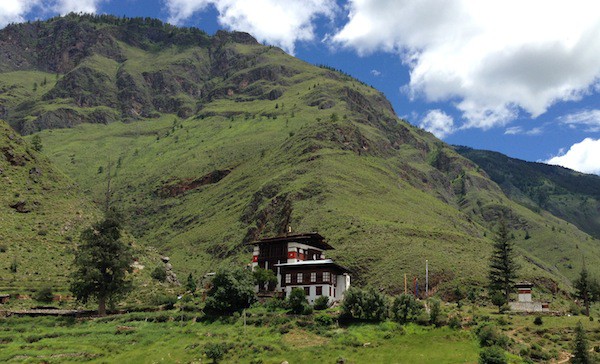
Pristine countryside
What’s not to love? We are in a very special place of only 700,000-plus inhabitants in a country where almost a quarter of it is designated national park and which ranks among the top 10 countries with the highest species density in the world.
All these facts come to life right before us as we drive through countryside, hills, valleys, rice terraces and villages. Dorji points out a building that is an arts and craft school for the disabled. There’s a large gathering at a village and he tells us it’s a day for community service – when people come from nearby areas to help in a communal activity.
It reminds me of those “gotong-royong” (cooperation) days back when I was growing up in a village in Penang, Malaysia. Those days are gone as we move to rapidly urbanised lives and I wonder how much we’ve lost as communities in this move from rural to urban.
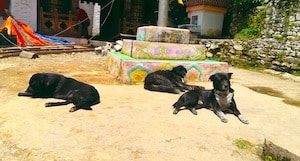
Thimpu is doggies heaven
I am told that in Bhutan, they’re trying to discourage villagers from moving to Thimpu and Paro. The young come in search of bright lights and jobs and most end up disenchanted and disenfranchised.
Dogs are everywhere. My Australian friend had prepared me for this. She calls Thimpu the valley of the dogs. I don’t mind them. They are clean, free and happy. They don’t belong to anyone but to everyone. I like that idea.
Our destination today is Tango Goemba. Tango means “horse head”. It’s the highest centre of Buddhist studies. It was built by the Divine Madman, Drukpa Kunley, in the 15th century.
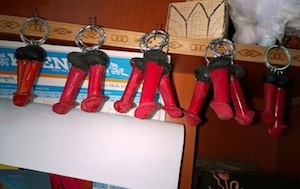
Phallic key chains
Over the next few days, we are to learn a lot more about this eccentric monk who basically democratised Buddhism by making its teachings accessible to the common man with his rather wayward lifestyle and teachings. In a nutshell (pardon the pun), he made the phallus popular and everywhere you go, you see the appendage everywhere – on temple doors, as wall art, handicraft and key chains. After a while, you don’t notice them because they are, in some places, they are literally part of the furniture.
The university is 280m up the trail although for how we were feeling, it felt more like 2,800m. We are huffing and puffing and we look on in envy as local monks skip up the trail like mountain goats, some of them carrying furniture on their backs. The altitude of Thimpu takes some getting used to for us urban haze-clogged lungs from the tropics.
But it’s a pleasant climb. You see signs along the way that makes you respect the Bhutanese attitude to life. Instead of “Do Not Litter”, it says, “Use me and keep nature clean” or “Nature belongs to everyone”. There are wise words about happiness and nature that remind you to respect the environment.
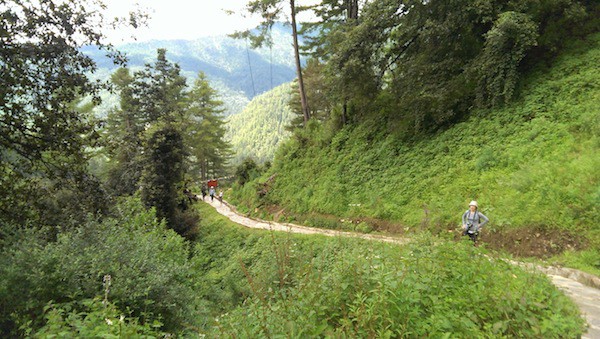
The trek up to Tango
At the centre, we are invited by a young monk for tea and biscuits. He tells us he’s 29 years old although he looks 17 and he’s been studying there for a year. There are about 300 students here and after graduation, they typically have to meditate for three years, three months and three days at the nearby Cheri Goemba retreat.
Luck is again with us. We’ve arrived in time for lunch break and we sit in the courtyard, watching the monks queue up for their food, which is basically rice and a vegetable dish. It’s a reminder of how simple life can be and how little we actually need.
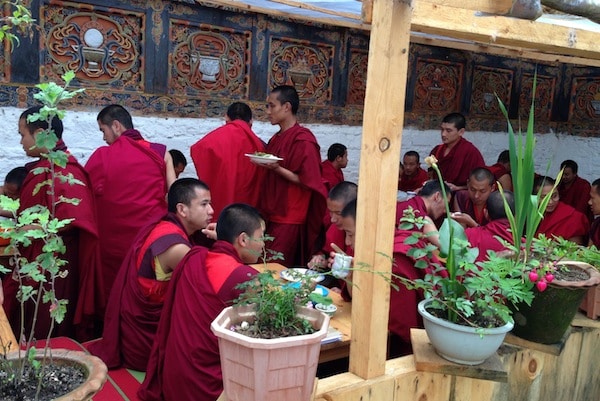
Together time at lunch
Our own lunch is at our Bhutanese host’s home. A feast has been prepared for us and there’s nothing like home-cooked food to make one feel, well, at home.
After a while, I almost forgot we were in Bhutan until of course the cordyceps came out. This is the medicinal herb that travellers flock to China and Nepal and obviously now Bhutan for. Called the “new gold rush”, these caterpillar fungi fetch a bomb in cities like Singapore.
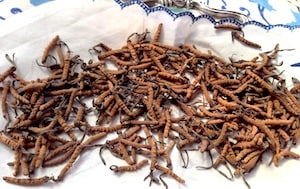
Cordyceps are much valued by Asians for their therapeutic qualities
They look like little worms with a thread sticking out of their backside but I am told they’ve got immense therapeutic qualities – so much that people pay hundreds of dollars per caterpillar.
In between picking out cordyceps and drinking tea, I speak to a young Bhutanese woman who’s been educated in the US. A lot of Bhutanese, I learnt, are educated in India. The wealthier ones go further to the UK and US..
I asked this 20-something what she thought of the Gross National Happiness Index and if it was just public relations, a good way to project the country’s image.
She said, “No, we really believe in it but we wished it could be less academic so that everyone can really understand it and live it everyday. It’s still too theoretical at the moment.”
Other than that, she had very few negative things to say about her country, despite my prodding and leading questions. Yes, you can take the journalist out of her country but you can’t take journalist out of her.
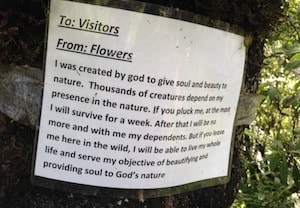
One of the many signs that reflects the Bhutanese attitude to life
And that’s again another difference I noticed between Bhutan and other places I’ve been. In most places, give people half a chance and they will whinge and moan about what’s wrong. You see it from Singapore to Ireland to New Zealand.
In Bhutan, you hear very few Bhutanese complain about their lot – they seem contented with what they have and it’s as though most of them really live the Dalai Lama mantra of “It’s better to want what you have than have what you want.”
I make it a point to remind myself of this mantra for the rest of my journey through Bhutan.