
Airbnb’s expansion in Asia continues apace. Its head for PR and social media, Lena Sonnichsen, is moving from Hamburg to Singapore effective November 1, and it has appointed country managers in Korea and Japan, and is scouting for a head in Australia.
Sonnichsen, in Singapore ahead of her move, said, “It’s no secret that Airbnb and Asia is a good combination and we’re exploring the potential and it’s no point us saying that we are committed if the communications position is based out of Europe.”
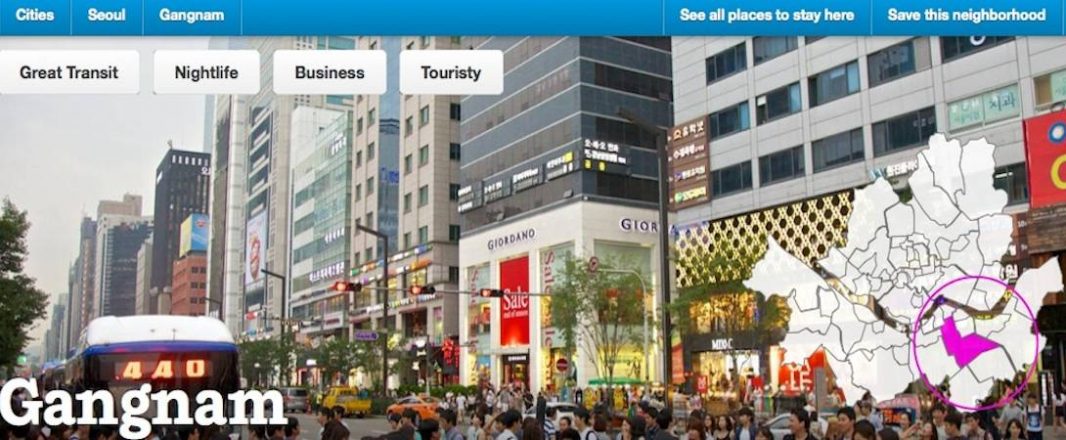
She said that three priority markets were Sydney, Seoul and Tokyo. “Sydney is a huge travel market, both inbound and outbound. Seoul, like no other city anywhere, is embracing the sharing economy – the mayor has publicly declared that he believes in the sharing economy and wants to help companies grow because he believes they make the city a better place.
“It’s the first city anywhere where there is political and regulatory will to do something about the sharing economy.”
With Tokyo, Airbnb hopes that with Olympics 2020, it will be able to replicate the same success it had with the London Olympics. “There is so much demand for Tokyo and there’s very little supply and with the Olympics, that’s huge news for Tokyo – we saw huge growth out of the London Olympics.”
Since its launch in 2008, Airbnb has crossed the 10 million guest nights mark, with five million guests being chalked up this year alone. Paris surpassed New York six months ago as its largest market.
Asked which city in Asia had the potential to surpass Paris, Sonnichsen said, “Tokyo has the potential.”
Other than building out supply – out of Airbnb’s 500,000 listings worldwide, 50,000 are in Asia – the company will also look to build brand awareness in Asia where it is not as well known as it is in Europe and the US.
With a brand built mainly through word of mouth and PR, having a key communications position based in Asia is critical to raising awareness in the region. “We have so many good stories to share,” said Sonnichsen. “Just yesterday, I got a call from a Japanese TV crew who wanted to do a story on “Trust and the sharing economy”, and wanted to find out if there were people who’d met and gotten married through Airbnb – and we have such stories.”
The company however is taking “baby steps” in offline and online marketing. In Los Angeles, it built five pop-up homes in different areas of the city, designed around celebrities.
“We might do something similar in Asia – we have a very different product and there’s no need for us to spend on search like the OTAs. People either love us or hate us but we know we have to work at brand awareness especially in Asia.”
With competition rising in the space, of course Airbnb is also mindful but Sonnichsen said that while it was flattering “people get inspired by our success”, “travel is inherently global and we are not worried by any local player – Airbnb has the scale that makes it easy to book across the globe.”
On the hiring of hotel veteran Chip Conley to head up its global hospitality, Sonnichsen said the move wasn’t meant to make Airbnb more like a hotel company. “In hotels, it’s an expected experience – you go to the bathroom and you see shampoo bottles in a row. We want to help our hosts make people feel at home not by lining up shampoo bottles but to anticipate guest needs.
“For example, I am staying in an Airbnb here and this morning, my host saw I was tired and brought me fresh apple juice to wake me up. And when I arrived, he had little cards lined up – bakery, massage, restaurant, Uber – little things that anticipate my needs.”
Other than looking after foreigners travelling to Asia, Sonnichsen said it was seeing amazing growth out of China. “We see Chinese travellers already booking on Airbnb. We have a feature that allows people to search for hosts by language filter and we’ve made that search easier to use in Asia.”
Sonnichsen, who joined Airbnb two years ago and looked after Eastern Europe, said that initially people also said the model wouldn’t work there. “But it’s not true, it works all over the world, we just need to make it accessible and get people to know about it.”
On the recent development where Airbnb had to make concessions to New York city authorities to fall in good graces with regulators, Sonnichsen said, “Accommodation is a heavily regulated market in the world, housing in general, and we are trying to work with governments around the world to make it clearer. We have some great successes.
“Hamburg, my city, has just passed a new law, increasing the fine for illegal housing, but at the same time, making it clear that the occasional Airbnb rental is fine. Important is that it must be a primary home.”
“Paris, Amsterdam, Copenhagen – there are tons of cities that are beginning to understand the positive impact on local economies.”
The company is currently working on a local economic impact study for Sydney.