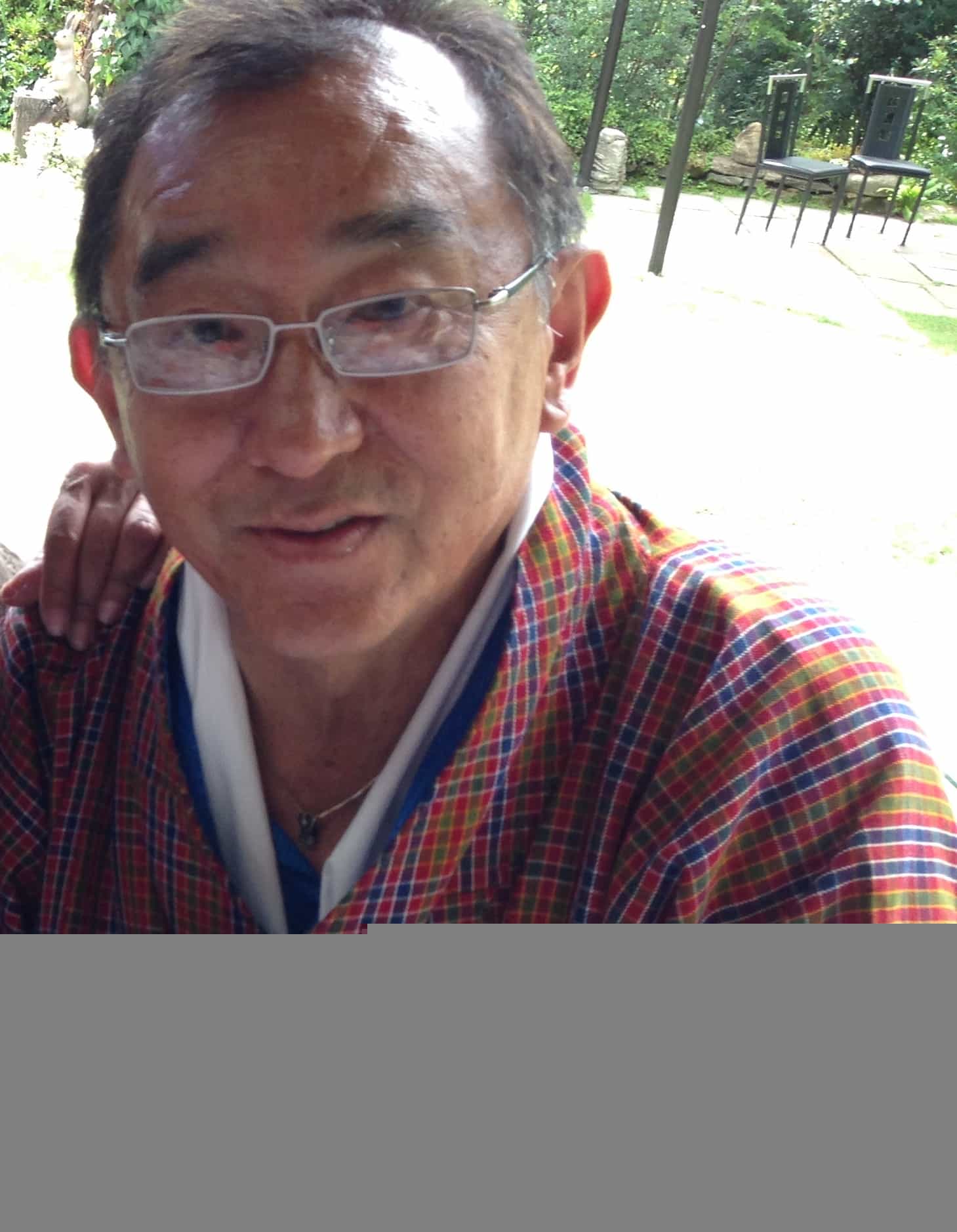
Tobyge: “I tell my staff to treat guests like it’s their home.”
“The thing is, nobody says don’t make money. Just that if you don’t, it’s okay,” said our dinner host, shrugging. “It’s important not to take things too seriously.”
Tobgye Dorji (left) shrugs and laughs a lot. A wonderul host during our stay in Paro, he comes across as someone who’s lived, learned and laughed a lot, and some more. His family owns the Gangtey Palace Hotel where we are staying. They restored and converted the 100-year-old palace into a hotel in 1995 and it’s only in the last couple of years that it’s covering costs. He shrugs, “We didn’t want it to just deteriorate, it’s a beautiful piece of Bhutanese history.”
Not to mention the most beautiful setting – it overlooks the entire Paro valley and is the best place to come home to after each day of touring. It is from here that our group ventured into Ha Valley, the secret Shangri-La, and Tiger’s Nest, the must-visit monastery of any tourist to Bhutan.
“We tell our staff, just treat guests like your guests, like this is your home,” he said. And it most certainly felt that way.
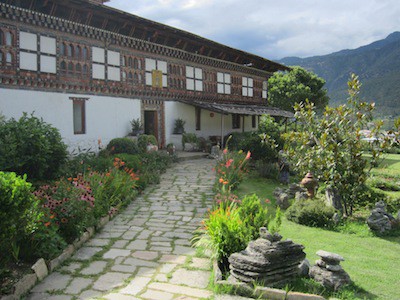
Gangtey Palace: Gorgeous setting over Paro valley.
Our mornings started with breathing lessons from Tobgye. For breakfast, we had freshly churned butter, local honey and homemade apricot jam and in the evenings, we gathered for dinners with Topgye and his family.
The contrast between Ha Valley and Taktsang Monastery, otherwise known as Tiger’s Nest, is striking. It is said that only 10% of tourists who visit Bhutan make it to Ha while you can safely say that 100% visit the latter.
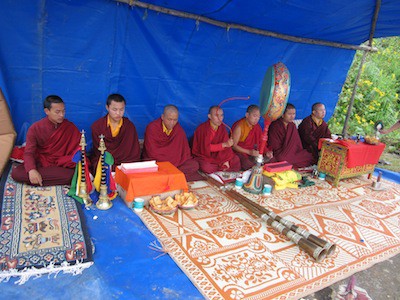
Monks chanting at Chelela Pass
It’s quite a drive to get to Ha but it’s well worth it. The scenery was splendid. At Chelela Pass, 3,810 metres high, we stopped to watch a ceremony. It’s the day to commemorate the first day Buddha began his teachings. Prayer flags fluttered in the wind and monks chanted while children played and the adults chatted.
You can see why Ha is called the Hidden Valley – it’s squeezed so tightly between mountain ranges that from a distance, you could miss it. Other than being home to an Indian military camp, there’s not much happening here – which is why it’s so delightful.
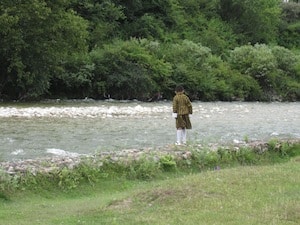
Solitude of the Secret Valley
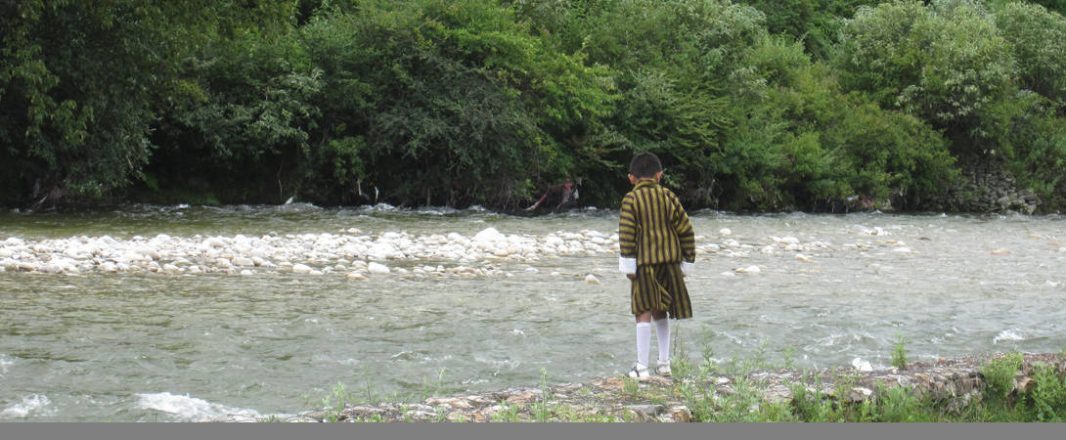
No tourists, just a handful of kids playing soccer in a field nearby and dogs which watched us with hope while we had our picnic by the river. Midway through our lunch, our group grew from 8 to 12 (we invited four local children to join us) and as many canines.
At Tiger’s Nest, you have the option of either taking horses up to the halfway point or walk. Guess which one our group chose. Hurey, my horse, was a gentle soul, nimble of foot. At least, I trusted that he was because frankly, I had no choice. There were times I felt he could have stayed further away from the edge of the trail but I think that’s how Hurey likes to live, on the edge.
It takes some getting used to if you are not used to horses – and no one in our group had ridden one before. I took horse-riding lessons in Canada and Australia but that was so long ago I am sure Hurey sensed that. Let’s just say he did all the work.
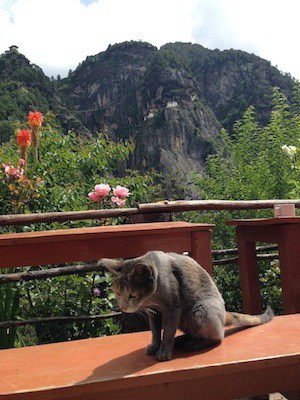
Cat at Tiger’s Nest: So near yet so far
We stopped for tea and biscuits at the cafeteria and admired the monastery from across the valley – it’s built into the cliff and you wonder how they built it in the first place in 1692. The site was chosen because legend has it that Padmasambhava (Guru Rinpoche), credited with introducing Buddhism to Bhutan, flew to this location from Tibet on the back of a tigress.
It looked near yet so far – well, definitely too far for me anyway that day, it would have taken another hour and this time no horses allowed which means we would have to walk the rest of the way. Yes, I didn’t make it to the monastery but somehow, it didn’t matter that much.
What mattered more was spending time talking to our guide Dorji Gyelshen (below) who took religious studies for two years before he became a guide to combine his two loves and being in the presence of a most sacred site and remembering the words of Tobgye from dinner the night before.
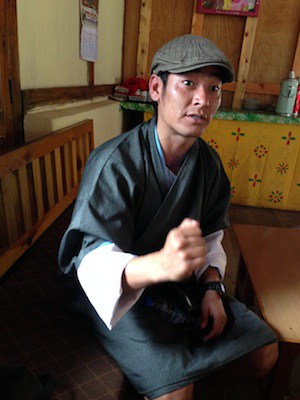
Dorji: Combining two loves.
“Happiness is within you. Some people think they’ll be happy if they move somewhere else but if you’re not happy in Singapore, then you won’t be happy in Bhutan or anywhere else.”
This, he said without shrugging or laughing.
I am happy I finally made it to Bhutan. I now get it.
• Read the complete Bhutan series – Part 1, Part 2 & Part 3