
One of the most frequent questions I’m asked these days – after Groupon set up its Travel vertical group in Asia Pacific earlier this year – is “how long do you think they will last?”
In the rapid-fire world of online, it seemed only yesterday when Groupon, the daily deals monster, was hailed as the game-changer in travel and today, some people are surprised that it’s actually still around and not imploded like the thousands of copycat sites that mushroomed after “the Groupon phenomenon”.
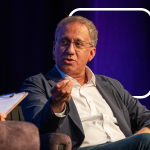
So when Seah Seah (left), formerly with Langham Hotels and prior to that, ZUJI, joined them as their travel head last October, many people were surprised – why would Seah join a company that is perceived to be floundering and its CEO Andrew Mason left in rather dramatic fashion, writing the most-talked-about resignation letter in the US corporate world?
To Seah, the move represented an opportunity for personal growth. “Groupon is full of entrepreneurs and I wanted to be among entrepreneurs – how they think, how they disrupt, how they question everything. Travelocity was a platform that couldn’t change and the speed of change was slow. At Groupon, there is no platform, it’s full of entrepreneur fervour and the feeling is ‘we can do anything’.”
He’s had to make mental adjustments obviously, one of which is ‘how do you translate the online travel world into the social commerce world – they are two different worlds, one is 15 years old, the other is 3 years old. Social commerce can do travel in a way that OTAs such as Travelocity can’t.”
Groupon is also moving from a “push” to “pull” model and Seah said the intention is to become a Social Commerce Platform (SCP, a new acronym to remember perhaps) where customers come to Groupon to be inspired and to buy deals. And with mobile now accounting for 50% of the group’s US$6 billion transactions, this factor could well work in its favour when it comes to travel and Asia.
Mobile and the shift in model from “push” to “pull” was recently hailed by Wired magazine as one of the reasons that “Groupon is staging one of the year’s more unlikely comebacks”.
The article, noting that Groupon’s shares have more than quadrupled and its market cap is back above US$8 billion, said that changes instituted by new CEO Eric Lefkofsky and mobile appear “to hold the key to Groupon’s comeback”.
In its second-quarter earnings announcement, Groupon said that “pull” was supplanting “push” – email accounted for lower than 40% of all North American transactions, and noted that “pulling” was an approach ideally suited to mobile apps – the Groupon app was downloaded 7.5 million times in the second quarter.
The company is also diversifying from daily deals. It recently bought hotel booking service Blink and this week, it acquiredSideTour, a marketplace where people can book places for small-scale, bespoke activities, and post their own events. Groupon says that SideTour will continue to operate as a separate entity “for some time” as its activity listings start to get distributed via Groupon’s email, web and mobile channels.
Seah sees Groupon as getting to the core of what travel should do – inspiring travellers. He cited a promotion it did in Australia recently promoting a trek to the Mt Everest basecamp – it sold 500 places and “in many ways, we have reversed the planning and booking stage. In our case, the flexible traveller gets inspired to go to the basecamp, buys it and then sometime over the next six months, he plans how to go”.
While he couldn’t disclose figures, he said travel was the fastest growing vertical in Groupon. .jpeg)
His first priority is to change the industry perception of “Groupon being a discount, cheap model to a value distribution partner that can help with first minute, middle and last minute sales”.
“We can drive overall ADR – we are able to put out targeted offers per country and you can yield higher by putting different packages and experiences together.”
He’s come up with different types of packages – Black Label, Grey (mystery deal), Gold (one coupon for 10 different hotels), Red (mobile only offers), Blue (packages) and Green (the traditional coupon offer). “I created all the different colours to fit hotels’ different needs. Green, Black and Grey are the most popular.”
And working with higher end brands will automatically lead to a change in consumer perception, said Seah. “We want to win it, deal by deal.”
He’s also been hiring talent from brands such as Rakuten, Orbitz and Expedia. “We now have people with established online travel expertise joining the team and this is helping change industry perception.”
The question is whether it can move its image away from the half-price curry fish head meal fast enough and get enough high-end travel brands to work with it and, at the same time, generate enough “pull” so that customers go to its site to search for deals and if mobile will indeed facilitate that.
What is clear is that Groupon is giving it a real go in the travel space in Asia.
Note: Sean Seah will be speaking at the WIT Conference, Oct 21-23, Singapore