My first morning in Shangri-La and I have to admit, I didn’t wake up as bright-eyed and bushy-tailed as I had planned. I had been warned that I’d have a fitful night. The body needs time to adjust to the thin air and sure enough, I felt dehydrated all night, plus it was colder than I was used to

The trick is to drink lots of water and of course, wear layers of clothing to be peeled off as and when necessary. It may be summer but the temperatures can fluctuate between hot (when it is sunny) and cold (when the clouds roll in).
I am late for my tour, my guide Lhakdon (which means Wind Goddess) is eager to show me the main attraction – the Ganden Sumtseling Monastery (pictured below) located on a hill in the old part of town. At 300 years old, it was badly damaged during the Cultural Revolution and parts of it are still being restored.

I am told of the different sects of Tibetan Buddhism, the significance of each mural and statues, the four heavenly kings all of whom have their own way of protecting us and the path to Nirvana. I love the stories behind all these and Wind Goddess is clearly passionate about sharing her heritage.
Besides, I am so winded by the walk up the five storeys I am happy to just listen and absorb the atmosphere of this sacred place.
.gif) In the afternoon, we head for the Rhinga valley and the temple of the 5 Wisdom Buddhas. I much prefer this spot to the monastery. It is situated in the grasslands, which are covered with wildflowers and it is secluded – we are the only two visitors here. This temple is reputed to have great powers to grant wishes and so I do the necessary.
In the afternoon, we head for the Rhinga valley and the temple of the 5 Wisdom Buddhas. I much prefer this spot to the monastery. It is situated in the grasslands, which are covered with wildflowers and it is secluded – we are the only two visitors here. This temple is reputed to have great powers to grant wishes and so I do the necessary.
Outside, goats, pigs, chickens, dogs roam freely – here, no animals are slaughtered and they live to the end of their natural lives. I watch two goats butt heads – now I know how they do it.
Next to the temple is the Banyan Tree Rhinga – I think they hit gold here with the location. A cluster of Tibetan-type houses sitting on a small hill with spectacular views over the valley. I am told their guests are mainly Chinese these days – when it first opened, foreigners made up the majority of their customers, shows how times have changed.
Things haven’t changed that much in the old town of Dudzekhong though. The cobbled streets are as they were when the ancient traders passed through this staging post on their way to Tibet or India. You can still see the horse tracks on the streets.
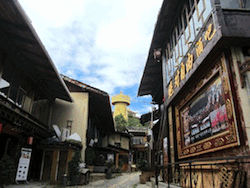
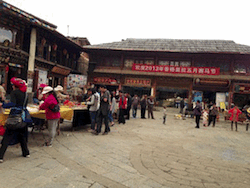
The shops have changed of course, catering to tourists rather than traders, but there are still a few family businesses around like in Weishan. The town square is a good spot to just linger and watch the world go by. Naxi women in traditional attire selling vegetables they’ve just brought down from the hills, farmers and their produce and merchants and their spices. Each evening, locals gather to dance in the square.
 For dinner, we dine at Tara Gallery (pictured right), which is a 100-year-old trading house lovingly restored by Uttara. After a week of Chinese food, I am ready for something different and Tara serves up delicious Indian food. At the restaurant, we meet two Swiss couples and out of curiosity, I asked them how they’d found this restaurant. The two girls replied in one voice, “Lonely Planet” while the guys said, “TripAdvisor.”
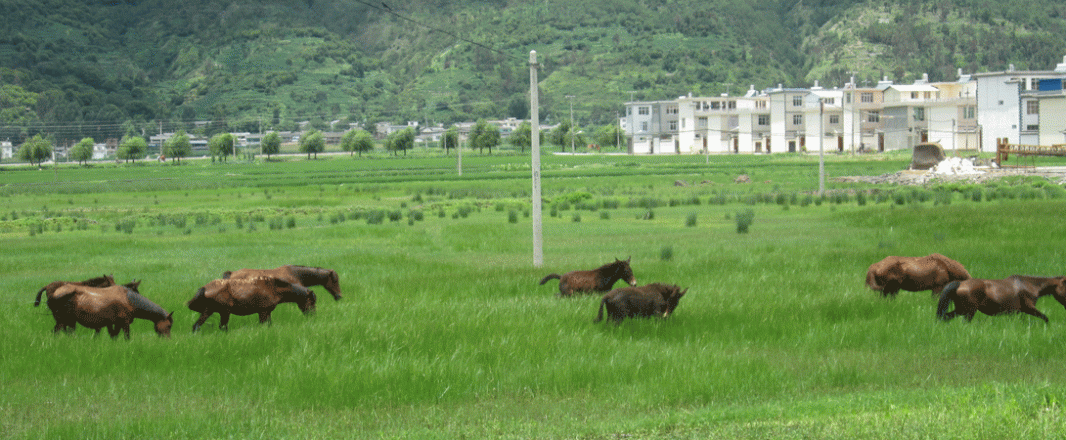
Other than the old town, to me the beauty of Shangri-La is in its nature and people. Our drive to Napha Lake the next morning takes us through vast swathes of grassland and the piercing blue of the sky brings out all the colours of nature and agriculture. The greens of barley fields, yellows of mustard flowers, the different hues of wildflowers and horses and cows grazing on the meadows.
At one point, we run into a cow jam as a herd refuses to get off the road. Why not indeed? They have as much right of passage as we do. There are lots of bicyclists and walkers out enjoying this beautiful summer’s day in what could well be paradise.
 We stop off at Hamugu Village. Uttara worked on an eco-tourism project here with the World Wildlife Fund, and the villagers were asked to decide what kind of tourism they wanted. They decided against homestays as they felt they wouldn’t have the time to look after guests properly. And so a community and visitor centre was built.
Tibetans in this part of the country are extremely house proud. Their homes are their castles, so to speak. Tibetan houses are strong and sturdily built (pictured below right). They typically have two storeys – upstairs is for living and downstairs is where they keep their animals and produce. The living area is one big space dominated by the stove and cooking area – taptse – which also keeps the house warm during winters.
 Water is sacred to Tibetans so the “sink” where water flows from is an altar. Dominating the living room is an extra-large pillar which literally symbolizes the pillar of the family and forms the heart around which dances and prayers are held.
The hospitality is overwhelming. In my travels around the world, I’ve come to realise that in general, people who don’t have a lot tend to be the most generous and hospitable while people who have a lot tend to give very little away to strangers.
This family’s main income is agriculture with minimal revenues from tourism – they have rented out their horses to a man who’s offering horse rides to tourists in the area but so far they have not seen much income.
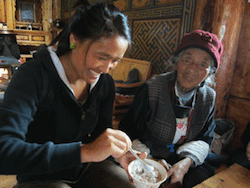
When we arrived, only the matriarch and her husband were home, but soon their two daughters returned from the fields and they invited us for tea. It was interesting watching yak butter tea being made, and soon we were seated around a small table, drinking copious quantities of yak butter tea (think of it as soup and it goes down better) and a seemingly endless supply of Tibetan bread.
Their children are going to a downtown school, part of a new government directive that all children from eight onwards have to be educated in city schools. It is likely that after school, these children will not return to the farm. My guide, who is 28, is a good example – from Western Tibet, she decided to leave home after school, travelled to Shangri-La, and yes, fell in love with the place and decided to become a guide. She visits her parents once a year during the winter season when there are few tourists.
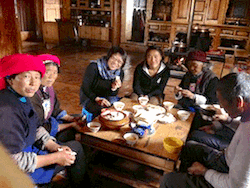
I asked one of the daughters how she felt about her children not returning to the farm and she shrugs, “It’s okay if it gives them a better life.”
Again, different setting but universal hopes – all parents want a better life for their children.
We lingered over tea longer than we had planned but hey, why not – we were not on any schedule – and surely the purpose of travel is to linger when you wish to. Later, we took a slow, rambling walk through the grasslands. There was no one around except for the women working in the fields.
 Fields of barley and mustard glisten in the sun. The grasslands are covered with wildflowers of all colours, luring butterflies and bees to their essence. We sit by a little stream and take in the beauty of the moment.
I started out on the Tea and Horse Caravan Trail to see a different world, meet different people and to try and imagine what it was like for the ancient traders and merchants travelling this route.
I hope they, in carting their tea and goods, through this rugged and beautiful part of Yunnan had time to smell the wildflowers. I am almost sure they did and I am almost sure they would not have been able to tell their adventures in five articles – but then in those days, people had time to linger and read.