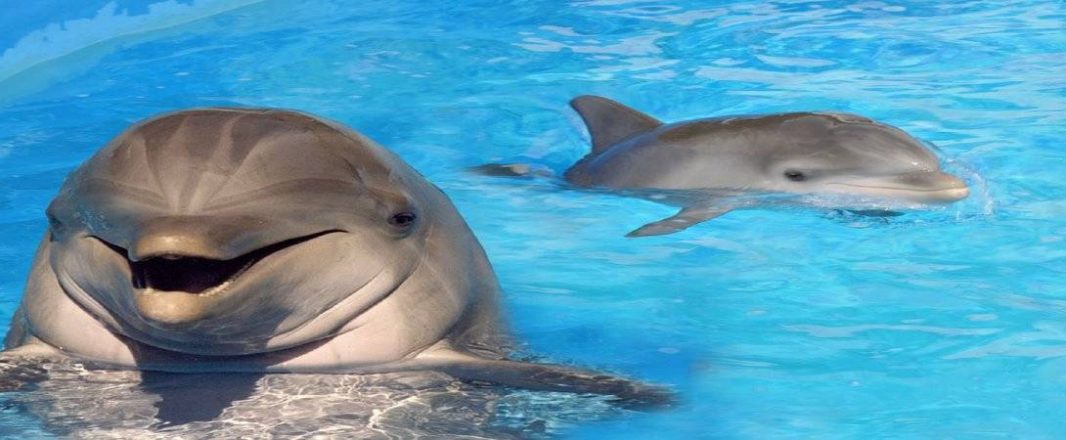
 Plans are well advanced for the opening of a Marine Life Park, part of which will be the world’s largest Oceanarium. As part of this, 27 dolphins have been wild-caught (two have since died) and are currently ‘housed’ in the Philippines waiting their onward journey to Singapore.
Urged by Animal Concerns Research and Education Society’s(ACRES), RWS’ Facebook wall was ‘bombed’ with comments from people unhappy with these plans resulting in it being temporarily suspended with accusations of cyber-harassment emanating from RWS folks. There is more detail here.
I have my own views on the ‘animal welfare’ aspect, as I’m sure you do. But I don’t want to dwell on those contentions here. Rather, I want to focus on more objective ground and consider what RWS could have done differently (if anything) and mull over their preparedness.
Most importantly, perhaps, we should ask ourselves what lessons might be learned.
The nucleus of strategy
It is important to understand the true nature of the core of the antagonism here. This wasn’t a case of a company’s errant employee stepping out of line with some stupid social media postings. And it wasn’t an unfortunate mistake by someone in an organisation resulting in someone finding a cockroach in their dinner.
This is about a core strategic component of a multi-billion dollar company’s business development plan. And it happens to have dolphins at the heart of it.
“Sorry about that thing in your dinner – it won’t happen again.” Or, “We’ve reprimanded said errant employee” won’t work here.
Before you get excited or even mildly interested in this piece, I should warn you right now that I really don’t know what they should have done differently. There are no answers or forthright opinions here – rather considerations and interesting thoughts that a couple of friends shared with me when we discussed it.
“They should have had a clearly defined crisis management strategy and formal escalation procedures in place” was the clear position of friend number one.
Appropriate action?
Of course we don’t know that this wasn’t the case. Indeed, everything RWS did might have been part of a clearly defined procedure. I didn’t watch the developments ‘live’ so have no insight into timelines and the speed of reaction. There is (almost) nothing I know that happened to suggest anything but well-considered action and reaction.
But the point about having something in place is extremely important – particularly in this case. Whereas it’s hard to predict errant employee behavior, not anticipating hostile reactions to wild dolphin capture and transportation is inexcusable.
There are some accusations on the fan wall that RWS were deleting some of the comments. I don’t know if this really happened but would suggest that if this did indeed take place (was this part of the escalation response?) then this was not a good idea. It cuts to the heart of what Facebook walls mean to fans and this was almost certainly always going to be counter productive. Now, if all of those particular posts were libelous or used inappropriate language then we’d be talking about something very different but I don’t think this was the case.
I’m guessing that if there was a plan in place to deal with such emergencies, deleting posts was not part of it. Was the plan ignored at some point out of desperation?
I’m a great believer not only in the plans but the transparent statement that can be extracted and posted on the page identifying what the ‘wall’ is for – what will be tolerated and what will be removed. The T&C’s if you like. This page from BP America is a good example.
Stop. Breathe. React
Friend number two likened (with her talent of creating real-life analogous situations) the ACRES action to people protesting right outside a store with the possibility of other customers feeling intimidated by this and the storefront essentially being hijacked. In this case, closing the store temporarily seems more like a sensible course of action.
The analogy is open to criticism and perhaps the real defining characteristic of Facebook fan walls is that there is actually nothing in real-life that can be compared to them. The openness of something that, for the most part, is the subject of limited degrees of interest and curiosity from most within an organisation (including, sometimes, those at the very top) suddenly becomes the organisation’s biggest area of concern.
RWS are still getting posts from unhappy ‘fans’. But they are obviously not deleting them (at least not all) anymore and the page appears open for business.
What would you have done? What will you do if it happens to your company and are you prepared? Do you have a plan and are you prepared to follow it through?
Phew! I’m sure the dust is far from settled at RWS and, for the vast majority of guests, the enjoyment of everything RWS has to offer remains completely unaffected.
But there must be a great number of lingering headaches in RWSland and, I would imagine, some less than favorable comments about Facebook and all that bloody social media nonsense.