.png)
There is no doubt that the global conference and event business has experienced an upswing since 2010 with more events and more participants.
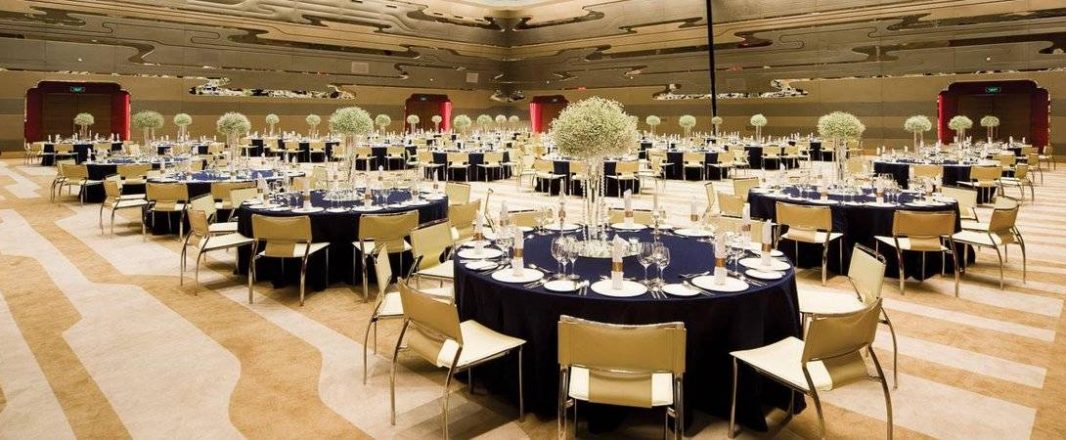
And hoteliers and MICE organisers are increasingly bullish about the high-yielding sector. (Pictured: Suntec Convention Centre, Singapore)
However, the 2011 IFH® Institute For Hospitality Management survey found that a great many hotels are missing out on much of these increases and business due to a lack of appropriate procedures and responsiveness to enquiries.
The situation would appear to have worsened for various reasons since the 2008/09 downturn and to put it bluntly, too many hotels are literally leaving major amounts of money on the table by failing to have proper MICE handling procedures or supervision of.
In order to establish in which way and at what level inquiries are responded to in the event area, and ultimately how much turnover is generated, the IFH® team for the area Quality Performance Benchmarking (mystery shopping) made a comprehensive set of attractive test MICE inquiries at the end of 2010 to 165 hotels in the 3-5 star category worldwide.
The result, an overwhelming number of the hotels neither addressed the actual needs and requirements of the enquiry and in many cases did not even respond. Whether Amsterdam, Hong Kong or New York – with regard to personal communication with the customer, silence prevailed to a large degree.
The most important results at a glance:
• 30% of the 167 hotels that were sent inquires did not respond at all.
• Of the 117 hotels (70%) that responded to the inquiry, 85 % did not speak nor attempt to personally contact the customers by phone to query or follow up on the response.
• Only 26 hotels (15%) provided a tailor-made offer oriented to the needs of the customer.
• 75% of all offers were merely “non-binding proposals” (i.e. prices and general proposals) although the details of the inquiry had been specifically worded.
• Only five hotels of a total of 167 were able to make a convincing offer and encourage the booking
About the 2011 IFH®MICE Survey
84% of the 167 hotels contacted were from major international hotel groups and consortia with the remainder (16%) being privately owned independent properties. In terms of star rating the survey concentrated on the upscale segment with 64% being 5 Star and 36% being 4-star category.
Most of the hotels are in Europe (40%, of which 6% are in Germany), followed by Asia and the Russian Federation (each with 16%), the US (15%), Middle East (9%) and Australia (4%).
The average number of rooms per hotel was 421 (from 23 to 4,000 rooms) with their average number of function rooms for events being 15 (from 1 to 64 areas). These are hotels which should attract a great deal of MICE business.
Within the scope of the MICE analysis, these hotels were contacted by means of an identically worded email containing an event inquiry via an appropriate fictitious company address. This “company” also had its own company website with appropriate content.
Afterwards, the complete event inquiry procedure was analysed and evaluated – from the first inquiry to the conclusion of the contract – based on a set of criteria (eight categories such as communication, customer orientation and sales behaviour).
The inquiry comprised a 3-day event (two overnight stays) for 30 persons with full board, including a special dinner as well as an attractive accompanying programme to be arranged in more detail. The stipulated maximum budget was EUR 30,000. The proposed event was outlined with just enough essential basic information, but making it absolutely crucial to take up personal contact with the customer.
No contact – no tailor-made offer – no conversion
Perhaps the most alarming shortcoming was that only 8% of the 167 hotels surveyed called the “customer” to discuss the request. Of the remaining hotels, 30% did not respond at all or sent a standard offer without referencing or sufficiently clarifying any other details.
.jpeg) Lucas Peng (left), IFH Asia Pacific Managing Director ,commented; “It is quite astonishing how disinterested or perhaps understaffed the employees in the event area seem to be. How else can these results be explained?”
Lucas Peng (left), IFH Asia Pacific Managing Director ,commented; “It is quite astonishing how disinterested or perhaps understaffed the employees in the event area seem to be. How else can these results be explained?”
34% of all the written offers were simple, standardised F&B lists, 14 % sent lists of technical equipment that were not helpful at all. And only just under half of the hotels sent an offer taking the two evening meals into consideration.
Frequently, the offers contained a number of diverse and disordered attachments such as unsorted photos and digitally standardised banquet brochures.
In summary there were not enough responses and the majority of those who did respond did so in a very unconvincing manner.
In the end, only five of the 165 hotels worldwide were able to make a convincing offer and encourage the customer to book the event. These submitted offers were complete, had an accurate description of the services offered, included concrete prices as well as an attractive layout.
Summary
The results of the MICE analysis are sobering to say the least. Above all, the personal communication with the customer was insufficient and the significance of the personal contact not recognised. But how, if not through personal contact, does a hotel find out what the customer really wants?
Furthermore, international standards for preparing offers for event inquiries seem to be lacking. Classic sales rules, such as timely response, checking requirements prompt follow up, etc were not followed.
These are all the rules you can learn – thanks to staff training and seminars. With the results being so consistently short of the mark, it also shows that those hotels who do establish and follow good MICE handing procedures are likely to benefit exponentially from the continued upswing in MICE business.