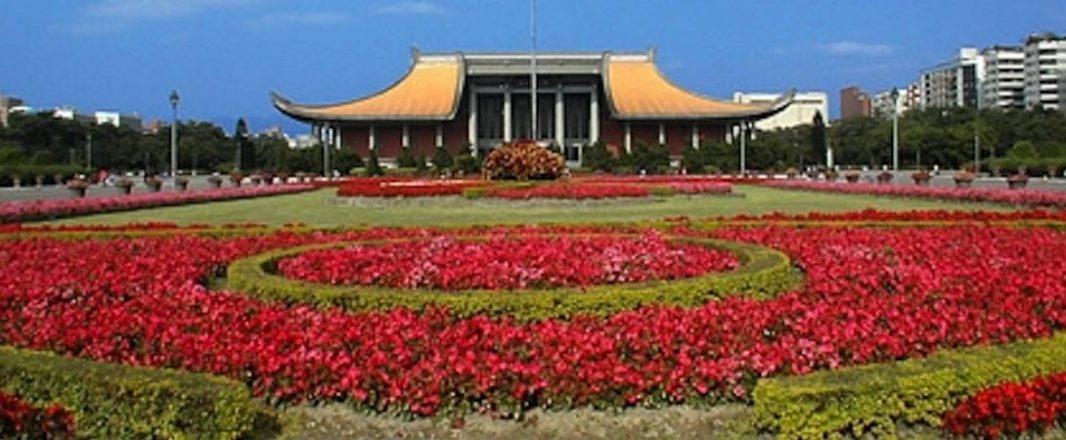
I’m Taiwanese and proud of it; for anyone who knows me, it’s no secret that I love Taiwan. That’s why when this flash mob video hit YouTube a week ago, featuring classic songs that stir all Taiwanese people, my pride for the country swelled to the heights of the Taipei 101.
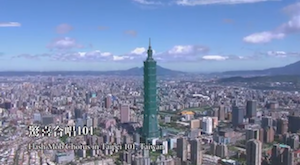
Taipei 101
I’m pleased to report that in its short existence it has garnered more than 800,000 views in 7 days, a viral hit by any measure. Not bad for a group of volunteer singers who used music to showcase Taiwan to the world.
According to official statistics, Taiwan tourism grew an impressive 20.1% to 7.3M visitor arrivals in 2012, and further growth is expected as well as occurring this year. Despite its strategic importance to balance the interests of East Asia, Taiwan doesn’t have many official friends in the international market: it’s not officially recognized by most countries to be a sovereign nation. Given that, the tourism bureau’s efforts to promote Taiwan as an international MICE destination over the years has nonsensically made the island, sadly, Asia’s best-kept secret.
Never mind the fact that the semi-conductor that powers the very device you’re using right now is probably made in Taiwan, or that the flashmob video is hosted on a service co-founded by a Taiwanese (Steve Chen, ex-CTO of YouTube), or that Taiwan has the 8th most number of millionaires in the world (over 300,000); many people still mistake Taiwan for Thailand. Imagine mistaking Australia for Austria.
Recently I split my company into 4 distinct groups of Taiwanese:
· Locals: Taiwanese living here now and have spent more time here than overseas in their life
· Expats: Non-Taiwanese who either live here now or have lived here
· Boomerangs: Taiwanese who have spent more time overseas than in Taiwan but have come back and now live here
· Transients: Visitors to Taiwan who don’t live here
I asked them what they liked about Taiwan, and the most popular common answers across all groups were the wide variety of delicious food (and how cheap it was), convenience, and the abundance of indoor/outdoor activities at all hours of the day/night. For the non-locals, there was an added element of the people – friendly, warm, open, and welcoming. Some of the French staff (I have 3 and they’re all in the Expat category) told me how the Taiwanese go the extra step to make sure they get to where they need to go when approached. .jpeg) (Pictured, malak beef noodle soup)
(Pictured, malak beef noodle soup)
Interestingly, the Locals disliked the negativity that Taiwanese people and media have towards themselves, as well as toward the government. I guess this is a by-product of the Eastern culture: self-critical on the inside, polite and courteous on the outside.
Removing the language barrier was the #1 suggestion from non-locals on how to make Taiwan more attractive to visitors. One of my staff in the Transient category wrote:
“One of the most concerning thing about booking on China Airlines is that their English site is complete garbage. It does not inspire any confidence at all. I’ve flown them a lot and they provide a fantastic experience for all travellers, but if I were to base my opinion of what the experience was going to be like on the website, I would think it would be 18 hours of Mandarin-only in-flight movies and congee only meals. It’s not that I want to be able to speak English everywhere I go — obviously if that’s what I wanted I would have to move to Ohio. In fact the Chinese language/history/culture is one of the biggest appeals about going Taiwan. But for those gateways — airlines, hotels, public transportation, I think they should focus on investing in localized online resources that focus on how to get around the country. It’s subtle details, but I think they matter — detecting the country of the IP address and defaulting to that language, re-designing the layout based on western characters, not relying on automated translation, customizing the content (maybe with the help of users) to find the best [insert nationality] activity to do.”
I had only asked for a one-sentence response! And by the way, China Airlines is one of the 2 international carriers for Taiwan, the other, less prone to be mistaken, is called Eva Air, which recently joined Star Alliance.
 I also asked the non-locals to compare Taiwan to another place on earth. Some said a more ‘friendly’ and ‘down-to-earth’ Hong Kong. Some say Taiwan is unique in the world. But I also got a lot of feedback that Taiwan was like Thailand.
“I often compare Taipei to Bangkok – cities that appeal to the senses, that have blossomed organically with great local shops and eateries in back allies off major thoroughfares (e.g. ZhongXiao Dong Lu and Sukhumvit).” (Pictured – shrimp wanton soup with century egg tofu, a typical Taipei delight)
“…Bangkok and parts of Thailand: energy, friendly people, good food, pockets of modernity in a sprawling run-down looking metropolis, charming country sides…”
“For the friendliness of Taiwanese, I would like to say Thailand. Taiwanese and Thai are two people very open to foreigners.”
This unscientific poll from my fellow co-workers who are from Taiwan, France, Switzerland, Singapore, Malaysia, Hong Kong, and the US revealed something to me. Though Taiwan’s sovereignty status may be in question in the high-stakes arena of international politics, its heart isn’t.
When you come here, you get the heart of its people, and great food to warm your heart and soul. Maybe the tourism bureau is getting it. Our slogan for recent years has been “Heart of Asia,” which is apt not only because it’s geographically the heart of Asia but also because Taiwan possesses much of the lauded qualities of Asian culture – heartwarming hospitality.
And that’s why the flashmob video so fully encapsulates what is good about Taiwan: heartfelt folk songs being sung in a crowded Taiwanese food court at the iconic landmark of Taipei 101. The delicious intersection of past, present, and future, stimulating all senses, is not logical, but it works.
And that is the Heart of Asia on display for the world to see.