
Marriott buys Starwood; Accor in talks with Fairmont; Expedia nabs HomeAway – what’s next as the big gets bigger?
Marriott buys Starwood. It came probably in a tweet, a Facebook post or a LinkedIn update. Just three words which mean a lot. A heck of a lot.
In fact, you could say, in travel industry terms, those three words probably carry as much import behind them as Ernest Hemingway’s famous phrase, “For sale: baby shoes, never worn”.
The US$12.2 billion deal brings together two large American giants to make one big American Extra Large Giant. 5,500 hotels. One million rooms. 30 brands. $2.7b in combined revenues. Marriott fought off other suitors for the prize, among them, Hyatt and couple of Chinese brands, among them said to be Wanda and Jinjiang.
Personally, I think it’d have been far more interesting if one of the Chinese companies had bought it – but hey, there’s more left on the buffet table as the hotel industry heads for consolidation.

Go big or go home – photo credit: iStock
Accor Hotels is reportedly in talks to buy Fairmont and that’s a pairing that would make sense. The French hotel group needs a bigger footprint in North America and a stronger upscale luxury portfolio and Fairmont is, in the big scheme of things, a middle weight and that’s a tough place to be right now.
We’re truly entering the land of giants and specialists – the travel sandwich is getting thinner in the middle.
Prior to that announcement was the news that Expedia had bought HomeAway, the world’s largest vacations rental’s marketplace, for US$3.9 billion. This, on top of buying Orbitz Worldwide Inc for $1.3 billion and Travelocity for $280 million in 2014 – cash-rich Expedia is indeed hungry to expand its empire.
Expedia values the alternative lodging market at around US$100 billion and, according to reports, it agreed to pay a roughly 20% premium above HomeAway’s share price. Some say it may have paid too much but S&P Capital IQ analyst Tuna Amobi called the purchase “transformational”, saying it lets Expedia “participate in the sharing economy, which might be the next frontier” for leisure travel.
Airbnb is the giant of sharing and according to reports, it is expected to double bookings to about 80 million nights this year alone. In comparison, Expedia booked some 150 million nights in 2014.
What will be interesting to watch in 2016 is the shift in power between those who own stuff and those who don’t, and those who just sell stuff versus those who make it.
Currently the most valuable companies in the world are those that do not own physical assets in the space they operate in – Airbnb is valued at more than Hilton and Uber is worth more than well, any company that owns any fleet of cars in the world. Facebook, which owns no content, is worth more than the New York Times or Financial Times, which have to hire a slew of professional writers to produce content.
Will we see a time when groups like Expedia or Priceline may buy companies with physical assets versus tech-driven platforms? Could hotel companies, as they consolidate, become big and daring enough to pull inventory from intermediaries?
Accor Hotels launching Accor Marketplace – depending on how that plays out – is certainly a first step by a hotel company that owns assets to regain power over distribution of their own inventory.
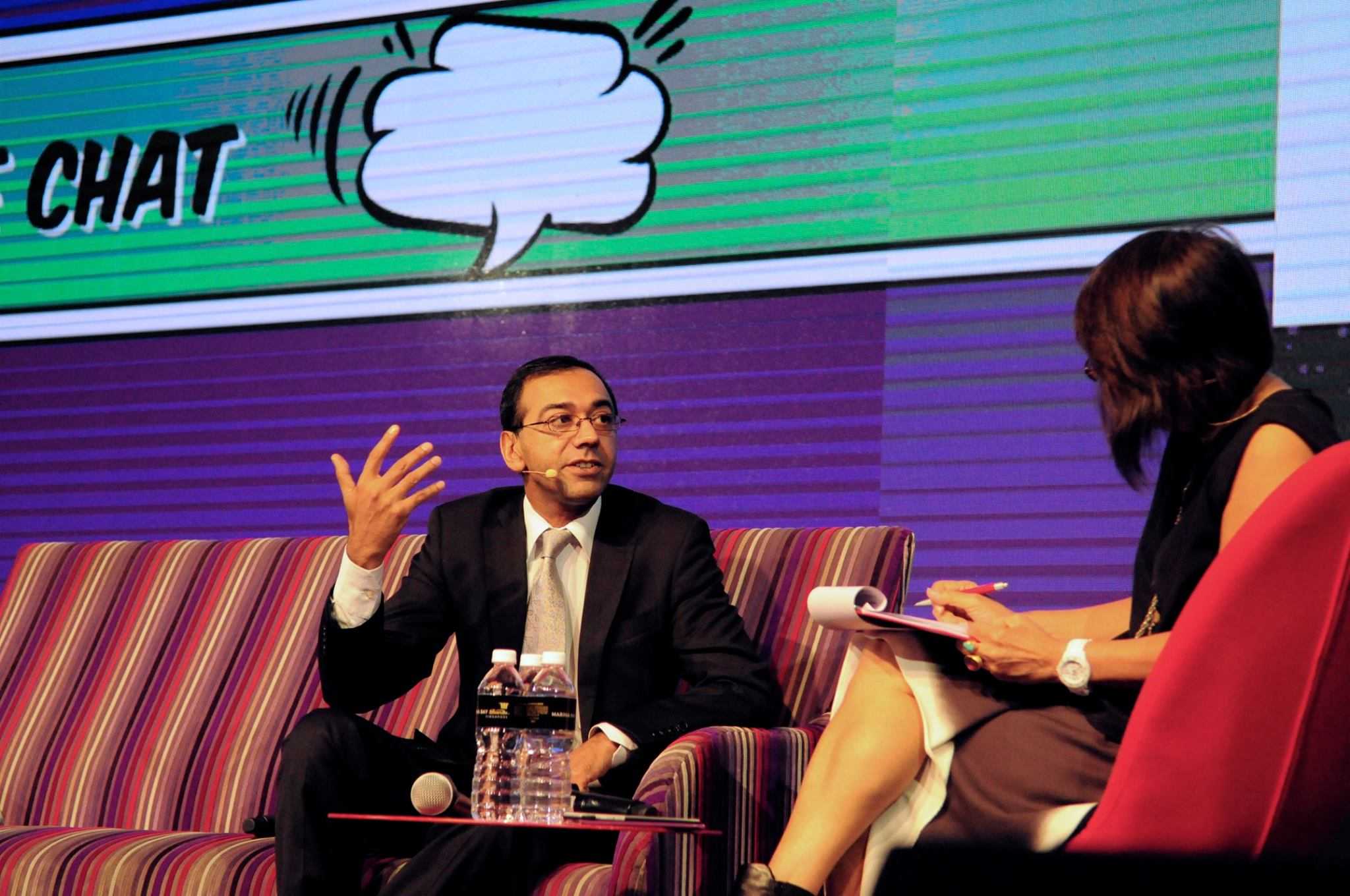
Vivek Badrinath: Challenges ahead in digital transformation but intent and will are there.
At the WIT Conference in Singapore, Accor deputy CEO Vivek Badrinath acknowledged challenges ahead as the hotel company learnt to become as good as tech-driven travel companies in its digital strategy but made no bones about the fact that it was willing to give it its best shot and was putting serious resources behind the transformation.
The other interesting trend to watch in 2016 is how the giants expand across the travel eco-system as they extend into B2B tech solutions, tours & activities, restaurants and other in-destination pieces.
Priceline Group probably has the widest span and in reported results for 12 months to June 30, 2105, it reported $53b billion total transactional value, 390m+ room nights, 57m rental car days, 34,000+ restaurants/200m+ seated diners and a market cap of $60b.
This week, tours & activities marketplace GetYourGuide made the news when it announced US$50m in Series C fund-raising and then promptly announced a partnership with Booking.com.
At the WIT Conference, Stephen Joyce, CEO of Rezgo, which powers tours & activities providers, was candid enough to say he did not believe tours & activities was a unicorn sector and probably burst a few balloons in the process.
Yet it’s an interesting enough space for specialists to gain enough traction to become attractive partners or acquisition targets by giants – for example, Voyagin being acquired by Rakuten Travel and Singapore-based BeMyGuest sealing a partnership with Ctrip, the Chinese online travel giant.
So in 2016, watch out for the giants getting bigger and if you’re a specialist, well, better start digging in and scaling fast and become a prized target for acquisition or else you just might end up as dinner at the giants’ table.