Mo, a hospitality software executive, woke up at 6am in Penang on Friday, July 3. Between brushing his teeth and gargling, he asked Gemini what he should do that day. He was on a solo weekend escape from Singapore, where he works.
One of the first recommendations was “an indie travel event” – WiT Indie, our independent travel event. Curious, because “indie travel” was a term he’d never heard, he asked for more, and learned it was about travel, hospitality and tech for SMEs and creatives. In the next breath, he asked Gemini to book him a ticket, paid for it, and showed up at Bangunan UAB, our venue, bright and early for a local breakfast of kopi, kaya toast, nasi lemak and curry puffs.
I don’t think he could have found a better local experience than that.
I heard Mo’s story during the morning break. He told me he didn’t know what to expect. He was curious, wanted to learn, and had nothing else planned for the weekend except to explore and experience Penang. That he stayed the whole day, sat through the sessions, and networked with fellow participants – that’s the part that warmed my heart.
An industry travel conference would probably sit near the bottom of most people’s things-to-do-while-travelling list. But Mo, who’s from Tunisia, learned things he never knew, made new friends, had his horizons broadened – and who knows how that might change his life. Isn’t that the very essence of indie travel? Isn’t it, actually, the essence of all travel?
His discovery of a niche event like WiT Indie was made possible by AI, which let him get straight to the heart of what he wanted, without typing a word, just voicing what was in his head. And it was made possible by us, too: a niche event became discoverable to a traveller like Mo, most likely because we’d done our groundwork on content.
It was an affirming story, and it went straight to our theme: “The Next 20: Small is Mighty.” Small can indeed be mighty – look no further than underdogs Cape Verde at the World Cup, or Alex Eala, who dethroned defending champion Iga Swiatek in the third round at Wimbledon, becoming the first Filipina and first Southeast Asian tennis player to reach that stage of the tournament.
AI and the changing tide of travel could well help small businesses rise to the surface — provided they seize the opportunity. That, in a heartbeat, is what our event was all about.
Here are the key takeaways.
1. Travellers are the new power brokers of cultural exchange
In his opening remarks, Ooi Kee Beng, executive director of Penang Institute, made the point that the old model is breaking down. Globalisation’s framework for travel is faltering amid new geopolitical tension, security concerns and unpredictable energy costs – and real intercultural contact now happens at street level, with travel doing much of the heavy lifting.
But travel has become transactional – “you buy, they sell” – with travellers as demanding customers and destinations as service providers who “had better behave themselves.”
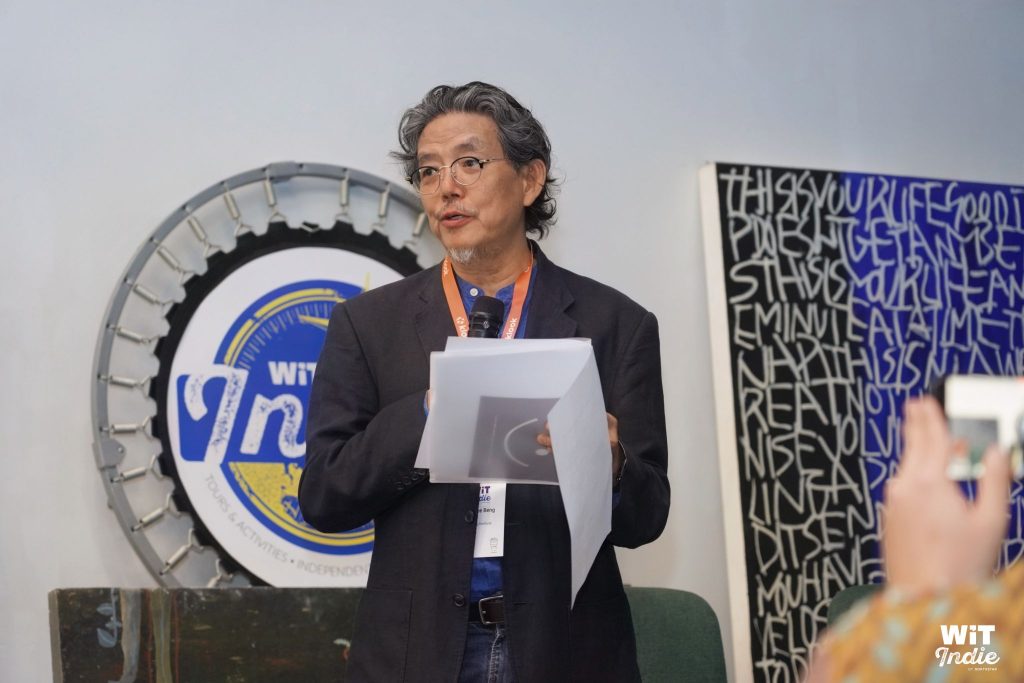
Ooi Kee Beng, executive director of Penang Institute, made the point that the old model is breaking down and real intercultural contact now happens at street level, with travel doing much of the heavy lifting.
With distrust growing between peoples and nations, Ooi, calling on travellers to be “moral agents”, said: “We need to be seriously curious again. We need to put on our anthropological hats and revive our childlike curiosity when we travel. Forget that you are in a hurry. Take your time, be friendly. Don’t just Google for information — inquire of the locals.”
Matt Benson, Executive Director of Think City, made a related point: the Grand Tour of the 18th century was built on the idea of travel transforming people through the places they visited. Today, he argued, travel transforms places more than it transforms people – and it’s time to swing the pendulum back.
So how do we do that? Ooi’s answer: “Who shall be the pedestrian agent of change across cultural lines, at a time when leaders are untrusting of each other, if not the tourist, the traveller, the sojourner? When crossing cultural lines, be a peacemaker, be a student, be a diplomat. Go beyond being the demanding customer. The tourist is more important and more significant than that. Small is mighty. The day of the beautiful tourist is at hand.”
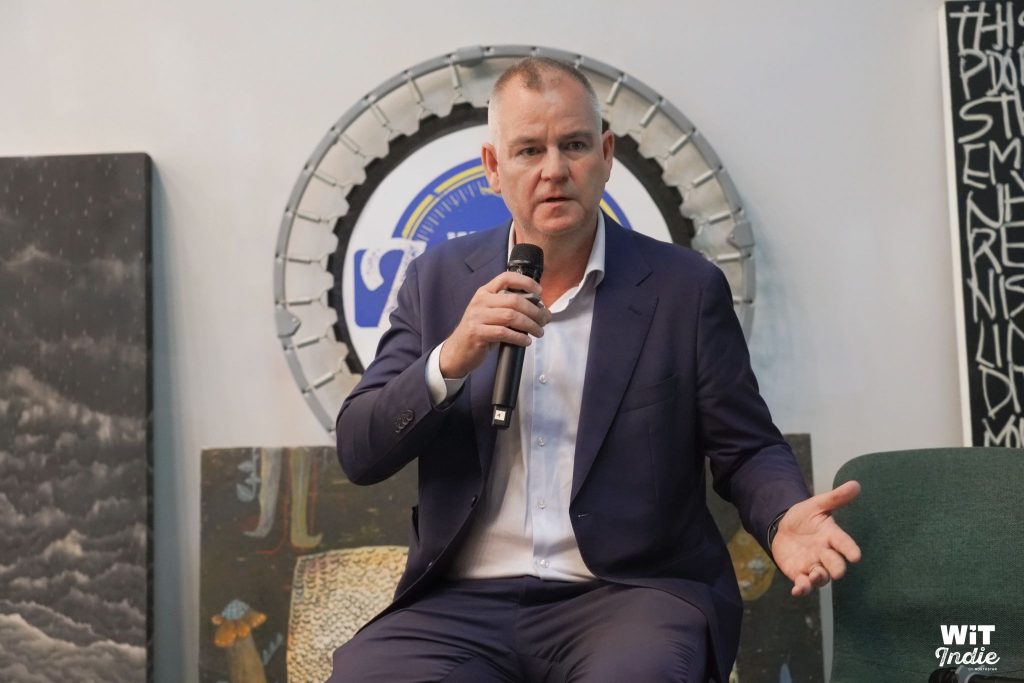
Matt Benson, Executive Director of Think City argued travel transforms places more than it transforms people today – and it’s time to swing the pendulum back.
2. Locals matter – what about a local happiness index?
Just as travellers can effect change, local communities should be empowered to as well.
The panel featuring Raul Guerra, Asia-Pacific Regional Director, Catalunya Tourism Board; Mich Goh, Director of Public Policy, APAC, Airbnb; and Mildred Ang, Director, Social Commerce, Klook, discussed how local communities need to be more engaged, especially as destinations – from Japan to Korea to Catalunya – try to address overcrowding in certain hot spots by promoting under-visited places.
Sure, it’s great to promote hidden gems and remote or rural areas. But what if locals aren’t prepared for it or don’t even welcome the attention?
My argument: DMOs are measured on tourist arrivals, expenditure, economic impact. Platforms like Airbnb and Klook answer to profits, revenue, shareholder value. But has anyone ever measured the happiness index of local communities, I asked?
Guerra said, “If we’re talking about human connection, the key indicator should be the level of satisfaction in the relationship between visitors and residents – something we’re only starting to measure now. We’re evolving from counting arrivals to measuring things like the quality of jobs tourism creates, or seasonality – does travel spread across all four seasons, or only concentrate in summer.”

Raul Guerra, Asia-Pacific Regional Director, Catalunya Tourism Board: “If we’re talking about human connection, the key indicator should be the level of satisfaction in the relationship between visitors and residents – something we’re only starting to measure now.”
Klook’s Ang added, “For second-tier cities, I’d look at some kind of growth index – satisfaction that indirectly reflects whether local infrastructure and community are actually ready to receive tourism. And rather than leaning further into the usual hotspots, I’d track new visitorship – people who’ve never experienced a destination should get the chance to. It’s about creating a cycle toward a healthier, more sustainable future, not just optimising the same demand.”
Airbnb’s Goh responded, “My team runs a biennial report looking at economic impact, not just direct spend, but how that spend ripples through the local community. But I keep thinking about how we measure connection itself: how many people someone actually meets through a stay or an experience they book. We can measure economic impact through spend, but we’re not really measuring the social, heritage or cultural impact of someone’s time in a local area. I think the three of us — product, platform distribution, destination — should genuinely collaborate on this.”
We’ll be watching this space.
3. A visual-first world has a cost
Briana Leong, writer, content creator and cultural storyteller, has embraced social media as fully as anyone – she’s herself a prolific video creator. Yet she confessed to three concerns.
“First, social media has made us all hyper-fixated on visuals. I’ve been on ‘solo dates’ that were amazing experiences but just didn’t look good on video – the presentation isn’t the same as the substance. Second, we mistake what’s visible for what’s good – the most photogenic place isn’t necessarily the best one, but we flock to it anyway. And third, short form removes a lot of nuance, context and subtext – everything gets flattened into a 90-second video, and that’s a shame.”
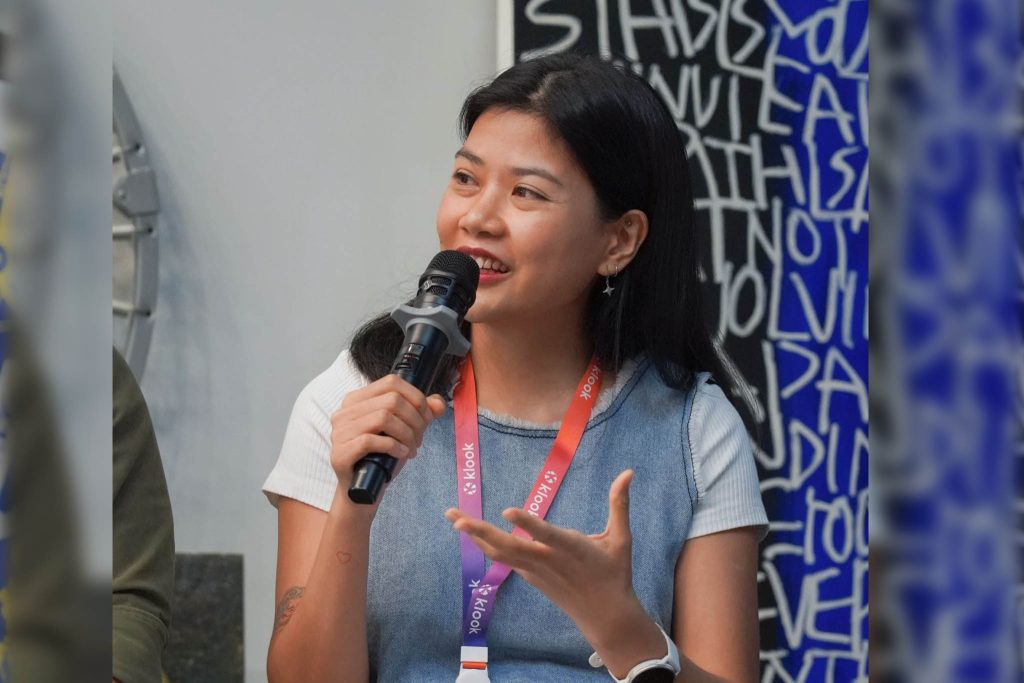
Briana Leong, writer, content creator and cultural storyteller: “First, social media has made us all hyper-fixated on visuals. I’ve been on ‘solo dates’ that were amazing experiences but just didn’t look good on video – the presentation isn’t the same as the substance.”
On the same panel – debating whether social media is a force for good or evil – Ash Raja, Co-Founder of Small Towns Malaysia, went further: “If a place looks really pretty, it goes wild on our page and then during school holidays it gets overcrowded, and it changes what the community expects from tourists. Travellers feel empowered to just go in without permission, especially in kampungs, where you traditionally need permission from locals to enter.
“There was one case in Sarawak where a group of tourists went through a community’s compound, took their boats, ate their food, drank their beer and these communities operate on trust, so you pay afterward. They just left without paying, for months. Imagine the loss the community had to absorb.”
One bad group doesn’t spoil the whole bunch. But as social becomes the predominant means of discovery, the risks climb whenever communities aren’t prepared for, or involved in, what’s coming.
The message is clear: prepare the ground before the ground revolts.
4. Good stories and singular obsessions will win at discovery
A divide became apparent through the day. Businesses with deep history, good stories and a singular obsession believe they hold the advantage in an era when AI is flattening everything else. Those stuck in the middle, without a clear voice or position, will fall through the cracks and disappear.
That’s as true for an independent hotel as it is for a tour and activity business.
In the hospitality session, Shen Loh-Lim of The Blue Mansion, Penang, whose properties come with deep history, put it plainly: “AI is definitely democratising discovery. Great independent hotels do storytelling, culture and craft and sense of place particularly well, and that’s an advantage — it lets us compete at a more global scale. Five years ago, I was much more focused on filling the gaps – SEO, Google, social media. Today I spend a lot less time obsessing over visibility, because we’ve actually built strong trust signals – good media, good PR, creators making content for us. It’s really about validating the decision for the traveler, pulling together multiple sources, and delivering on authenticity.”
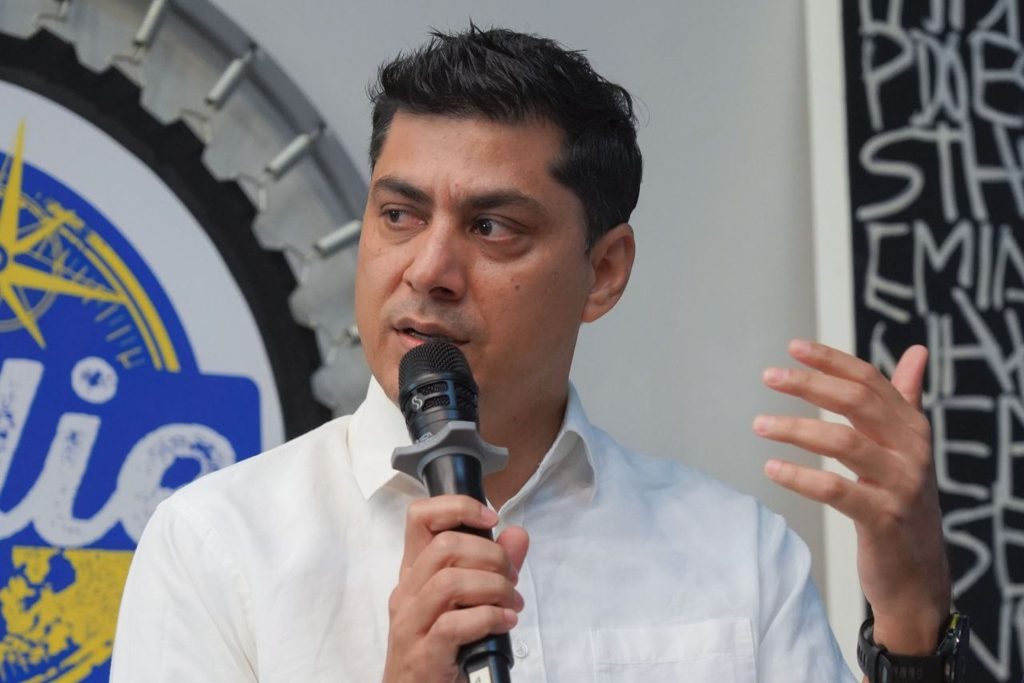
Vikram Malhi, CEO of ZUZU Hospitality: “OTA algorithms have historically rewarded whoever has the best pricing engine, and big chains have invested millions to stay on top.”
Chris Ong, whose Georgetown Heritage Hotels collection has one singular identity — heritage — has been telling that story through social and video for well over a decade, long before it was strategy: “The content I created was basically to record the heritage and culture of the place — not to sell anything. I didn’t even know AI existed when I did it.”
Vikram Malhi, CEO and Founder of ZUZU Hospitality, brought the technologist’s view of what’s shifting underneath all of this: “OTA algorithms have historically rewarded whoever has the best pricing engine, and big chains have invested millions to stay on top. AI lets small hotels compete on that ground too – the differentiator stops being who has the best spreadsheet and becomes who has the best hotel and the best experience. Independent hotels already make up 50 to 60% of bookings, and I think that only grows from here. Today it’s about who has the most computing power; that’s going to shift significantly in the next six to nine months.”
Opinion was more divided in tours and activities. Chan Chee Chong, CEO of GlobalTix, is bullish: “With AI, you can crawl through everything on your website and build content at scale. In China, Douyin sells more tour and activity tickets than some direct OTA channels, because indie operators have the best content in their hands — they know their product better than anyone, and they can’t push it to the OTAs fast enough, so they just do it themselves. AI opens up that opportunity, especially for indie operators.”
Sarah Wan, General Manager for Indonesia, Malaysia, Singapore and Thailand, Klook, is less so: “Unfortunately, at the current state of AI, it does help the mighty get mightier because it still picks up the obvious. But it depends on how platforms decide to train it. We could go the hyper-personalised route and teach AI how to match passions to indie experiences, or we could end up with everyone doing the same thing. It’s really up in the air right now.”
The message is clear: work on your stories, and tell them well — short form or long. Give AI a reason to find you.
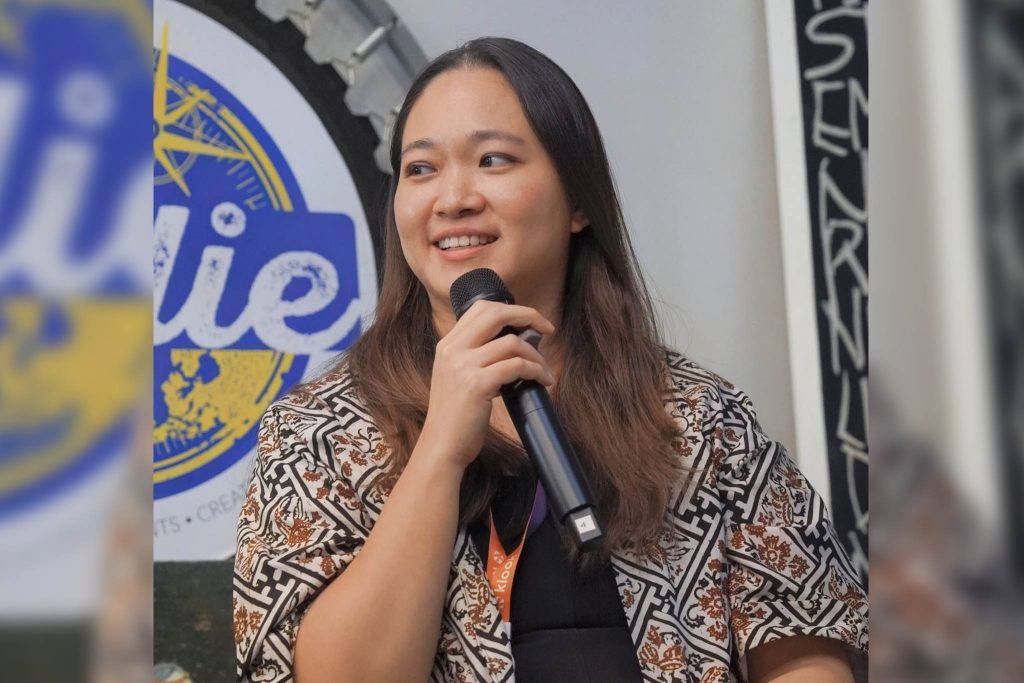
Sarah Wan, General Manager for Indonesia, Malaysia, Singapore and Thailand, Klook: “Unfortunately, at the current state of AI, it does help the mighty get mightier because it still picks up the obvious. But it depends on how platforms decide to train it.”
5. The magic still happens on the ground
However the traveller finds you, what happens the moment they walk into your hotel, or step onto your tour, is what actually matters.
Alison Fraser, General Manager of the Eastern & Oriental Hotel, said, “It’s down to the soft skills of staff – that’s our biggest draw card. If your staff are sincerely, passionately wanting to offer hospitality, that filters through to guests, and it makes them want to come back, because they feel safe and comfortable the minute they walk in.
“Our repeat business runs close to 55% at certain times of year. A lot of our business comes through direct distribution – guests writing in by email – and there’s a human touch on the other end of that email that helps convert. But it’s also about how you handle it when something goes wrong: if management steps in and deals with a problem properly, you can turn a complaint into a repeat guest. It’s not that everyone has a perfect stay — it’s how you handle the issues.”
Georgetown Heritage’s Chris Ong said all the AI noise was pushing him the other way entirely: “I’m really into analog at the moment. Personal touch is very important, being authentic is very important. AI levels the playing field for everyone – so you have to be different, you have to stick to what you are. You have to know your market segment. You can’t be everything to everyone.”
6. AI: friend, foe, or near enemy?
So, at the end of the day – is AI friend or foe? I asked Jacinta Lim, CEO and Co-Founder of Seek Sophie.
Her response: “In Buddhism there’s a concept of the near enemy versus the far enemy. The far enemy of love is hate – obvious. The near enemy is more insidious: it feels like a friend, but underneath it undermines what you’re trying to build. The near enemy of compassion is pity; the near enemy of empathy is sympathy – ‘oh, you poor thing’ instead of ‘I really feel you.’ Both look similar, but undermine connection.
“AI feels like a friend because it’s so similar to one but underneath, I think it undermines the things that make us deeply human: creativity, connection, empathy. Spend a whole day talking only to AI, with nothing else going on, and by the end of that day you’ll feel empty. I read a phrase for it that stuck with me – the dehydration of human connection. Spend that same day with someone you truly love, and you’ll feel full, energised, excited to be human.”
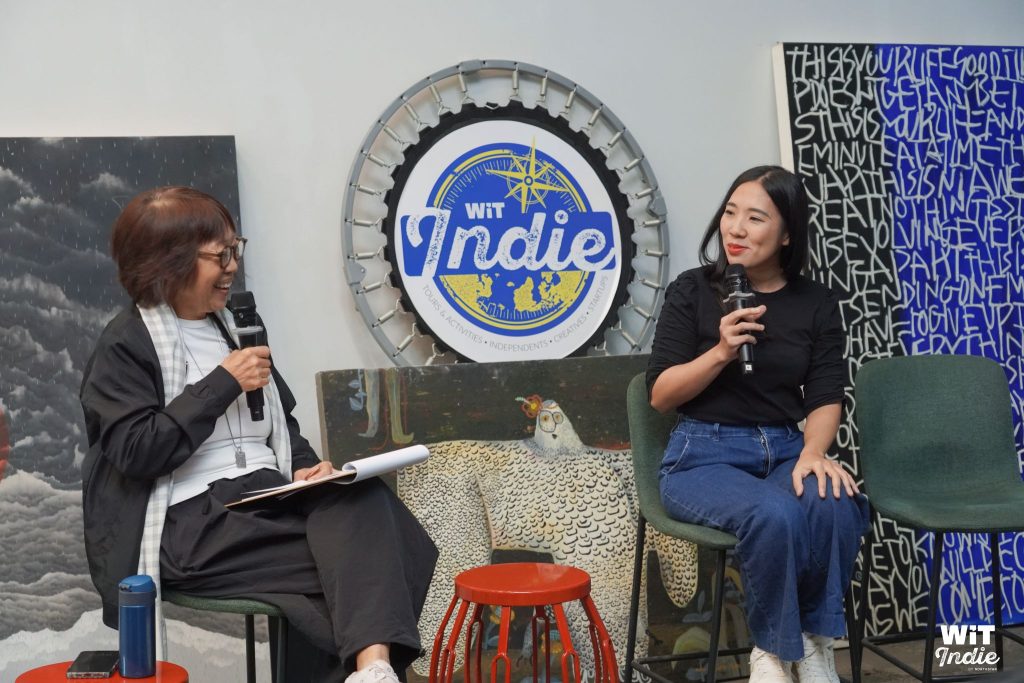
Jacinta Lim, CEO and Co-Founder of Seek Sophie: “AI feels like a friend because it’s so similar to one but underneath, I think it undermines the things that make us deeply human: creativity, connection, empathy. Spend a whole day talking only to AI, with nothing else going on, and by the end of that day you’ll feel empty.”
Her words brought me back to Mo. AI got him through our door. It couldn’t have kept him in the room. That was the kopi, the kaya toast, the strangers who turned into friends over nasi lemak, the sessions he chose to sit through when he could have been out walking Georgetown instead. Jacinta calls AI a near enemy – something that looks like connection but quietly empties you out. Mo’s Friday was the opposite of empty.
He asked a chatbot for something to do. He left, I’d wager, with the kind of day only humans can actually give you.
Small is mighty. So, it turns out, is a good local breakfast and more than 100 strangers willing to talk to you.