
As Japan races toward its goal of welcoming 60 million tourists annually, it faces a mounting dilemma – how to remain a dream destination without becoming a nightmare for its residents. At WiT Japan & North Asia 2025, a spirited panel moderated by Morris Sim of Montara Hospitality tackled the thorny question of overtourism and offered up grounded insights, humourous analogies, and pragmatic pathways.
Featuring Jay Wardle, President & General Manager of Adara, a RateGain company, and Tomotaka Hirabayashi, Partner, Strategic Impact of EY Japan, the panel unpacked not just the symptoms but also the soul of the overtourism issue.
When the magic fades
“Overtourism is when a destination can’t be its best self,” said Wardle. “It’s like going to a concert you paid a lot of money for, but it’s so crowded and hot you wish you stayed home.” The problem isn’t just infrastructure strain, he argued, but the dilution of joy for both locals and visitors.
Sim extended the metaphor: “In hotels, we don’t build for 100% occupancy because the system collapses. The same goes for cities – beyond a certain point, sustainability disappears.”
The Lawson problem: When social media drives the masses
One of the most surreal examples of overexposure came from Hirabayashi, who cited the “Mount Fuji + Lawson convenience store photo spot,” which has gone viral on social media. “Residents didn’t ask for this. It’s not even a landmark, they just want to buy milk,” he said. “Overtourism becomes a conflict between locals and the global demand for photo ops.”
He framed overtourism as a failure of destination marketing, when everyone is sent to the same place at the same time, based on viral aesthetics rather than real cultural or seasonal context.
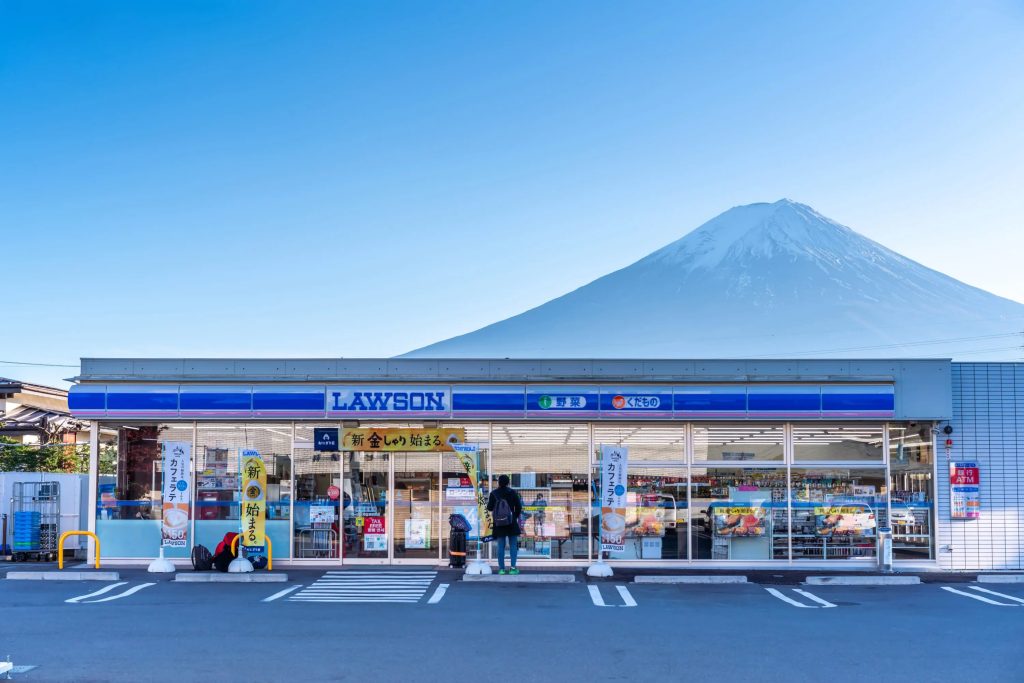
Image credit via Tokyo Weekender
Kyoto is full, Tokyo is not
While Kyoto groans under tourist pressure – locals say it’s “becoming a foreign land” – the surrounding region still has room to absorb more. “Kyoto’s problem isn’t the whole city,” noted Hirabayashi. “It’s Kikakuji Temple and a few hotspots. Just one street behind, it’s empty.”
The real challenge? Infrastructure and staffing shortages in secondary cities. “There may be a train to your town, but no taxis, no hotels,” he said. “Many local destinations aren’t yet ready to host global visitors.”
Short-term rentals and second cities
Wardle pointed to the Caribbean for a useful case study: “In five years, hotel chains went from 95% of inventory to 50%. Short-term rentals filled the rest. Japan can learn from that.”
He emphasized that short-term rentals can decentralize traffic without massive hotel development. “Many places could become overnight destinations, not just day trips, if they had more accommodation options.”
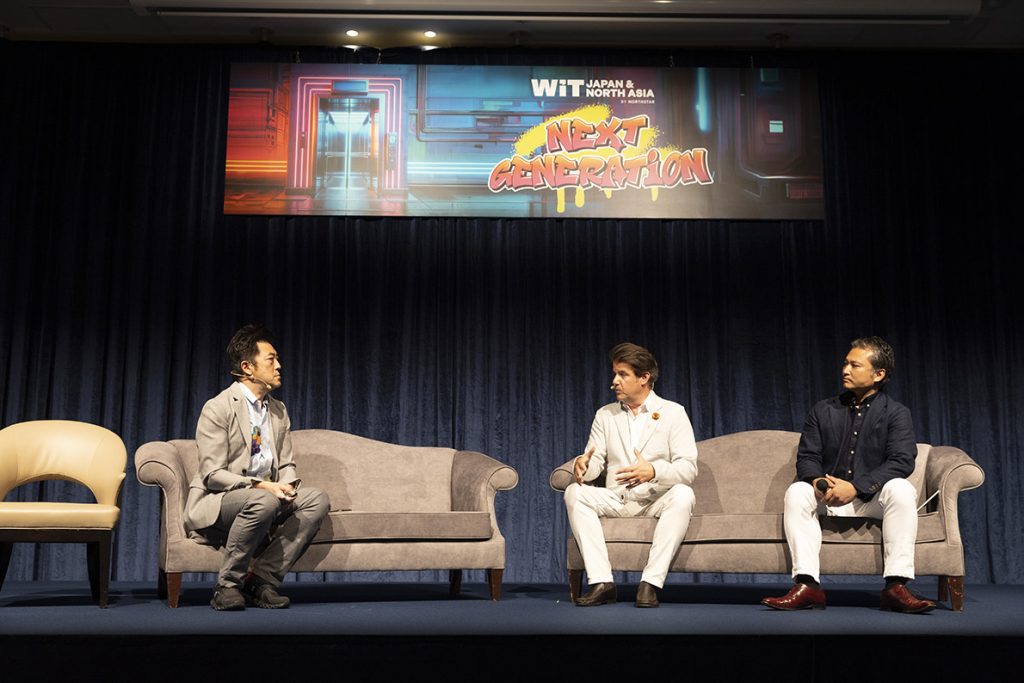
From left: Morris Sim [Moderator], Executive Director, Montara Hospitality Group. Jay Wardle, President & General Manager, Adara – A RateGain Company. Tomotaka Hirabayashi, Partner, Strategic Impact, EY Strategy and Consulting Co., Ltd.
Money, time, and the luxury of avoiding crowds
As crowding worsens, Japan risks creating a two-tiered system. Popular theme parks in Japan, such as Disneyland and Universal Studios, offer fast passes. “It’s basically a VIP tax on time,” Sim observed.
Wardle agreed: “Time is the new luxury. Those with means will pay more for efficiency. But if DMOs get smarter with data, they can offer incentives – ‘Come early, stay late, walk three blocks over’ – to improve flow and experience for all.”
Can AI be a cultural ally?
Surprisingly, AI came up not as a threat but as a possible cultural bridge. “I used translation apps on the train to Karuizawa. I didn’t speak Japanese, but it was a civil exchange,” said Wardle. “AI made me feel more respectful, more confident, and less likely to just go where everyone else goes.”
Sim noted that such technologies could help guide tourists away from overcrowded sites and toward more meaningful, respectful interactions.
Tension or teacup? Will Japan just adapt?
Is this a crisis or just growing pains? “Japan’s population is shrinking. Tourism is needed to sustain local economies,” Hirabayashi reminded the audience. “We can’t avoid overtourism, but we can manage it with better balance between numbers and quality.”
Wardle wrapped with an optimistic note: “Japan has more building blocks for sustainable tourism than most places – culture, food, infrastructure. The question is whether it will use data and partnerships to build five elevators instead of cramming everyone into one.”
Overtourism isn’t just a footfall problem – it’s a failure of imagination, curation, and local dialogue. Japan has the depth, beauty and tools to decentralize travel demand. But it’ll need data-smart DMOs, a rethink on accommodation, and a shift from volume to value – to ensure the Land of the Rising Sun doesn’t sink under its own popularity.