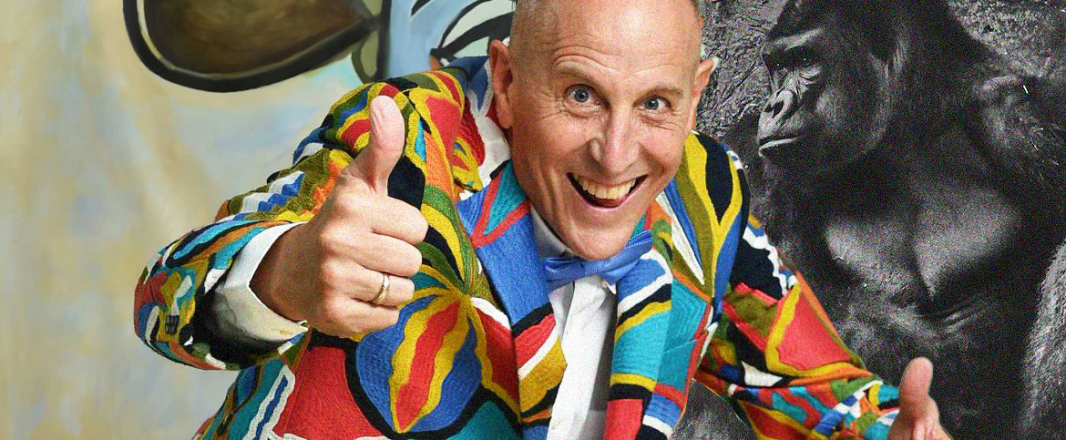
“Once you respect Mother Nature, everything falls in place”
For Bill Bensley, renowned hotel architect, designer and landscape artist, starting any new project in a virgin site is all about risk mitigation and learning to work with Mother Nature.
“We can only make it worse,” said the American, known for his distinctive hotels such as The Slate Phuket, Capella Ubud, Shinta Mani Wild, and numerous others in Asia, during a session at this week’s PHIST, the sustainability event run by the Phuket Hotels Association, C9 Hotelworks and Greenview, “so the question is, what can we do to lessen our impact and footprint. Mother Nature is already perfect, how do you go about building what you want and still have respect for nature?”
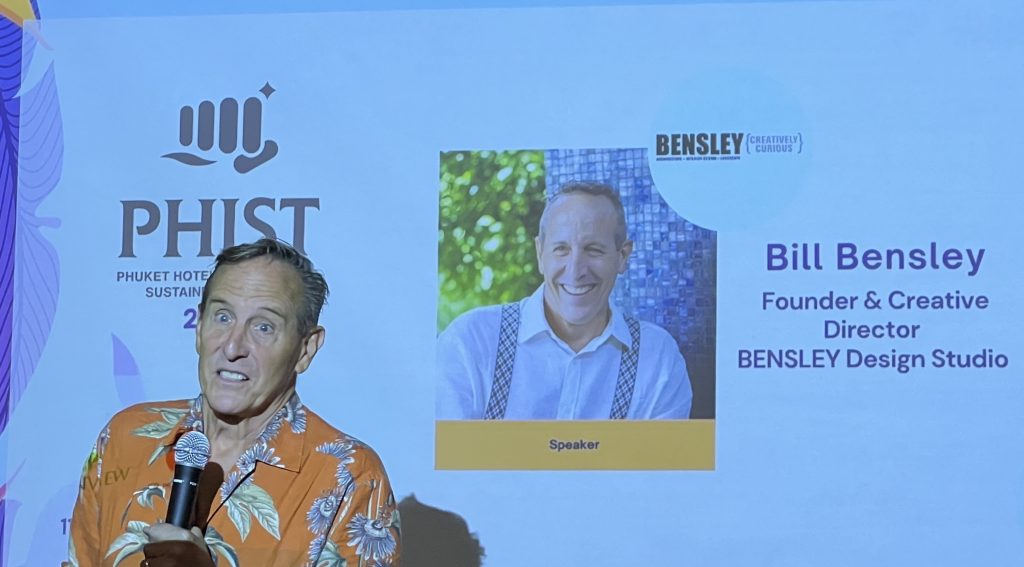
Bill Bensley, speaking at PHIST: “I’ve always wanted to build in deep, dark Africa”
He spoke of his latest project in French Congo – “I’ve always wanted to build in deep, dark, Africa” – on which he’s been working the past 18 months. The project calls for the building of four resorts within the site, with four rooms each priced at $3,500 per night.
The site, said Bensley, was made famous by Sir David Attenborough in his “Our Planet” documentary series in an episode called “Jungles”.
“It is the world’s last frontier, almost black in there, and you are guided by the pygmies. There’s a clearing within the forest where elephants have been clearing to get to the salts and minerals. And every day, hundreds of gorillas gather here for their ‘happy hour’ of salt and minerals. It is an important site, no vehicles are allowed.”
For this project, he’s building rooms that are 8m high on stilts to make room for the movement of elephants.
“It is important to camp out on the site, especially if it’s a natural site, understand where the sun comes up, where the wind comes from. The key is to understand the idiosyncracies of nature, how it reacts in heavy downpours and in dry season.
“You build temporary structures which are easy to float above natural topography. Don’t change the topography. Once you respect Mother Nature, everything falls in place.”
He also believes in working with local materials. The French Congo development came with the caveat that everything had to be built with materials from the area. “Otherwise, imported materials are either stolen or get taxed. Of course, it’s a challenge – very few people in French Congo even know how to make a chair, and they have sustainable logging rules that timber can only be cut in certain widths.”
Bensley also believes in taking on all aspects of a hotel development, from architecture, to interiors and landscaping, and doing everything inhouse which is why he employs a team of 120 at Bensley Creative Studios, covering all areas of expertise needed for a hotel development.
“Hotels are like churches – you have the ability to grab the attention of guests for two to three days and you have to find a way of storytelling. So the more we can embed the message in all aspects – art work, uniforms, furniture – the more successful we are.”
This, he said, is especially important in French Congo because “the more successful we are at telling the story of the gorillas and elephants, the more people will want to protect them.”
Of course, it is also about what the client wants – which can sometimes be unreasonable. “An owner can say, we have two rai, and we want 1,000 rooms of 200sqm each and you must keep all the trees. So we give them alternatives,” he said.
He told a story of a resort in Ubud, Bali where a hotel management company wanted to build 120 rooms in a way which would have wiped out all the trees, and destroyed the valley. “Our alternative was 24 tents on stilts, and we let water run through the site. It is now the hotel with the highest room rate in Ubud and we didn’t touch one tree.”
Bensley admits to disillusionment with “big brands”. “They are way too money-oriented. It’s usually money first, environment second.”
He sees his future as “projects that have to do with some serious renovation”.
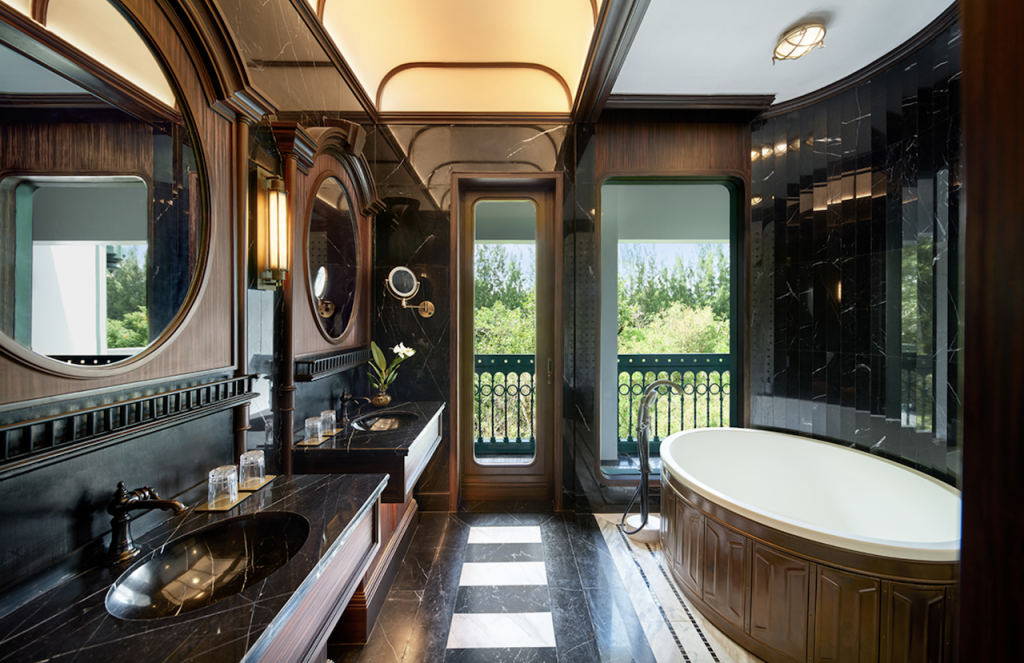
InterContinental Khao Yai: “When you are building, everything doesn’t have to be brand new.” Credit: Bensley.com
For example, one of his projects in Thailand – the InterContinental Khao Yai – involved “dragging out of the jungle train carriages that had roots and vines crawling all over them, but they were perfectly good steel, 22m long and we renovated them into a brand new hotel”. The hotel with 61 keys opened October 2022.
Said Bensley, “When you are building, everything doesn’t have to be brand new. At Capella Ubud, all of the interiors were made of garbage. We found them in junkyards and it took us a year to renovate, repaint and reuse.”
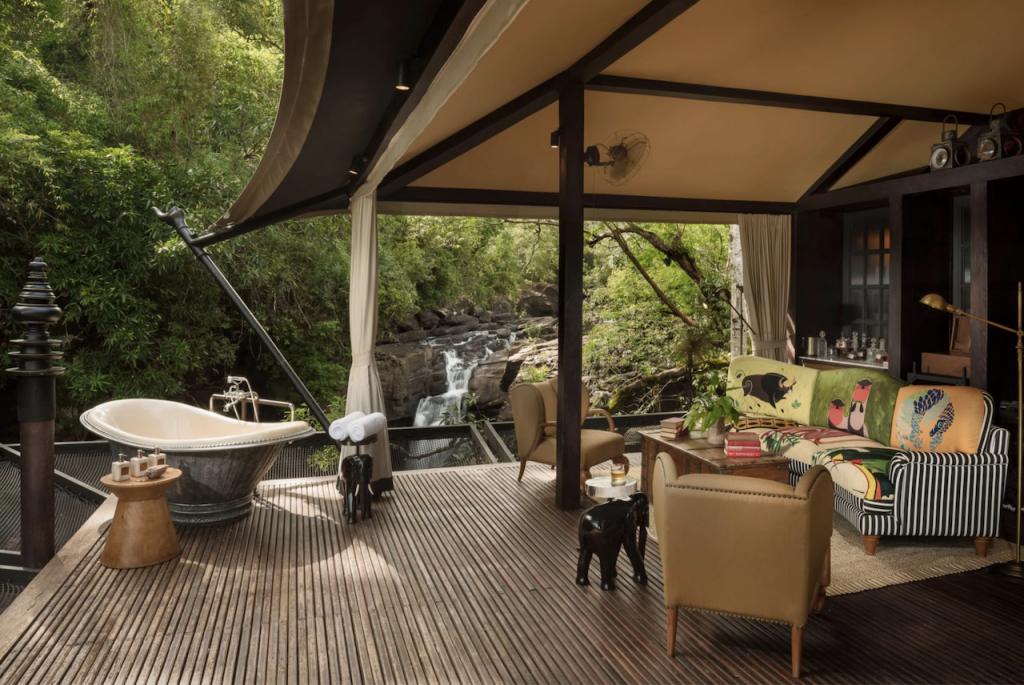
Shinta Mani Wild, his personal favourite – “we took thousands of hectares of what was a titanium mine and we have rewilded it, and now the gibbons are coming back”. Credit: Bensley.com
With Shinta Mani Wild in the Cardomon Forest of Tmor Rung, which he declared his favourite, it took him at least 17 visits to understand the site’s topography. Bensley, together with friend Sokoun Chandpreda, had initially bought the land to save it from poaching and logging.
It is his favourite because “we took thousands of hectares of what was a titanium mine and we have rewilded it, and now the gibbons are coming back. It is a safe haven for many of the animals constantly poached. And we have removed 12,000 snares – that are put between trees to catch the animals.”
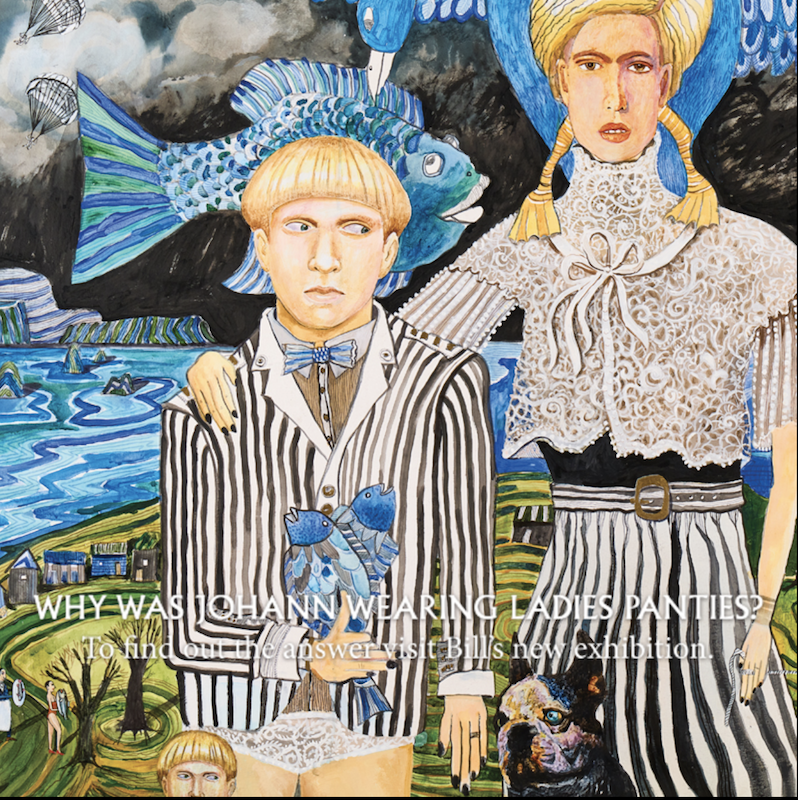
One of Bensley’s paintings from “The Faroese Chronicle”: “You develop an innate understanding that can translate into architecture and design.” Credit: Bensley.com
Inside Bensley is an adventurer that’s not very far from the surface. He’s just returned from Greenland and recently, went to Faroe Islands from which he produced a series of paintings and held an exhibition called “The Faroese Chronicle” at the Museum of Contemporary Art in Bangkok in April.
Through his paintings and other philanthropic work, he raises funds for the Shinta Mani Foundation. “With what we sold, we can build 22 homes in the villages of Siem Reap.”
A believer in lifelong learning, Bensley said he learns from the people in the places he visits by “drawing them”. “When you draw a person, it is a totally different experience from taking your iPhone and click, click, click. The same with drawing fish or animals – you develop an innate understanding that can translate into architecture and design.”
As for how he constantly reinvents himself, he said, “Don’t stay in your box.”
“I started out as a landscape architect and built the Bali Gardens and became “the guy who did Bali Gardens’’. Then I moved into architecture with Four Seasons in Langkawi. Then I moved to interior design, to tell stories with interiors.”
He credits meeting Sokoun, the Cambodian co-owner of Shinta Mani Angkor, who had returned from overseas to invest in the future of his country, as the game changer in his life. “That meeting gave me a lot of power and I became a hotelier, then a conservationist, then a painter, then a philanthropist.”
He’s now developing a line of furniture with Baker Furniture and a line of fabric with Jim Thompson, the Thai fashion brand, and proceeds from those go towards the Foundation.
“That’s how I don’t become bored,” he quipped.
So what’s next? Sculpture, he said without missing a beat.