
May 4, 2010 – lunchtime at Mezza9, Grand Hyatt, Singapore
I am with Hans Lerch, CEO of Hotelplan, Switzerland, who is staying inhouse. It’s 12.45pm, Hans is clearly in a hurry as he has another appointment at 2pm. His manner is brisk as he approaches the reception at the restaurant.
“Table for two.”
“Do you have a reservation?”
“No, do I need one? Plenty of tables,” he replies, gesturing to the empty tables in the restaurant.
“Can I have your name for reference?”
“I just want to eat, you don’t need my name.”
Staff gets a bit flustered. She mumbles something, picks up two menus and directs us to a table that’s tightly sandwiched between two occupied tables. (There are plenty of unoccupied tables around the area.)
“No,” says Hans. “That one.” And promptly walks off to a section with two empty tables.
Staff shrugs and pulls a face.
We sit. She hands me a menu. I ask her, “What kind of customer do you think he is? How would you describe him?”
She hesitates, unsure how to answer. “It’s okay,” she says, obviously uncomfortable at having to answer in front of Hans.
“Yes, but what kind of customer is he? Difficult?” I persists.
“Fussy,” she says.
Truth is, I don’t think Hans was fussy at all. In fact, what he wanted was minimum fuss. He just wanted a table where he could eat quickly and be able to talk without being too crowded in. And he didn’t want to give his name to do that.
Could the staff have anticipated Hans’ behaviour? Read his body language? That he was in a hurry, wanted minimal fuss and be dealt with accordingly?
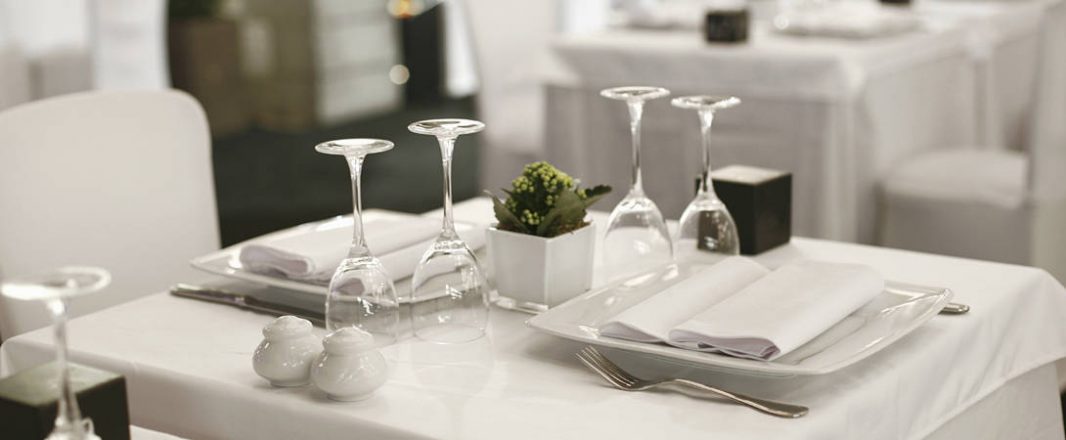
Featured image credit (table setting) : iStock