
Speaking at a press conference held at The Chow Kit in Kuala Lumpur, Capital A CEO Tony Fernandes balanced the news of increased travel costs with the appointment of a new Deputy CEO and, with this being the final stage of its solidification, a rundown of Capital A’s portfolio.
The aviation veteran remained bullish on regional demand despite the “doomsday scenarios” often associated with fluctuating oil prices. Fernandes stressed that while the airline industry faces significant headwinds, Capital A is structurally insulated from the direct impact of fuel costs compared to its airline subsidiary, AirAsia.
Capital A is “a very different company”
A major theme of the conference was the decoupling of AirAsia (aviation) from Capital A (the parent investment body). “Our share price has behaved like Capital A is part of aviation, but it’s not. It’s a very different company. This oil is not a major factor for Capital A,” said Fernandes.
To emphasise this digital and diversified gameplan, Fernandes announced the appointment of Effendy Shahul Hamid, a former senior executive at CIMB Bank, as the new Deputy CEO of Capital A. Effendy’s addition to Capital A will see him add depth primarily in the areas of strategic decisioning and ecosystem orchestration.
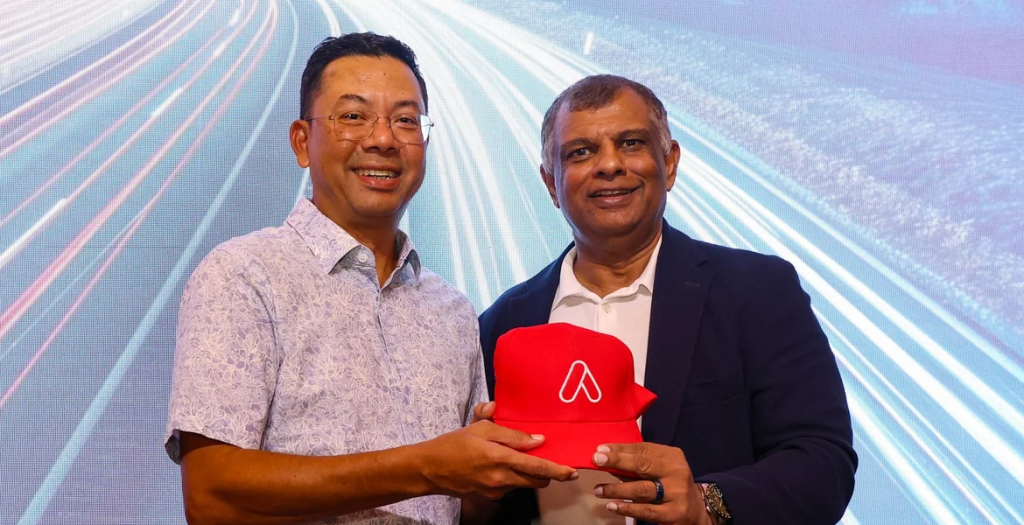
Tony Fernandes (Right), CEO of Capital A, announced the appointment of Effendy Shahul Hamid (Left), a former senior executive at CIMB Bank, as the new Deputy CEO of Capital A
“You can put your heads in the sand, or you can be innovative.”
Addressing the elephant in the room, oil prices currently hovering around $115, Fernandes was blunt about the economic reality facing travellers. “Impact is there. You can either cry and put your heads in the sand, or you can be innovative,” said Fernandes. “We never waste a crisis. There’s always an opportunity through a crisis, and AirAsia will continue to grow through many ideas that we are working on right now.”
While AirAsia has long championed affordability, Fernandes noted that the current geopolitical climate, affecting everything from food supply to computer chips, has made price adjustments inevitable. “Fares will have to go up. There is no choice. But our fares will go up much less than others.”
Despite the price hikes, Fernandes insisted that demand remains “better than before” because travellers are opting for regional trips over long-haul European travel. To mitigate the burden on passengers, he called for a collective effort from the broader aviation ecosystem, saying “This burden cannot be shared by the aviation industry alone. Fuel companies have to play a part. Airports have to play a part.”
“It’s a wonderful opportunity for ASEAN,” added Fernandes. “My number one concern is to try and keep fares as low as possible.”
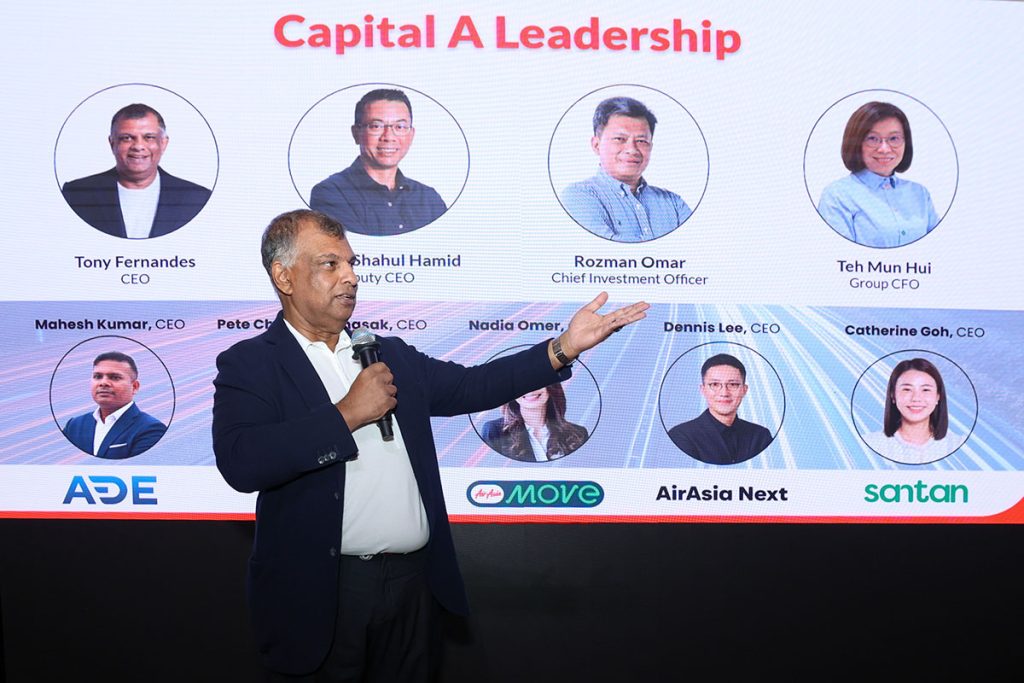
Diversification strategy, including MRO, logistics, and food
Fernandes detailed several key business units under Capital A that act as pillars to the head company:
- ADE (Engineering): The MRO (Maintenance, Repair, and Overhaul) arm is reportedly seeing record growth. “ADE is an MRO; no impact on oil, because people still have to fix the plane right?” asked Fernandes, rhetorically. He revealed that Air France has begun sending aircraft to Malaysia for maintenance, a significant nod to the local engineering talent. “We believe we can fix planes and maintain planes faster and cheaper than anyone in the world.”
- AirAsia MOVE: The overhauled AirAsia website now acts as an OTA superapp for flight and hotel bookings. “But we’re not just going to be another OTA,” said Fernandes. “We want to be very social driven. Because we have 35 million members, we’re building a next generation app.”
- Teleport (Logistics): Having recently raised $50 million, a move Fernandes views as a massive vote of confidence in their “next-day” delivery model that targets SMEs across ASEAN.
- Santan (Food): Capital A aims to turn its famous in-flight meals into a global “grab-and-go” brand. “There is no ASEAN McDonald’s. There is no ASEAN grab-and-go food,” said Fernandes, alluding to interested parties wanting to grow the brand independently. He also added that of all the companies under Capital A, Santan is likely to be most affected by the hike in oil prices.
AirAsia Next
Fernandes identified AirAsia Next as a critical piece of the infrastructure that many might not “fully understand” yet, but one that is essential for the company’s long-term sustainability. The company focuses on the branding, marketing and IP of Capital A’s ecosystem, a sort of all-encompassing platform with brand merchandising and IP identification in its pipeline.
Fernandes highlighted that this venture is particularly vital during periods of market volatility, as it allows the group to be “innovative” rather than just reactive to external pressures, adding that the goal is to “revolutionise the way you buy travel” by making it more intuitive and personalised than before.