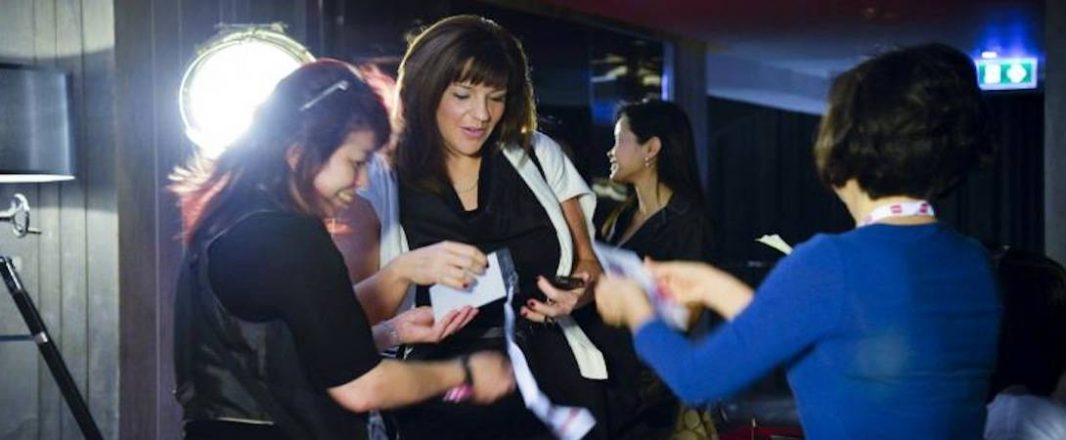

Morris Sim (centre) and Guy Charusadhirakul, Sr Manager Partnership, APAC, TripAdvisor on a panel
At Microsoft, there’s a saying ‘flipping the bozo bit’. Bits are binary – they can either be on or off. So the saying describes the moment when a person loses credibility completely… and with it, their career.
In my first few months at Microsoft, I was useless. The product I was supposed to market was delayed by at least a year, and as the most junior marketer, I had little to do. My first manager found tasks for me and I became a glorified admin.
One day in a meeting, I blurted out an idea so outrageously non-Microsoft that the reaction I got convinced me that my managers and my peers had flipped the bozo bit on me. As I sat dejected in my office contemplating the end of my career, a manager from another department who had been in the meeting came to my office to talk to me about what I had said.
What I suggested was wild, he said, but he saw in it a spark of creativity. He wanted to know if I would consider working for him, even though it meant switching from marketing to technical development. I said yes, and dodged my bozo bit being flipped for the time being.
When I began working for him, he told me to wear glasses because I “looked like I was sixteen. It’s hard to respect someone who looked so young.”
“Don’t wear shorts,” he also advised for the same reason, despite a working environment where everyone else dressed as they pleased: shorts, tank tops, Birkenstocks, and even flip-flops. They were trying to stay in high school; I was trying to look like an adult.
“If what I said offended you, sorry. Just don’t take my advice,” he said. “But please don’t tell HR that I told you this. If they found out I’d probably get fired.”
I couldn’t have been more grateful. As a young Taiwanese employee starting a career in the software world some 25 years ago, I didn’t know the inside scoop. Through the years this manager who was very much part of the establishment protected me, yelled at me, defended me, made me stay late and work weekends, gave me the best projects, helped me navigate through internal politics, and asked other great mentors in his circle to do the same for me. Had it not been for him and other mentors, I wouldn’t have risen through the ranks as quickly. They taught me everything I know about building a product.

Marisa Sukosol Nunbhakdi, Executive Vice President, Sukosol Hotels
As I sat at WITX in Bangkok – I came to appreciate the gathering and also understood why Siew Hoon wanted men like me to be there. Even though I felt like a fraud – really, what do I know about being a woman – I realized that wasn’t the point. The point was: it’s one thing to have mentorship from one’s own kind, but help from people outside one’s group can accelerate progress, as it did with me when I worked at Microsoft.
In each session, I was in awe of the ease in which the women carried themselves. On stage, mothers, daughters, and spouses conveyed expertise effortlessly. The sisterhood code was on; they didn’t need to worry about the bozo bit being flipped on them because it didn’t exist in the room. Grace is what happens when no one feels insecure. It was touching.
I wished my seventy-year old mom had been there. I wanted her to see how much progress had occurred. When we moved to the States in 1979, she did not speak English well, but she went back to school in Buffalo, NY to learn Computer Science while working a day job and made breakfast, lunch, and dinner everyday.

(Mum and her grandson, Winston
Back then she learned how to control mainframes by feeding them punch cards. After she graduated, she couldn’t get the jobs her younger male peers got, so she worked in a university lab cleaning test tubes, and babysat for the director of the lab.
With the money she saved, she opened up a flower shop, and from that, became such a well-respected florist that the ladies club in the town we moved to in California invited her to speak and teach them how to arrange flowers. She accomplished so much, alone, not because she wanted to, but because she had to.
I also wished another one of my mentors, Maggie Wilderotter, had been there. Maggie is the CEO and Chairwoman of Frontier Communications, one of the largest Telcos in the US. I met Maggie during my second stint at Microsoft when she was the Senior Vice President responsible for Microsoft’s efforts in the Public Sector globally.
A graceful and elegant woman, she taught me everything I know about business strategy. Microsoft was lucky to have her represent the company to heads of states around the world. Maggie is also one of the Sullivan sisters, profiled in the WSJ a few years ago. Her father raised her and her sisters to be leaders, and all of them today are business leaders. And they support each other, talking to one another on the phone every week.
According to Booz & Company, national GDP per capita is positively correlated with the support women have and their economic earning power. In other words, the more women are supported and recognized in the professional world, the better off the men are in those countries. Not surprisingly, most of the Western countries  do well in all respects, while most of the Asian countries are emerging, with Japan being the most supportive, and India – the least.
Check out this interactive map on “Women and The Economics of Equality” here
The bozo bit that exists – the one men flip onto women in their lives – is still in practice. If appreciated women equate to wealthier men, who are the real bozos if we don’t do more to support women?
• Morris Sim is the CEO & Co-founder of Circos Brand Karma