IF you’ve travelled internationally in the last year or so, chances are you’ve stared – wide-eyed and jaw open – at the price of flight tickets. Before everyone’s least favourite microbe rocked our world, low-cost airlines used to be able to offer truly low-cost fares. Even regular airlines were sometimes considered affordable, depending on the destination.
All that has changed.
As the aviation industry struggles to recoup its losses by capitalising on our collective need to venture out into the world, travellers worldwide are trying to make sense of new prices, new trends, and new “best times” to plan trips. Is this what booking a flight is going to be like moving forward? Will “budget” travel go back to being, well, budget-friendly?
According to Timothy O’Neil-Dunne (Principal, T2 Impact), there’s a lot that the aviation industry is doing right to control the chaos of the last few years and create access to more travellers than ever before. There’s also a lot that they’re not doing. WiT recently hopped on a virtual meeting with O’Neil-Dunne who’s been involved in the aviation industry for the past three decades to get his feedback on a few nagging questions.
Q: How long will this phase in air travel last before it stabilises?
The challenge, I think, for many people is we’re still in the phase of revenge travel, that is, I gotta get out there, I’ve got to do something, it’s great. But as you can see the airline industry itself, and the infrastructure around it, is actually not doing so well. So if you want to take a guessing game, it’s going to be 2023 before we have, let’s call it, a new normal. Things won’t be like the 2019 version of the old normal, but we would have learned to accommodate it.
Q: What do you think will disrupt the airline industry, and when will it happen?
The question I think you’re asking is, will flying change per se? And the answer is not for a long time. And the reason for that is that flying still depends on these things called aircraft or airplanes. And the vast majority of those have a lifecycle that is quite long. So the planes that are coming in today are going to be around for somewhere between 12 and 21 years. So that means we’re going to be stuck in the same situation for at least the next 20 years. I think the process of the airport experience is more likely to see some changes more urgently than you will see in other areas. The first thing that’s going to have to give is we’re going to have to shorten the amount of time that people spend in an airport terminal, because if you don’t solve that problem, the airports will just be backed up as you have seen this summer in Europe and the US – which is what happens when the airport capacity runs out of space.
Q: What are airline companies doing right to capitalise on this “new world”?
I think there’s a lot of controversy at the moment about whether or not there are enough pilots. There’s also not enough engineers to service the planes, there are not enough planes coming on stream to replace the ones that are going off stream or have actually left off stream. There’s a much-publicised rumor, which probably by the time this airs will be public, that Emirates and United Airlines are going to form a joint relationship. Now, some of my colleagues in the industry have described that as hell freezing over. They’re forming some kind of joint relationship to exchange passengers and to link their networks. So I think you’re going to see some of these changes and new bedfellows emerge in the world of aviation, and that disruption is going to continue.

I think there’s a lot of controversy at the moment about whether or not there are enough pilots. There’s also not enough engineers to service the planes
Q: And what are they doing wrong? Things that make you scratch your head and wonder… what are they even thinking!?
There’s lots of things that airlines do that don’t make sense. I’m going to pick on the issue of pilots again – the airlines have been complaining, oh, we don’t have enough pilots, and that’s going to result in in us not being able to service and fly the routes. Well, excuse me, but the airlines ordered planes a long time ago, they’re continuing to order planes. Surely they must know that it’s going to take a long time to train a pilot. And then they did something very strange… they cancelled a lot of flights on small regional aircraft. Great, but there’s a knock on effect of that, because that was the feedstock of pilots to mainstream airlines. And that’s a big issue. You also have the challenge that there is still an ageing workforce. That problem has existed for the past 25-30 years. And the ignorance of the airlines, in my view, for failing to take advantage of the potentiality of solving that problem earlier, is now causing the current crisis of the lack of pilots.
Q: What’s your opinion on the surge in airline prices worldwide? Will that hurt or help the industry in the long run?
I’m a big advocate of rationality in the airline space. I also believe that we have an unnatural act of too little competition in airlines. So my first question internally to myself is, is the state of airline competition fair? And the answer I give myself is no, it’s not fair. The result of that is you have airlines who are too big to fail.
And you see what happened during the pandemic, literally hundreds of billions of dollars were provided by governments to airlines to keep them afloat. So airlines were completely offside with how they approach the problem of the resurgence after the pandemic. And still, they ended up with this mess.
“One of the benefits of new entrant airlines is they always come in with a lower cost, just because they don’t have any legacy costs to go with it.”
What you’re seeing now is a large cutback in capacity, particularly in places like the United States, where you have airlines literally cancelling hundreds of thousands of flights in the second half of 2022. And that increased demand and less supply results in the imbalance – when you have supply not meeting the needs of the demand, prices will rise, and they will stay high. They’re not coming down for the near future. I suspect it will be towards the end of 2023 and into 2024. And notice I use the word stabilisation as opposed to return to the low prices that we had before.
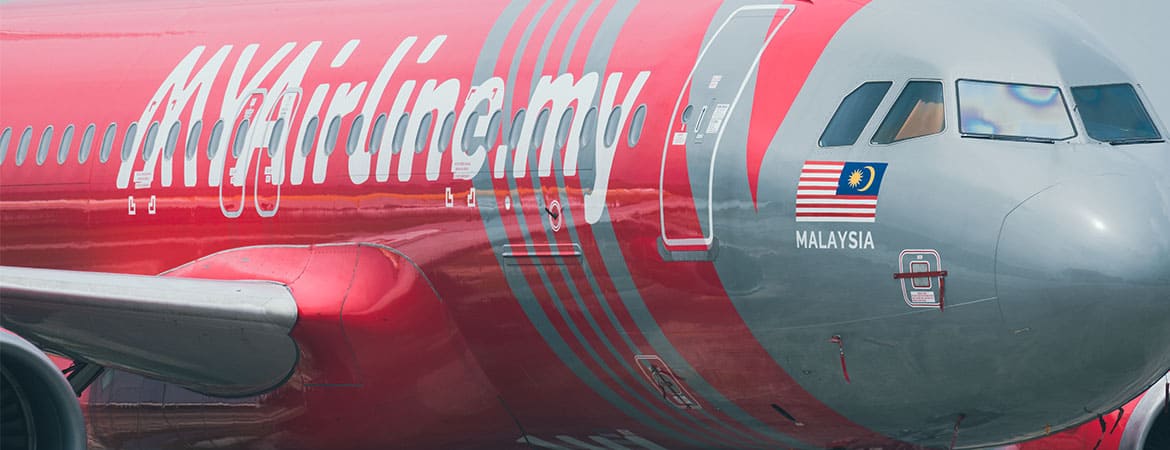
However, there is another factor. There is a lot of equipment out there that is fairly young, that a lot of assets are owned by people who have now got this debt of these planes. So will people take a risk and start new airlines? There’s a new airline starting in Malaysia called MYAirline. One of the benefits of new entrant airlines is they always come in with a lower cost, just because they don’t have any legacy costs to go with it. And I suspect that that is going to be an interesting game. So if I look at the four big domestic markets in South-east Asia – Philippines, Indonesia, Malaysia and Thailand – I think there’s an opportunity for new airlines to emerge.
Q: How can travellers navigate these high prices?
I’ll break that into countries with alternative forms of travel and countries that don’t have alternative forms of travel. And unfortunately, when it comes to Asia/Pacific, most of the people are in the latter. The consumer unfortunately has little choice. Because if the airlines aren’t there, and the prices are too high, you either have to take foot, bus or ferry… sometimes a combination of all three. The prices are beyond the reach of many of the people who used to fly. But I think Mr O’Leary, who is the CEO of Ryanair, said the age of cheap flying is over. I disagree with him. I don’t think it’s over. I just think it’s temporarily on hold until we get some sanity.

Timothy O’Neil-Dunne, Principal, T2Impact
Q: Are airline companies ready to face future crises and emergencies?
The answer to that question is a decided no, they are not prepared. And the blame does not rest with the airlines alone. It rests with governments. When the pandemic hit, governments basically forgot all the lessons for the past 100 years. There is a health passport that has existed, for example, for over 100 years. It’s been in common use and approved by the World Health Organisation since 1945. It’s called the yellow passport vaccination card.
Why didn’t anybody use that? Well, only one country used it and that was Germany. The challenge, I think, is that governments were not prepared. And as a result, airlines were lulled into a false sense of security. I don’t think airlines have enough preparation in place. And what will happen is they will react the same way they did this time – which is cut back, cancel, and then they’ll lay everybody off.
I believe that we have to remember that the air transportation system is a public asset. As a public asset, it is the responsibility of airlines to deliver a public service, that’s known as a common carrier. And airlines are generally classified as a common carrier, they do not perform in the way that they have an obligation to the travelling public. And that is a real problem and will continue until there is some degree of change on the regulatory side that says, if you are granted a license to operate an airline, you have an obligation to use those assets, and not sit on them and hold them back so that consumers can’t, in fact, achieve their goals.