
Coming out of the pandemic, Vikram Malhi, CEO and founder of ZUZU Hospitality Solutions, told his team that “we didn’t just weather the storm but we danced in the rain”.
Well, he and his team now have US$9m more reasons to dance following the successful completion of an oversubscribed Series B round led by SoftBank Ventures Asia, with participation from Atinum Partners and existing investors Wooshin Venture Investment, Visor Ventures and JG Digital Capital.
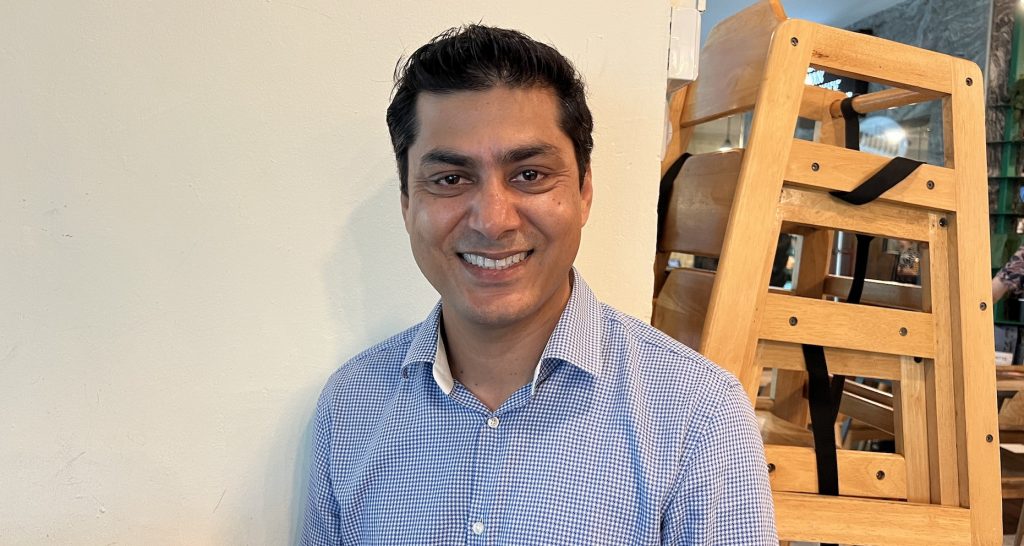
Vikram Malhi: AI will democratise hospitality and benefit small and independent hotels who take advantage of the new tools.
“It’s super exciting after three years of tough times,” Malhi told WiT, adding, “The round’s oversubscription reflects the strong confidence our investors have in our vision and capabilities. This substantial financial boost will enable us to innovate our offerings further, accelerate our growth trajectory and support more independent hotels in increasing their revenue.”
He added, “It’s a tough time to be raising funds but there is money sitting on the sideline ready to be deployed in capital-efficient businesses with strong unit economics. We are one such business that has managed to not only come out stronger post-pandemic but also scaled with positive unit economics with a fraction of the relative capital.”
Harris Yang, vice president of SoftBank Ventures Asia, said, “We are very impressed by the strength of the management team which is evident in their ability to navigate the tough Covid-19 crisis and we believe in the longterm potential of their business, which has proven to be fundamentally robust.”
With the online travel market in South-east Asia projected to surge to an estimated worth of US$44b by 2025, the funding could not have come at a better time for ZUZU to seize the growth opportunity.
Malhi is particularly excited about the rise of AI which he believes will democratize the hospitality market and benefit the small and independent properties. “Before, only the big groups had PMSes and channel managers, then SaaS came along and small and medium-sized hotels got access to those solutions. Now the same thing will happen with data, analytics and decision making using AI.”
He said ZUZU, which spent the past couple of years building its product and fully automating its pricing and revenue management, would focus on deploying AI, not just in revenue management but also automation of operations. “We are already starting to use ChatGPT to answer reviews on OTA platforms. Small independent hotels have a hard time with this, and we will be automating this process.”
It has also established a comprehensive payment platform enabling seamless payment management with all OTA partners and guests, mitigating the issue of payment discrepancies.
ZUZU, which signed its first hotel in Jakarta in 2016, grew its hotel network by 50% during the pandemic and currently has 2,700 hotels in seven markets across Asia. It aims to increase that to 5,000 by the end of 2024, with India a key market of growth.
Indeed, India has turned out to be a pleasant surprise, said Malhi. “In early 2020, when we didn’t know when borders would open, we looked to India which had a strong domestic market and we felt we needed to be there, if things didn’t open up. As it turned out, we are seeing amazing business in markets like Goa and Delhi.
“What we are also finding is, it is easier to add hotels in India than in other markets. The reason is, they appreciate the importance of technology in distribution management and revenue management, and they are familiar with models such as ours because the market has been educated.”
ZUZU has seen good recovery from the South-east Asian markets, and North Asia is coming back. “The demand is there, there are flight capacity constraints but we are two-thirds of the way back.”
Malhi said ZUZU had seen a 2.5 times growth in revenues, and was almost at breakeven point. “We have more hotels, we are driving more revenues per hotel and we are super capital efficient. We don’t spend on branding because we feel that’s not valuable – we genuinely feel that slapping a logo on a hotel doesn’t change the experience of a hotel. Our hotels are getting their fair share of online demand and distribution.”
Malhi said conversations with small, independent hotels about the need to have an OTA strategy have become easier. “There were markets where hotels used to have a lot of offline business, such as Bali which relied on China business. That has gone away. They know now that they have to learn to work with OTAs and build those capabilities inhouse.”
He called this an exciting time for hospitality tech and distribution. “How people search will change. The days when I put in, Singapore hotels and I get 25 and I pick one – that doesn’t work anymore. There is an opportunity to help independent hotels manage this change, and empower them.”